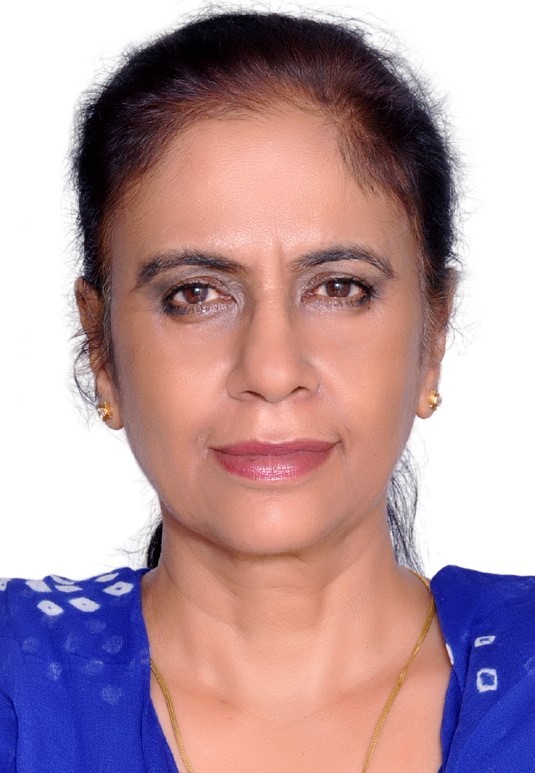
Dr. Shalini Agarwal
Session Speaker
Dr. Shalini Agarwal, Flt Lt (Retd) is a distinguished radiologist and Senior Consultant at Shalby International Hospital, Gurugram, Haryana, India. She holds an MBBS from Armed Forces Medical College, Pune, followed by a Master’s degree (MD) in Radiology from the University of Delhi at Army Hospital (R&R). She is also a Diplomate of the National Board (DNB) awarded by the Ministry of Health and Family Welfare, Government of India, and a Member of the National Academy of Medical Sciences (MNAMS). Dr. Agarwal has further advanced her expertise through the Commonwealth Fellowship (2013–2014) at the Royal National Orthopaedic Hospital, London, an observership at UT Southwestern Medical Center, Dallas, USA, and specialized training including the ESSR Diploma in Musculoskeletal Radiology (2016) and short-term training at AIIMS in 2018. With extensive professional experience, she currently serves as a Senior Consultant at Shalby International Hospital (since February 2025). Previously, she worked as a Consultant at Pt. BD Sharma PGIMS, Rohtak (2024) and earlier practiced as a radiology consultant in private diagnostic centers following her MD. She also served as a Medical Officer in the Indian Air Force (1992–1997), contributing to general medical services as part of the Armed Forces Medical Corps. Dr. Agarwal is actively involved in several prestigious professional bodies, including the Indian Radiological and Imaging Association, Indian Society of Pediatric Radiology, National Academy of Medical Sciences, European Society of Radiology, European Society of Skeletal Radiology, and multiple musculoskeletal imaging societies in India and Asia. She is also a life member of the Indian College of Radiology and Imaging and the Research Foundation of Hospital and Healthcare Administration (RFHHA). A prolific academic contributor, Dr. Agarwal has authored 63 publications, delivered 35 presentations, and presented 30 proffered papers and posters at national and international conferences, reflecting her strong commitment to advancing research and education in the field of radiology and musculoskeletal imaging. Musculoskeletal radiology, medical imaging, skeletal disorders, and advanced diagnostic radiology techniques.
Biomechanics & Anatomy of Musculoskeletal System: An Overview The human body is an engineering marvel capable of performing a wide range of movements required for locomotion. These movements include flexion, extension, abduction, adduction, supination, pronation, and circumduction, as well as complex actions such as walking, running, jumping, crawling, and climbing. Such movements are executed smoothly and precisely through the coordinated interaction of bones, joints, and muscles. Muscles function in harmony either to stabilize joints or to facilitate their movement. Even the simple act of standing requires proper alignment of bones and joints, supported by coordinated muscular activity. Joints are classified into three types: synarthrosis, amphiarthrosis, and diarthrosis, ranging from immovable to freely movable joints. Movement at these joints is associated with peak mechanical loads that must be effectively managed to prevent excessive translation. For instance, the walking cycle is characterized by two peak load phases-heel strike and toe-off. The musculoskeletal system functions to control these loads and maintain stability while minimizing unnecessary vertical translation. These biomechanical considerations are particularly important in procedures such as joint replacement. There exists a strong interrelationship between muscular strength and movement. Force couples generated by muscle groups produce opposing forces that help regulate movement and stabilize joints. An example of this coordinated mechanism is the screw-home mechanism of the knee joint, which locks the knee into a stable and rigid position, allowing efficient upright standing. Muscles may be classified as pennate or non-pennate and may cross one or more joints, producing different movements depending on the functional requirements of locomotion. Their coordinated activity enables both closed-chain and open-chain movements. Finally, the nervous system plays a crucial role in the musculoskeletal system. It not only regulates and coordinates movement but may also be affected by pathological conditions involving the musculoskeletal structures.