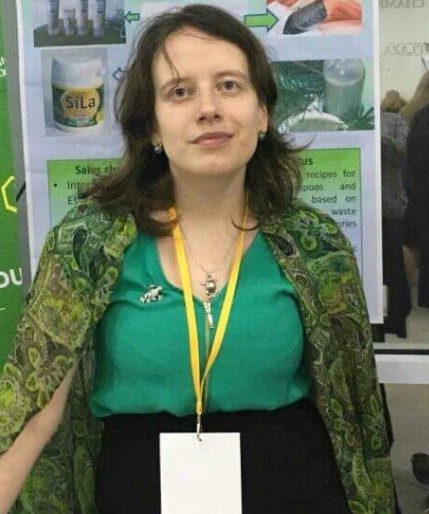
Viktoriia Paientko
Session Speaker
Dr. Viktoriia Paientko is a Ukrainian researcher at the Chuiko Institute of Surface Chemistry, National Academy of Sciences of Ukraine. She received her PhD in Chemistry from Maria Curie-Skłodowska University (Poland) in 2023. Her scientific expertise includes mechanochemical modification of natural minerals, functional organic–mineral composites, adsorption processes, immobilization of bioactive compounds, and biological assessment of advanced materials. Her research focuses on applications in environmental protection, agriculture, cosmetics, and sustainable material technologies. She has extensive experience in experimental materials development, physicochemical characterization, plant-based biotesting, and the preparation of technical specifications and regulatory documentation for mineral-based products. Dr. Paientko has authored and co-authored scientific publications in international peer-reviewed journals and developed numerous functional composite formulations. Her innovative research has received multiple international awards, including Silver and Bronze Medals at the InnoWings International Exhibition of Inventions and Innovations.
Functional Organic-Mineral Composites for Water Treatment: Adsorption Properties and Biological Assessment
The development of sustainable materials for water purification requires integrating adsorption efficiency with environmental safety assessment. This study aims to investigate functional organic-mineral composites and evaluate the biological responses of terrestrial and aquatic plants to mineral-based materials and cosmetic formulations, supporting environmentally responsible technologies.
Natural and synthetic mineral matrices, including kaolin, bentonite, diatomite, and amorphous silica, were used to develop functional composites through mechanochemical modification and immobilization of organic compounds. Materials were characterized using XRD, FTIR, SEM, BET surface analysis, and electrokinetic measurements. Adsorption properties and interactions between mineral and organic components were investigated. Biological assessment included seed germination, root development, and early growth of higher plants, alongside observations of aquatic plant responses to cosmetic formulations.
The investigations demonstrated the applicability of mechanochemical processing for preparing functional mineral-based composites with modified surface and interfacial characteristics. Physicochemical characterization provided information on structural organization, surface properties, and mineral–organic interactions relevant to adsorption behavior. Plant-based biotesting enabled the assessment of biological responses under different experimental conditions, while aquatic plant studies provided complementary information on the environmental compatibility of cosmetic formulations. Experience in developing technical specifications and regulatory-oriented documentation for mineral-based products supported the practical and standardization aspects of the research.
Combining mineral surface modification, adsorption studies, and plant-based biological assessment provides an integrated approach to developing environmentally responsible functional materials. The findings support further investigation of organic-mineral composites for water treatment and highlight the importance of evaluating potential ecological effects before practical implementation.
Keywords
Organic-mineral composites; adsorption; mechanochemical modification; aquatic plant biotesting; environmental safety.