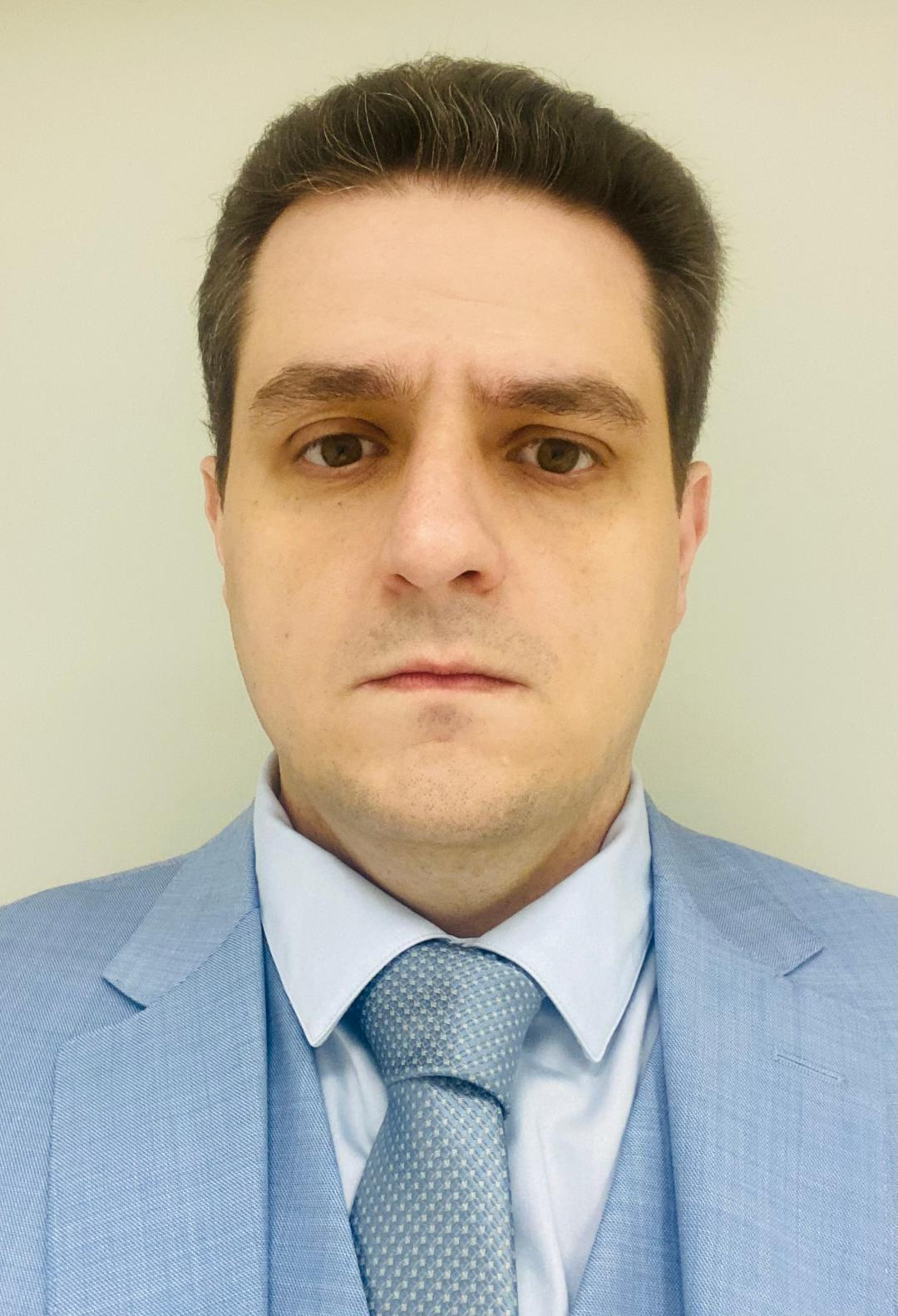
Caio Cesar Cardoso
Session Speaker
Physician graduated from the Faculty of Medical Sciences of Santa Casa de São Paulo.General Surgeon from the Irmandade of Santa Casa de Misericórdia de São Paulo.Cardiovascular Surgeon from the Federal University of São Paulo.Professional Master's Degree in New Technologies and Healthcare from the Federal University of São Paulo.Doctorate in Cardiology from the Federal University of São Paulo.Professor of Medicine at the School of Medical Sciences of Santa Casa de São Paulo.Physician in charge of the Cardiac Implantable Electronic Devices Outpatient Clinic of the Irmandade of Santa Casa de Misericórdia de São Paulo.Head of the Cardiovascular Surgery Department at the Adventist Hospital of São Paulo.Cardiovascular Surgeon at Stella Maris Hospital.
Title: Prosthesis Selection in Heart Valve Surgery: Is Intraoperative Valve Size the Missing Factor? Abstract: Background:The choice between mechanical or biological heart valve prosthesis has traditionally been guided by patient age, comorbidities, and need for lifelong anticoagulation. However, the expansion of transcatheter therapies, particularly valve-in-valve (ViV) and sequential ViV procedures, has introduced new considerations for prosthesis selection. These techniques offer less invasive alternatives but may be limited by patient–prosthesis mismatch (PPM), especially in small annuli. This study discusses whether prosthesis size at the time of the first implantation should also influence the selection of heart valve prosthesis type. Methods:Evidence from recent clinical literature and an in-vitro hydrodynamic study evaluating sequential ViV implantation using a Brazilian conventional bioprosthesis and transcatheter valve was analyzed. Was assessed the feasibility and hydrodynamic performance of different prosthesis size combinations in ViV and sequential ViV configurations, focusing on effective orifice area and oversizing limits. On the other hand, a recent cohort study demonstrated safety of mechanical heart valves for elderly patients. Results:Hydrodynamic testing demonstrated that feasibility of sequential ViV procedures strongly depends on the size of the initially implanted surgical prosthesis. Larger initial prosthesis sizes therefore increase the potential for multiple transcatheter interventions during a patient’s lifetime. Conversely, small annuli may restrict future transcatheter strategies and may favor mechanical prostheses. As a clinical counterpoint, findings were compared with a large cohort study demonstrating that mechanical mitral valves were associated with lower all-cause mortality than biological valves in patients up to 70 years of age, while the survival advantage of mechanical prostheses in the aortic position disappeared after 55 years of age. Notably, this study did not account for transcatheter treatment of degenerated bioprosthesis. Conclusions:With the growing role of transcatheter therapies for degenerated bioprostheses, prosthesis size at the time of initial surgical implantation may represent an additional determinant in choosing between mechanical and biological valves. Larger annuli may favor biological prostheses due to the feasibility of ViV strategies, whereas smaller annuli may support the use of mechanical valves. Importantly, conventional reoperations for degenerated bioprostheses may increase operative mortality by up to 8%, reinforcing the importance of long-term procedural planning at the time of the first valve replacement.