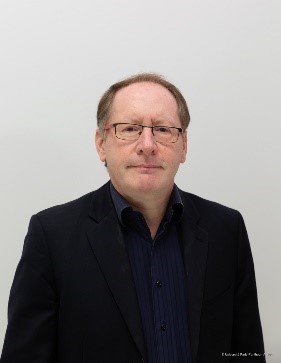
Jean Mercier Ythier
Keynote Speaker
He went notably through positions of invited research fellow at the University of Montréal (Québec, Canada), assistant professor and associate professor of economics at the University of Paris Panthéon-Sorbonne and professor of economics at the University of Lorraine (France). Prof. Jean Mercier Ythier's research interests include the theory of general competitive equilibrium, microeconomic theory, public economic theory, economic philosophy, altruism, ethics, and topics of economic anthropology General equilibrium theory, public economic theory, redistribution and social contract, altruism, ethics, economic anthropology
Jean Mercier Ythier is professor of economics at the University of Paris-Panthéon-Assas, France. He graduated from the Institute of Political Studies of Paris (PhD, 1989). He was also a graduate student at Harvard University (1986-87). He went notably through positions of invited research fellow at the University of Montréal (Québec, Canada), assistant professor and associate professor of economics at the University of Paris Panthéon-Sorbonne and professor of economics at the University of Lorraine (France). Prof. Jean Mercier Ythier's research interests include the theory of general competitive equilibrium, microeconomic theory, public economic theory, economic philosophy, altruism, ethics, and topics of economic anthropology. Reference: Implementing strategic plasma resource self-sufficiency through unpaid plasma donations on the global plasma market The last two decades have seen a considerable increase in the pharmaceutical industry’s demand for plasma on a global scale for the production of plasma-derived medicinal products (PDMPs). It is impossible to meet the demand for fractionation plasma from unpaid voluntary donations on a global scale at the present state of manufacturing and biomedical techniques. Nevertheless, we argue that self-sufficiency in strategic plasma resources, properly construed, can be achieved through unpaid plasma donations to appropriately designed national blood donation organizations. We proceed in three short steps: (i) by first recalling why and in what sense plasma and PDMPs should be considered strategic commodities; (ii) by secondly explaining why self-sufficiency in strategic plasma products matters and in what practical sense it can be achieved; and (iii) by outlining the main characteristics that a national blood organization must meet to achieve self-sufficiency through unpaid voluntary donations