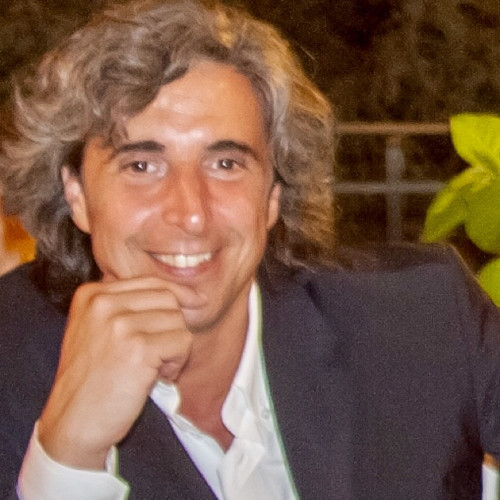
Paolo Milia
Invited Speaker
Paolo Milia, MD, PhD, has been the Head of the Neurorehabilitation and Robotics Area at the Istituto Clinico Tiberino since 2007. Dr. Milia serves as Vice President of the International Society of Digital Medicine (ISDM) and is Co-Editor-in-Chief of the international journals Digital Medicine (Wolters Kluwer) and Intelligent Medicine (Springer). He earned his degree in Medicine and Surgery from the "Gabriele D’Annunzio" University (Chieti, Italy) in 1998 and specialized in Neurology at the University of Perugia in 2003. Subsequently, he served as a neurologist, clinical research fellow, and university lecturer at the University of Glasgow (Scotland). From 2003 to 2007, he was a PhD candidate and staff physician at the Neurological Clinic and Stroke Unit of the University of Perugia. In 2007, he obtained his PhD in Cerebrovascular Physiopathology, Neurodegenerative Diseases, and Recovery Processes from the University of Perugia. Dr. Milia has taught physiopathology, nutrition, neurology, medical radiology, sports medicine, and sports neurology at the University of Perugia. In 2002, he received the "Excellence in Stroke Research" award at the European Stroke Conference for his work titled "Serum potassium and Stroke Outcome," which led to an invitation to the Stroke Summer School at the Karolinska Institute in Helsinki, Finland. He also secured research grants from the University of Glasgow to study the effects of thiazides and diuretics post-stroke, and from the University of Rome for his work on the validity of the Italian version of the Modified Rankin Scale (mRS). In 2017, he won the "Inn@va Salute" award from the Ministry of Health for the project "Use of an exoskeleton in a domestic setting for patients with spinal cord injuries." He also contributed to winning the "Le Fonti Awards 2018" for excellence in healthcare innovation and robotic rehabilitation. Dr. Milia is one of Europe’s leading experts in the use of robotic devices for the rehabilitation of patients with neurological conditions such as stroke, spinal cord injuries, multiple sclerosis, and Parkinson’s disease. He is the author of numerous publications, abstracts, and several chapters in scientific books. As Head of the Robotics Area, he has focused his scientific activity on the use of exoskeletons. He is also involved in using "serious games" for telerehabilitation in patients recovering from stroke and SARS-CoV-2 infections. During the pandemic, he developed the RIPARTO project (Rehabilitation for COVID-19 Recovery post-Hospitalization) to provide functional and cognitive recovery for patients discharged from intensive care. He currently teaches "Motor Re-education in Neurosensory Disabilities" at the University of Perugia and serves as the Head of Clinical Education for students from 32 American universities who attend the Istituto Clinico Tiberino for elective internships. In this capacity, he has been invited to give keynote lectures at prestigious U.S. institutions, including Columbia University (New York), New York Medical College, Georgia State University (Atlanta), and Bellarmine University (Kentucky). Additionally, he holds the Chair of Neurophysiology at the SLOP (Lombard School of Psychopathology) in Mila
Motor Re-education in Neurosensory Disabilities