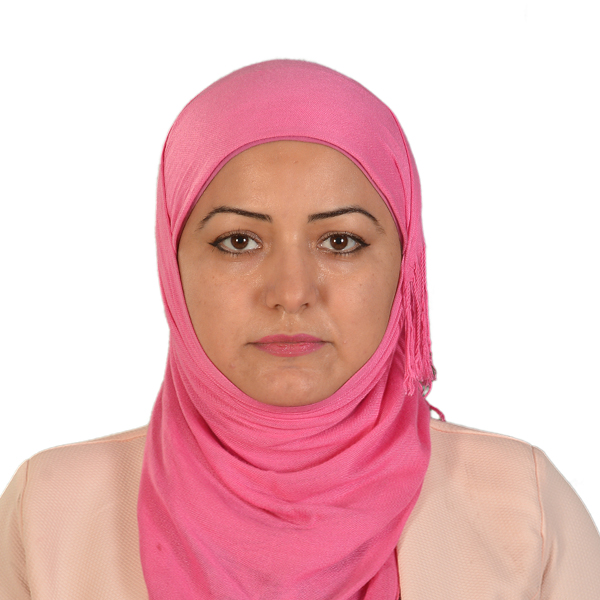
Rahaf Akel Rajjoub
Online/Virtual Speaker
Nursing education, curriculum development, and innovative teaching strategies Simulation-based learning and clinical skills education Artificial intelligence and digital technologies in nursing education and healthcare Student well-being, emotional intelligence, resilience, and academic success Quality of care, patient experience, and evidence-based nursing practice Occupational health and workforce well-being among nurses and healthcare providers
Rahaf Akel Rajjoub has obtained her PhD’s degree in Medical-Surgical Nursing from University of Alexandria, Egypt in 2015. Her areas of Interest are evidence-based nursing practice, oncology nursing besides diabetes and wound care, nursing education, the role technology in enhancing nursing education, sleep disorders and its complications, rehabilitation. She has collaborated with several researchers in the field of nursing and has been serving as reviewer of many articles. In addition, she is a member of professional organizations, including Sigma Theta Tau International and International Nursing Association for Clinical Simulation and Learning (INACSL). Reference: Beyond Weight: Understanding Low Back Pain in Nurses with Normal BMI Background:Low back pain (LBP) is a leading occupational health problem among nurses worldwide. While overweight and obesity are known risk factors, emerging evidence shows that nurses with a normal body mass index (BMI) also experience high rates of LBP due to physical workload and psychosocial stressors. Methods:A cross-sectional study was conducted among 184 nurses in Oman, of whom 106 had a normal BMI (18.5–24.9). Data was collected using a validated questionnaire addressing demographic, occupational, psychosocial, and clinical characteristics of LBP. Statistical analyses included descriptive statistics, chi-square tests, correlation analysis, and multivariate logistic regression. Results:The overall prevalence of LBP was 100%. Among nurses with normal BMI, the most reported frequency was weekly pain (34.5%), followed by daily pain (26.1%). Pain intensity was predominantly mild (64.8%) or moderate (25.9%), while duration was commonly less than one day (44.4%). Significant associations were found between LBP and pain frequency (p = 0.006), intensity (p < 0.001), BMI category (p = 0.049), and work specialty (p < 0.001). Correlation analysis showed that physical job demands (r = 0.44, p < 0.01) and psychological job demands (r = 0.28, p = 0.018) were positively related to LBP severity, whereas job control and social support demonstrated protective effects. Logistic regression revealed that high physical job demands (AOR = 2.4, 95% CI: 1.3–4.3) and working more than 40 hours per week (AOR = 1.9, 95% CI: 1.1–3.5) were independent predictors of high-severity LBP. Conclusion:LBP is highly prevalent even among nurses with normal BMI, underscoring that occupational and psychosocial demands are stronger determinants than weight alone. Targeted ergonomic interventions, workload regulation, and workplace support programs are essential to reduce LBP and protect nurses’ health.