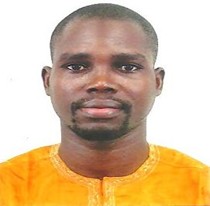
El Hadji Seydou Mbaye
Select Speaker Type
Biography will be updated soon.
Dr. El Hadji Seydou Mbaye was born in 1978 in Kaolack a region of Senegal. During 2008-2013, he earned his PhD in Biology and Human Pathologies with the collaboration of the International Agency for Research on Cancer / World Health Organization, (IARC/WHO), Lyon (France); He obtained a Master’s of Life and Health, Specialty Biology of microorganisms, Virology; a Master’s of Life and Health, option Immuno-physiopathology; a License of Biochemistry in Louis Pasteur University of Strasbourg (France); and a General Degree in Sciences and Technologies in University of METZ (France). He was certified Grade 10/10 by the Federation International of Gynecology Obstetric (FIGO), the Accreditation Council of Oncology in Europe (ACOE), and the Institute Catalan of Oncology (ICO). These credits were recognized as Physician’s Recognition Award (AMA PRA Category 1) by the American Medical Association. He was awarded as International Outstanding Scientist Awards 2020, Awarded as the Best Researcher Award 2021, by VDGOOD. He was certified, by the United Nations, by IARC/WHO. He has published 1 Book with a style of philosophical story. Author of the World Program against Cancer in Low and Middle Incomes Countries, he is lead author of more than 90 peer-reviewed research articles published in reputed journals. Dr. Mbaye is Editor-in-Chief of 4 journals, Editorial Board Member of 157 International Journals, and then he has Edited/Reviewed 270 peer-reviewed articles. He is member of Allied Academies, member of the World Society for Virology (WSV), member of World’s Leading Virologists Group: Facing to Covid-19, member of U.S. National Academies of Sciences, Engineering, and Medicine (NASEM): Societal Experts Action Network (SEAN), and also, member of BCNet International Working Group, IARC/WHO. Dr. MBAYE has formed for free, more than 250 Healthcare Professionals for the techniques of cervical cancer screening in Senegal. He has screened for free more than 2000 women for cervical cancer in Senegal. He appeared on local media, 2S TV, Leeral.net, Mbour TV, Sen TV and 7TV. Reference: Covid-19 Global Pandemic: Effects of SARS-CoV-2 on Different Organs of Human Body The world is now facing an outbreak of a virus known as coronavirus, which began as an emergent pneumonia-like sickness in Wuhan, China, in December 2019 and has since spread swiftly around the globe. These viruses are RNA viruses that motive illnesses in vertebrates (birds and mammals). They motive moderate to severe infections of the respiratory tract. Coronaviruses are having different types of the main subgrouping include alpha, beta, gamma, and delta. The purpose of our study is to gain knowledge about the characteristics of the virus, prevalence of the disease, its severity and to identify effects of SARS-CoV-2 on different organs of the body and also the complications caused by this novel virus. From our study, we came to know that COVID mostly affects immuno-compromised patients. Analysis shows that aged adults males who have other diseases like heart diseases, diabetes, and diseases of the respiratory tract like COPD are more susceptible to SARS-CoV-2 in comparison to any other age group. COVID can affect different organs of the body but most commonly it affects the lungs of a patient. Because this virus has an infinity for the ACE2 receptors. Coronavirus attaches with ACE2 receptors of the host cells through its spike proteins and causes illness. Common symptoms include difficulty in breathing, a severe cough, high fever, chills fatigue. Less severe symptoms are trembling with chills, sore throat, headache is the common sense of taste or smell affected. It is a highly transmissible disease, spread very frequently from an infected person through the droplets inhalation produce during coughing and sneezing by the host. From the data, we can conclude that the recovery rate is much higher than the fatality rate. But we should have to take precautionary measures like the use of masks, frequently wash the hands, and follow the social distancing as this illness has no effective therapy.