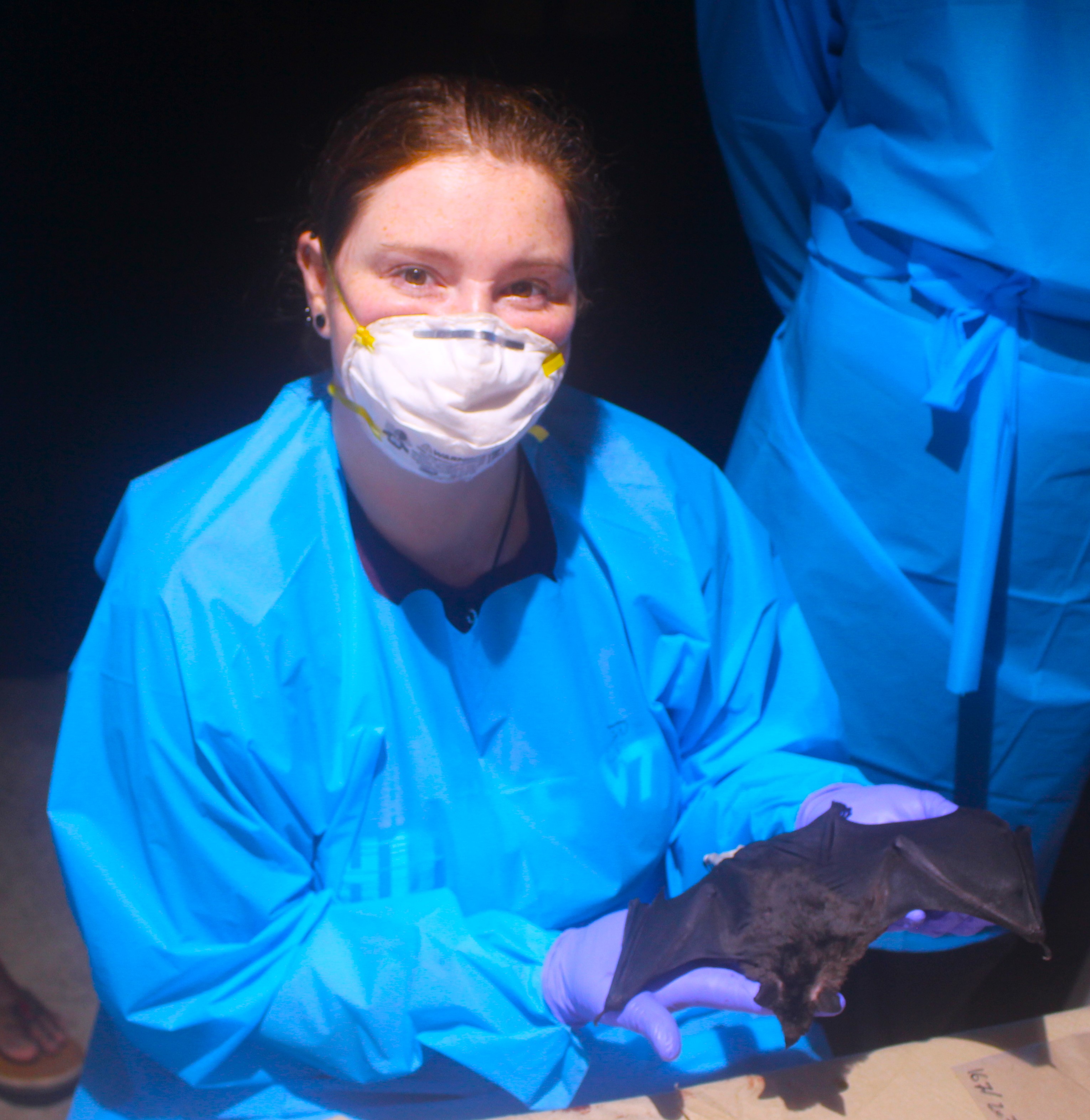
Paige Van de Vuurst
Online/Virtual Speaker
Paige Van de Vuurst McClure is a researcher and educator specializing in infectious diseases, climate change, zoonotic spillover, and public health. She currently serves as a Visiting Assistant Professor at The George Washington University. She earned her PhD in Translational Biology, Medicine, and Health from Virginia Tech in 2024 with distinction. Her research focuses on disease ecology, geospatial epidemiology, climate change impacts on infectious diseases, and One Health approaches. She has published research in leading international journals and has conducted fieldwork in Colombia, Tanzania, Indonesia, and the United States. In addition to her academic work, she served as a Peace Corps volunteer in Tanzania, contributing to STEM education and community health initiatives.
"Beyond the Climate Niche: Using a One Health Approach to Map Viral Spillover Risk Distribution" Ecological niche modeling has been utilized in recent history to elucidate and forecast the distribution of species, including those who act as vectors or reservoirs of infectious diseases. The use of this method has largely, however, been focused on reconstructing the climatic niches of these species. By ignoring biotic factors like landscape variables, obligate or prey species distributions, and anthropogenic factors, vital components of disease transmission cycles can be overlooked, especially in zoonotic disease systems. By using ecological niche modeling techniques informed by Onehealth approaches, scientists may be able to more accurately map where infectious disease risk is elevated, thus benefiting public health interventions. Rabies is an acute and progressive zoonotic disease of the nervous system which widely affects domestic livestock and humans in Latin America. The distribution of vampire bat-borne rabies virus (RABV) has experienced spatial expansion in recent history linked to a variety of factors. Nevertheless, the identification of landscape level factors that drive RABV transmission from vampire bats to other species remains elusive. To determine how intersectional anthropogenic, ecological, and climatic factors modulate RABV spillover, we used a Onehealth approach to assessed the role of different landscape variables on RABV spillover from Desmodus rotundus to livestock in Colombia. Using ecological niche modeling as the theoretical and analytical framework, we analyzed ecological and epidemiological RABV data to reconstruct spillover transmission risk across the country. Our results indicate that human activity drives RABV spillover risk to a greater extent than ecological or climatological factors alone. Results from this study provide new perspectives on how landscape conditions and human activity are linked to RABV transmission risk, and where public health intervention efforts should be prioritized