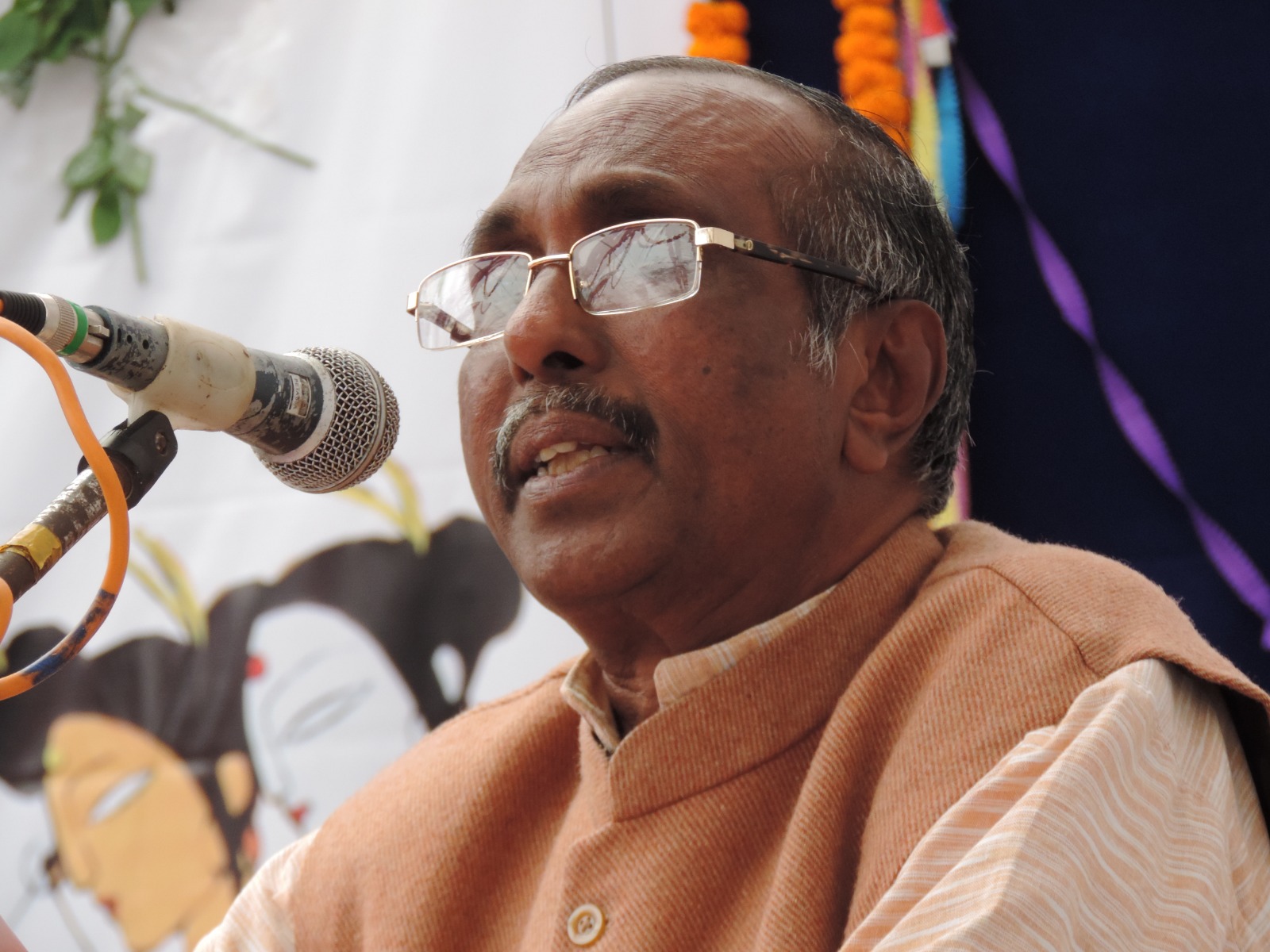
Satish Gogulwar
Session Speaker
Dr. Satish Vasantrao Gogulwar is a distinguished physician, social activist, and community health leader from Maharashtra, India, whose work spans over four decades in public health, tribal development, disability empowerment, and sustainable rural livelihoods. A graduate in Biology from Janata Mahavidyalaya, Chandrapur, and an MBBS from Indira Gandhi Government Medical College, Nagpur, he was deeply influenced by the philosophies of Mahatma Gandhi, Vinoba Bhave, Jyotiba Phule, Dr. B.R. Ambedkar, and Jayaprakash Narayan. In 1984, he co-founded Amhi Amchya Arogyasathi, an organization that has become a leading force in tribal health, disability rights, and community development in the Vidarbha region. Dr. Gogulwar played a key role in the Forest Rights Movement, helping over 100 villages secure collective forest rights and strengthening local self-governance through empowered Gram Sabhas. His community health initiatives have improved nutrition among thousands of children, while his disability inclusion programs have supported more than 2,000 persons with disabilities through skill development, employment, entrepreneurship, and livelihood opportunities. He has also promoted organic farming, menstrual health awareness, herbal medicine, scientific honey collection, and sustainable agriculture across rural communities. Recognized nationally and internationally for his contributions, he has received numerous honors, including the Lifetime Achievement Award from the Indian Medical Association, the Jeevan Sadhana Gaurav Award, the Lokmat Times Excellence in Healthcare Award, and the One Humanitarian International Award. Dr. Gogulwar continues to champion community-led, rights-based public health and social transformation in underserved regions of Eastern Vidarbha.
Management of Malnutrition in tribal communities of Gadchiroli Through frontline Workers, and Community Management. BackgroundAmhi Amchya Arogyasathi (AAA), a non-profit organization with over 43 years of experience intribal health and community development, implemented the “Malnutrition Free VillageCampaign” in the Dhanora block of Gadchiroli district, Maharashtra, to address the persistentburden of child malnutrition in tribal communities. Malnutrition remains a major public healthconcern in Gadchiroli, particularly among children under five years of age, due to factors such aspoverty, low birth weight, inadequate nutrition, poor healthcare access, recurrent infections,anemia, and socio-economic vulnerabilities. According to district-level estimates, 6.95% ofchildren under five are malnourished, while 20.10% are underweight and 5.42% are severelyunderweight. Dhanora block presents an even greater challenge, with 21.88% of children reportedas underweight.ObjectivesThe project aimed to reduce Severe Acute Malnutrition (SAM) and Severely Underweight (SUW)cases among children aged 0–24 months through integrated nutritional rehabilitation, communityengagement, healthcare referrals, and livelihood-based interventions. The initiative also focusedon strengthening awareness and participation among mothers, adolescent girls, Village Health,Sanitation and Nutrition Committees (VHSNCs), Gram Sabha members, and frontline healthcareworkers.MethodologyThe intervention was implemented across 40 tribal villages in Dhanora block between August2022 and June 2025 using a community-based and family-centered approach. Baselineassessments were conducted to identify children with Severe Acute Malnutrition (SAM), ModerateAcute Malnutrition (MAM), Severe Underweight (SUW), and Moderate Underweight (MUW).Key interventions included:• Referral of SAM and SUW children to Government Nutrition Rehabilitation Centers(NRCs)• Nutritional counseling for mothers and caregivers• Distribution of nutritional support kits containing pulses, jaggery, nuts, and gram• Provision of medicines and health monitoring supportP a g e | 2• Information, Education and Communication (IEC) campaigns on nutrition and child health• Livelihood interventions such as poultry and goatery support for vulnerable families• Coordination with government health systems and ICDS services• Village-level health awareness activities and community mobilizationResultsThe project demonstrated significant improvements in child nutritional outcomes over theintervention period. Severe Acute Malnutrition (SAM) cases declined from 31 (6.99%) in August2022 to 5 (1.20%) in June 2025. Moderate Acute Malnutrition (MAM) cases reduced from 76(17.15%) to 21 (5.27%), while Severely Underweight (SUW) children decreased from 54(11.96%) to 16 (4%). The proportion of children maintaining normal nutritional status improvedsubstantially from 282 (63.65%) to 319 (80.15%).All identified SAM and SUW children were referred to Nutrition Rehabilitation Centers (NRCs)for specialized care and follow-up services. Nutritional kit distribution improved dietary intakeand recovery among affected children. Livelihood interventions enhanced household food securityand income generation, reducing the risk of recurrent malnutrition. Community awarenessactivities contributed to improved childcare practices, nutrition awareness, healthcare utilization,and community participation in health-related decision-making.DiscussionThe findings indicate that livelihood-integrated nutritional interventions can significantly improvechild nutrition outcomes in remote tribal settings. The integration of healthcare referrals,nutritional rehabilitation, and sustainable livelihood support addressed both the immediate andunderlying determinants of malnutrition. Community participation and collaboration withgovernment systems played a critical role in improving service utilization and ensuring continuityof care.The reduction in SAM, MAM, and SUW cases demonstrates the effectiveness of combiningnutritional support with socio-economic strengthening measures. Furthermore, the increase inchildren with normal nutritional status highlights the long-term positive impact of communitydriven interventions.ConclusionThe “Malnutrition Free Village Campaign” presents a scalable and replicable model for addressingchild malnutrition in tribal and underserved regions. Integrating nutritional rehabilitation withlivelihood enhancement, community engagement, and health system coordination can lead tosustained improvements in child health and nutritional status. The project underscores theimportance of culturally sensitive, community-based approaches in combating malnutrition andimproving the well-being of vulnerable populations.KeywordsP a g e | 3Severe Acute Malnutrition, Tribal Health, Child Nutrition, Livelihood Intervention, NutritionRehabilitation Center, Gadchiroli, Community Health, Public Health Nutrition, Community-BasedIntervention, Child Health