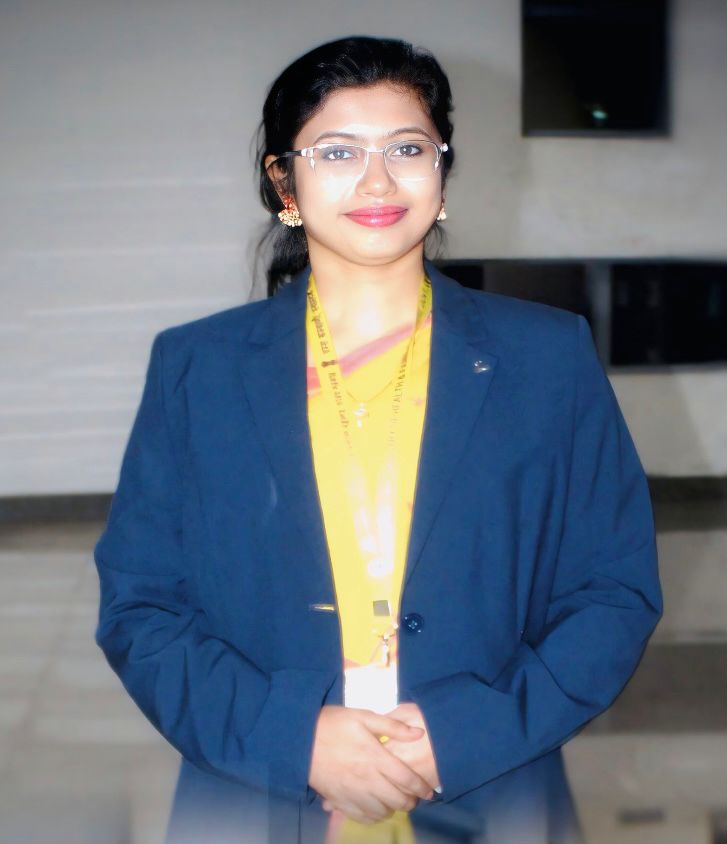
Tanusree Biswas
Online/Virtual Speaker
Ms. Tanusree Biswas is currently serving as a Tutor/Clinical Instructor at the College of Nursing, AIIMS Kalyani, West Bengal, India, where she has been contributing to nursing education and clinical training for the past four years. She has published several research papers in both national and international journals and is actively involved in ongoing research projects at AIIMS Kalyani. Ms. Biswas is a member of the Society of Midwives India (SOMI), pediSTAR India, and is a Level II Anthropometrist certified by the International Society for the Advancement of Kinanthropometry (ISAK). Her notable professional achievements include serving as a Resource Trainer for In-Service Skills Training under the DAKSH Training Program, a Mentor for supportive supervision at delivery points across various medical colleges and hospitals in Kolkata under the National Health Mission, and a District-Level Master Trainer for the Comprehensive Primary Health Care (CPHC) Programme for Community Health Officers in West Bengal. She has also worked as a Mentor under the LaQshya Programme, a Labour Room Quality Improvement Initiative of the National Health Mission, in collaboration with the Society of Midwives India (West Bengal Chapter) and UNICEF, supporting quality maternal healthcare services in rural hospitals.
Comparing an Artificial Intelligence-Powered Chatbot to Standardized Patient Simulation for Teaching Breast Self-Examination: A Randomized Controlled Trial Background: Artificial intelligence-assisted simulation (AIAS) has emerged as a potential alternative, but its efficacy compared to SPS for BSE training has not been rigorously evaluated. Objective: To compare the effectiveness of AIAS and SPS in teaching BSE to first-year medical, nursing, and paramedical students. Design: An open-label, parallel-group randomized controlled trial. Setting: Tertiary care institution in Eastern India. Methods: 84 first-year medical, nursing, and paramedical students were randomized to receive either AIAS (n=42) or SPS (n=42) training for BSE. The outcomes assessed included BSE skill performance, knowledge, anxiety, self-confidence, and satisfaction. Assessments were conducted at baseline, immediately post-intervention, and at one-month follow-up. Interventions Participants in the AIAS group were provided access to the application using individual user IDs and passwords. Following an initial orientation within the app to familiarize themselves with its features, the participants used it for their BSE training. They could interact with the chatbot, view instructional videos, and practice BSE techniques guided by the app. The participants in the control group performed BSE on a standardized patient (a trained actress) using a wearable breast model in a private room under the supervision of an interventionist to ensure standardized scenario parameters. The sessions lasted for 15-20 minutes. Results: AIAS participants achieved higher immediate post-intervention BSE skill scores than SPS participants (16.4 vs. 13.1, p<0.01). At one month, the scores were comparable between the groups, suggesting convergence of skill retention. Both interventions led to significant and sustained improvements in BSE knowledge. No significant differences were observed between the groups in terms of anxiety, self-confidence, or satisfaction. At the one-month follow-up, 82.4% of the participants reported performing BSE, with no significant difference between the groups. Conclusions: AIAS demonstrated superior immediate BSE skill acquisition compared to SPS, with comparable long-term outcomes across all metrics. These findings suggest that AIAS may offer an efficient, scalable alternative to SPS for BSE training, potentially addressing resource constraints in medical education, particularly in settings with limited access to standardized patients, while providing a platform for deliberate, on-demand practice.