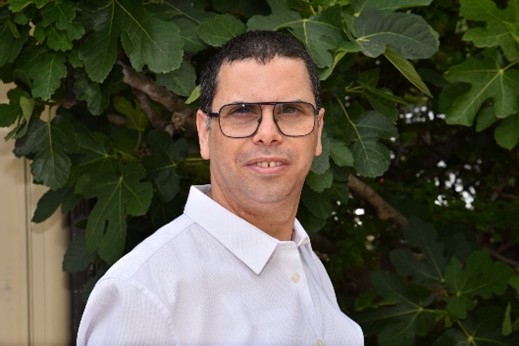
Hen Friman
Session Speaker
Biography will be updated soon.
Hen Friman holds Ph.D. and Master's degrees from Bar-Ilan University. His master's research examined the effect of Cyt1Aa on prokaryotes, while his doctoral work focused on energy production from the degradation of aromatic compounds by bacteria using biofuel cells. Since 2012, Dr. Friman has been a researcher and lecturer at the Faculty of Engineering. He currently serves as the Academic Director of the Renewable Energy and Smart Grid Excellence Center at HIT - Holon Institute of Technology. Dr. Friman has developed an innovative "paperless" laboratory teaching approach in the fields of solar, wind, and water energy, and managed the "Energy Supervisor" training program at HIT. He also contributed to the development of the undergraduate course "Pre-Project and Developing Soft Skills for Engineers," aimed at enhancing students' employability skills, including teamwork, time management, risk and quality control, design, and presentation. His research interests include renewable energy, fuel cells, microbial fuel cells, water and wastewater treatment, chemical engineering, ecological education, academic collaboration, and the integration of artificial intelligence (AI) in energy systems and environmental technologies. Reference: AI-Generated Disaster Simulations and Public Engagement with Climate Risk Climate change communication increasingly adopts formats intended to reduce psychological distance from climate-related threats and thereby strengthen engagement. This study tests whether AI-generated audiovisual simulations of climate disasters increase fear, worry, perceived personal relevance, and willingness to act, and whether effects are stronger when scenarios are locally framed. A representative Israeli sample (N = 402) viewed four short AI-generated films depicting wildfires in Israel, wildfires abroad, a tsunami in Israel, and a tsunami abroad, with viewing order counterbalanced. Participants ranked each film on all outcomes (1 = most impactful; 4 = least). Mean ranks revealed a consistent locality advantage across outcomes: Israel-framed wildfires and tsunami were ranked as more impactful than their abroad counterparts for fear (M = 1.98–2.00 vs. 3.00–3.02), worry (M = 1.83–1.95 vs. ≈ 3.1), personal relevance (M = 1.70–1.90 vs. 3.15–3.25), and willingness to act (M = 1.61–2.01 vs. 3.06–3.32). Women showed stronger responses than men; younger and more educated respondents reported higher engagement; secular respondents exceeded traditional and religious respondents; and regional patterns aligned with hazard exposure. Findings support construal-level theory (Trope and Liberman, 2010), highlight the experimental utility of AI-generated simulations, and suggest that locally anchored, vivid depictions can strengthen public engagement.