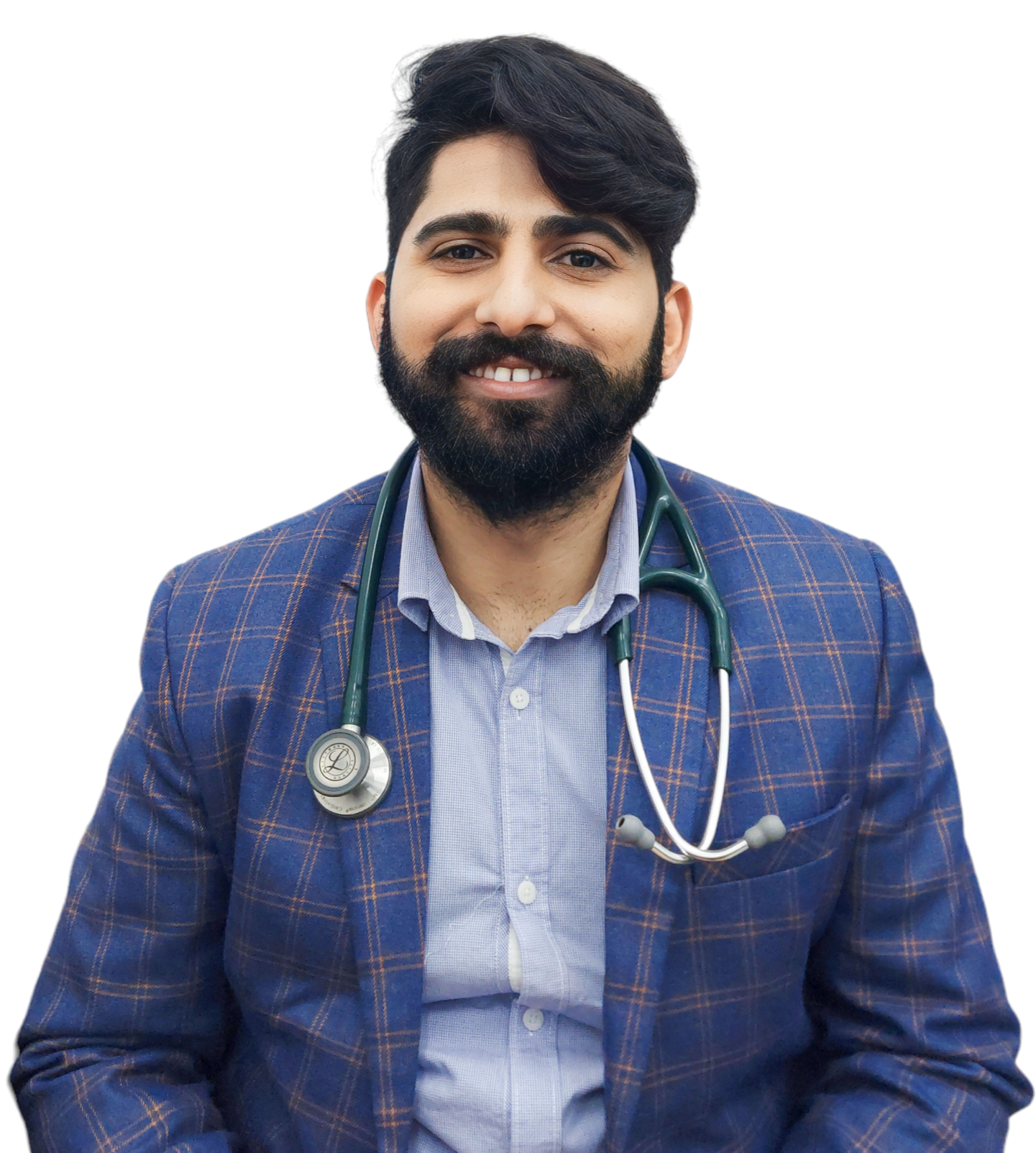
Dr. Rohit Raina
Session Speaker
Dr. Rohit Raina, MBBS, MD (Internal Medicine), Fellowship in Diabetology (AIIMS Rishikesh), is an Assistant Professor in the Department of Medicine at AIIMS Bathinda, India. He previously served as a Senior Resident in the Department of Internal Medicine at AIIMS Rishikesh. His clinical expertise includes diabetes and its acute and chronic complications, metabolic disorders, hypertension, coronary artery disease, and stroke. Dr. Raina is skilled in advanced diagnostic and critical care procedures, including 2D echocardiography, point-of-care ultrasound (POCUS), vascular Doppler, and intensive care interventions. He is actively involved in undergraduate, postgraduate, nursing, and paramedical education, as well as research and clinical training. An accomplished academician, he has received the UDAAN President Appreciation Award (SEADFCON 2022), delivered presentations at national and international conferences, and published numerous research articles and case reports in indexed journals.
The Evolving Face of Malaria - Elimination to Eradication AbstractMalaria, one of humanity’s oldest scourges, is undergoing a dramatic epidemiological and therapeutic transformation. Once defined by high transmission, limited diagnostics, and chloroquine-based therapy, the disease today faces a complex landscape of declining incidence in some regions, persistent hotspots, drug and insecticide resistance, and emerging climate-driven shifts. The global agenda has moved from control to elimination, with WHO’s 2030 targets and several countries now malaria-free. India, accounting for the majority of cases in South-East Asia, has shown remarkable progress yet faces challenges from _Plasmodium falciparum_ resistance, _P. vivax_ relapses, urban malaria, and asymptomatic reservoirs. This talk will map malaria’s evolving face across three dimensions. First, *parasite and vector biology* - emergence of artemisinin partial resistance, _Pfhrp2/3_ deletions compromising RDTs, and vector behavior changes undermining bed nets. Second, *innovation surge* - deployment of R21/Matrix-M and RTS,S vaccines, monoclonal antibodies, next-gen diagnostics, and gene-drive approaches for vector control. Third, *programmatic reality* - the “last mile” challenge of case-based surveillance, radical cure for _vivax_, and financing elimination in low-transmission settings. Indian data will illustrate regional heterogeneity, ICU burden of severe malaria, and practical treatment updates for clinicians. The session concludes that eradication is biologically feasible but operationally formidable. Success will depend on integrating new tools with robust health systems, cross-border collaboration, and sustained political will. For clinicians, the message is clear: malaria is not disappearing, it is evolving. Diagnosis, treatment, and prevention strategies must evolve with it.