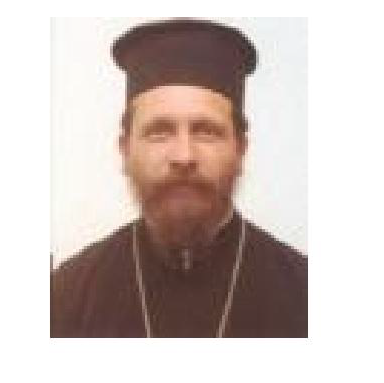
Marius Vasile Bardan
Session Speaker
BARDAN Marius-Vasile, a person always eager to learn, to improve, an autodidact. I believe with strength in God, justice therefore I chose to learn in a high school with a profile theological. After completing studied high school, I attended the day courses of the Faculty of Theology within Andrei Saguna University of Sibiu. I am a person. IMPASSIONED so much science technical, social, as well as exactly, I studied at various faculties for deepening knowledge in my areas of interest. Work my intense in study, reflects a passion for science so complex, chemistry, physics and engineering, but equally I bent over backwards enthusiastic attention on SCIENCES humanities, theology, law and psychology. I am a flexible graduate of SEVERAL faculties, post- university, doctoral and post- doctoral studies, which possess skills analytical, management of the various project and team work excellent, acquired during studied various universities. Throughout time has proven ever skills: strong leadership skills, excellent communication skills as well as attention to detail. Also, I have abilities sociable STRONG and an attitude colloquial hot by people who need guidance or who feel the need to be listened to. However, I can be authoritarian in the same way measure as needed. I am a person. self-motivated, I was looking for always to value myself abilities interpersonal very good as well as the opportunity to take my responsibilities to the highest possible levels raised. I have constantly participated in internal conferences and international, through OVERVIEW SOME research topics scientific and not only, after which I acquired skills very good of presentation in AVERAGE professional and academic. I am a professional BOTH technically as well as humanist East by objection and strategy, with a vast experience progressive in management LOADS and POWERS what falls to roar a priest, psychologist, lawyer and criminologist investigator, as well as a builder, engineer and architect and implementing new initiatives in an environment dynamic and always changing. I am a leader dynamic, with a history demonstrated in the motivation and administrator teams to respect DEADLINES limit, guaranteeing at the same time time quality, consistency and alignment with standards professionals from various areas that I have studied. I have knowledge in combining creativity and technology to design and develop solutions suitable the needs requested by beneficiaries. I am an illustrator, creator and imaginative, with a vast experience in designing, building and finish, using a fine mesh for color, balance and composition works with a clean, clear design and captivating visual. All these led to the acquisition of skills efficient ways of transforming concepts into graphics, which what made me saddle Ill deepen the knowledge they already possess, through following courses the faculty of architecture, later after graduation saddle are member of the Architects Order.
Martial Arts Traditional Karate Character Modeling and Formation Technique AbstractBackground: In a contemporary society driven by rapid technological advances and widespread virtualization, individuals increasingly suffer from fragmented attention spans, low frustration tolerance, and an overall sense of ethical liquidity (pp. 4, 8-9). While modern performance sports often prioritize external verification such as scores and medals, a critical gap exists in modern systems for holistic character development and long-term moral anchoring (pp. 5, 10, 19). Objectives: This study aims to identify the specific pedagogical, psychological, and biomechanical mechanisms by which traditional Karate training—modeled as a "school of character"—systematically fosters core personality traits, specifically focusing on perseverance (Ninyo), respect (Rei), and self-control (Zanshin) (pp. 5-6, 11). Furthermore, the research seeks to validate the hypothesis that a baseline physical practice can serve as a superior tool for structural character transformation, reducing aggression while expanding a practitioner's capacity for voluntary effort (p. 21, 41). Methodology: Utilizing an applied research framework centered on a systematic training regimen (minimum of 3 sessions per week), this work analyzes the foundational principles of traditional Shotokan Karate through a multidisciplinary lens. It integrates the structural triad of Shin-Gi-Tai (Spirit-Technique-Body), the physiological biofeedback of specialized breathing techniques (Ibuki), and the strict adherence to martial arts etiquette (Reigi) (pp. 20-21, 36). Newtonian dynamics (F=ma and Kinetic Energy equations) are applied to demonstrate how correct technical refinement directly correlates to behavioral discipline and emotional regulation (pp. 32, 34). Historical evolution—from ancestral roots in Okinawa under weapon bans to its academic integration by Gichin Funakoshi—is also contextualized alongside regional structural benchmarks like the pioneers of traditional Karate in Romania (pp. 24, 27, 30). Results: The conceptual synthesis establishes that precise technical execution functions as an explicit mechanism of mindfulness and emotional control (pp. 20-21). Under strict biomechanical constraints, stopping a high-impact strike millimeters from a target (Sun-dome) transitions brute force into conscious intent, reinforcing cognitive control over impulsive actions and stress responses (pp. 6, 8). The meritocratic framework of degree examinations and martial competitions provides necessary "emotional immunization," transforming failure from an existential crisis into a constructive direction indicator for life skill development (p. 39, 41).Conclusions: The work concludes that an inseparable link exists between physical precision and moral refinement (p. 21). Traditional Karate offers an effective antidote to modern overstimulation and sedentary lifestyles (pp. 8-9, 39). By translating the rigid external architecture of the Dojo to an internal moral framework, practitioners successfully sublimate aggressive impulses into civic empathy and self-regulation, resulting in complete character modeling (pp. 19, 21, 38). Keywords: Traditional Karate, Character Formation, Biomechanics, Shotokan, Self-Control (Zanshin), Dojo Kun, Resilience, Emotional Regulation, Gichin Funakoshi, Applied Physics in Sports