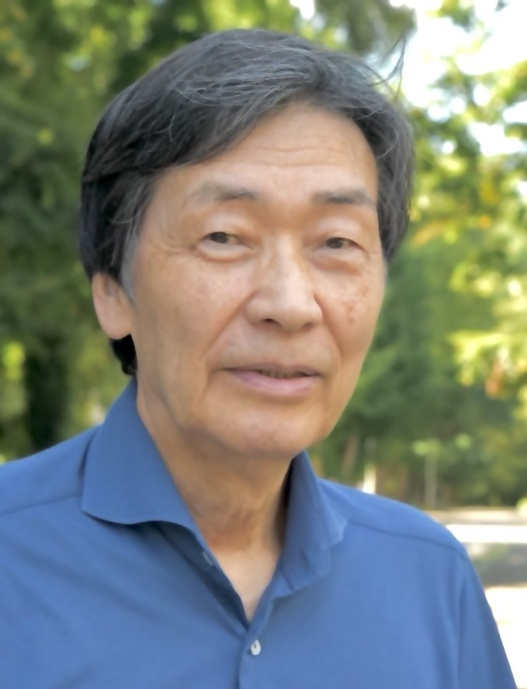
Tadahiko Mizuno
Session Speaker
Hydrogen absorption in metals, hydrogen storage alloys, excess heat generation, plasma electrolysis, nuclear reaction phenomena, and neutron generation.
Tadahiko Mizuno, born on May 7, 1945, is the Representative Director of Hydrogen Engineering Application & Development Co., Ltd. (HEAD), headquartered at the Three System Building in Sapporo, Japan. He can be contacted at 011-792-1626. Dr. Mizuno graduated from Hokkaido Muroran Sakae High School in 1964 and entered Hokkaido University the same year. He transferred to the Department of Applied Physics in 1965, completed his bachelor’s degree in 1968, his master’s degree in 1970, and his doctoral degree in 1973. He was awarded the Doctor of Engineering degree in 1976 for his dissertation titled “A Study on the Formation Process of Hydrides on the Titanium Surface by the d,n Reaction Method.” He is a member of the Atomic Energy Society of Japan and the International Society for Condensed Matter Nuclear Science. He began his career in 1973 as an Assistant in the Department of Nuclear Engineering at Hokkaido University. Over the years, he served in several departments within the university’s Faculty and Graduate School of Engineering, focusing on nuclear engineering, quantum energy engineering, and energy and environmental systems. He became Assistant Professor in 2007 and served until his resignation in 2009. In July 2009, he founded Hydrogen Engineering Application & Development Co., Ltd., and later established Mizuno Technology Co., Ltd. in 2019, which operated until June 2025. During his academic tenure, Dr. Mizuno taught various laboratory and engineering courses, including electron microscopy, material corrosion experiments, X-ray analysis, scanning electron microscopy, industrial mathematics, neutron measurement, pitting corrosion experiments, measurement engineering, and vacuum engineering. His research career spans radiochemical studies, hydrogen absorption in metals, hydrogen storage alloys, pitting corrosion, excess heat generation, plasma electrolysis, water splitting, hydrogen permeation in stainless steel, metal–gas thermal systems, and nuclear reaction phenomena. He demonstrated continuous excess heat production for more than three years (2013–2016) and made significant contributions to metallurgical processing for excess heat reactors. His recent collaborations include joint experiments with Murata Manufacturing (2023–2024) and neutron detection verification at Uppsala University in 2025. Since 2017, he has shared reproducible methods for generating excess heat with institutions in Japan, Norway, China, India, and France. His work has repeatedly demonstrated reproducibility, with confirmed neutron generation in 2025. He has received multiple awards from the Thermal and Electrical Energy Technology Foundation and the International Society for Condensed Matter Nuclear Science, including several Giuliano Preparata Medals. Dr. Mizuno holds numerous Japanese and international patents related to hydrogen gas generation, neutron generation devices, heating devices, and excess heat generation methods, with overseas patents in China, Australia, Russia, and Taiwan. He has authored 74 peer-reviewed papers covering hydrogen absorption, pitting corrosion, isotopic anomalies, plasma electrolysis, nuclear transmutation, neutron evolution, and various fields within applied physics, electrochemistry, and condensed matter nuclear science. Reference: Control of Excess Heat, Electromagnetic Waves, Electromotive Force, and Neutron Generation Using SUS Alloy When a reaction vessel composed of a SUS304 pipe and a nickel rod is evacuated and heated, excess heat, electromagnetic waves, neutrons, and an electromotive force are generated between the furnace body and the rod. The author has previously reported various anomalous phenomena in metal-hydrogen systems. Initially, it was hypothesized that the anomalous phenomena were typical nuclear reactions occurring during electrolysis in heavy water solution, and the sudden generation of neutrons and their spectrum were also reported. Furthermore, the isotopic changes of elements generated during the electrolysis experiment were analyzed, and it was reported that they differed from the natural distribution. During the initial experiments, anomalous excess heat (heat exceeding the input energy) was generated, but it was difficult to control. Subsequent research showed that excess heat (heat output minus input greater than zero) exceeding the heating power applied to the reactor was obtained and could also be controlled. A system with good reproducibility and controllability was achieved by using a SUS alloy in the fabricated reactor and heating it to 800°C to generate excess heat. Furthermore, electromotive force, electromagnetic waves, and neutron generation were confirmed from a reactor equipped with electrodes inside. The spectrum was not a single 2.45 MeV peak, as in nuclear fusion, but had a peak at 0.7 MeV, which is characteristic of nuclear fission reactions. This phenomenon cannot be explained by many of the physical phenomena reported in our papers, but it is estimated that this event can be explained if there is an internal nuclear reaction in the metal.