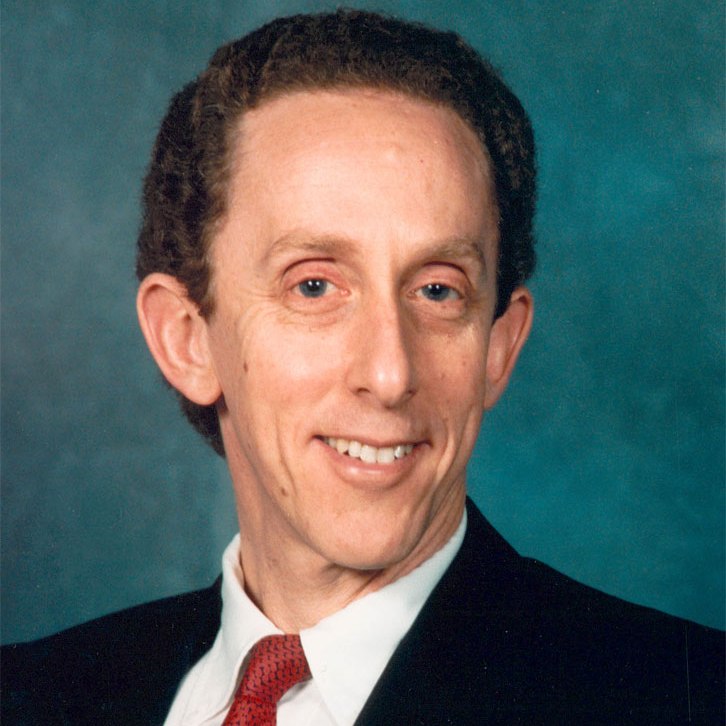
Dr. Thomas J. Buckholtz
Keynote Speaker
Dr. Thomas J. Buckholtz does research in (1) cosmology and elementary particle physics and (2) innovation, leadership, skills development, and thinking. His background for (1) includes a mathematics BS from Caltech, a physics PhD from Berkeley, and work as a physicist. His background for (2) includes catalyzing a grassroots innovation program throughout an energy utility and serving as a United States General Services Administration commissioner {including leading a $1-billion business unit and serving as co-chief information officer for the US federal government's Executive Branch}. His contributions to society span aspects of research and development, business, government, education, information technology and IT business practices, not-for-profit endeavors, startup enterprises, and the environment. He lives in Portola Valley, a town in California's Silicon Valley.
Gravitational and dark-matter concepts that can help explain cosmic data We discuss gravitational concepts and candidate specifications for dark matter that, together, can help explain known ratios of dark-matter effects to ordinary-matter effects and can help explain eras in the rate of expansion of the universe. The ratios pertain to galaxies and galaxy evolution, galaxy clusters, and densities of the universe. The candidate specifications for dark matter reuse, with variations, a set of known elementary particles. Regarding galaxy evolution and the rate of expansion of the universe, we deploy multipole-expansion methods that combine Newtonian gravity, aspects of motions of sub-objects of gravitationally interacting objects, and Lorentz invariance. One outgrowth from our work suggests relationships among some physics constants. Another outgrowth from our work suggests a basis for a candidate specification for quantum gravity cosmology and elementary particle physics, as well as innovation and leadership, with a focus on applying scientific thinking to organizational, governmental, and technological advancement.