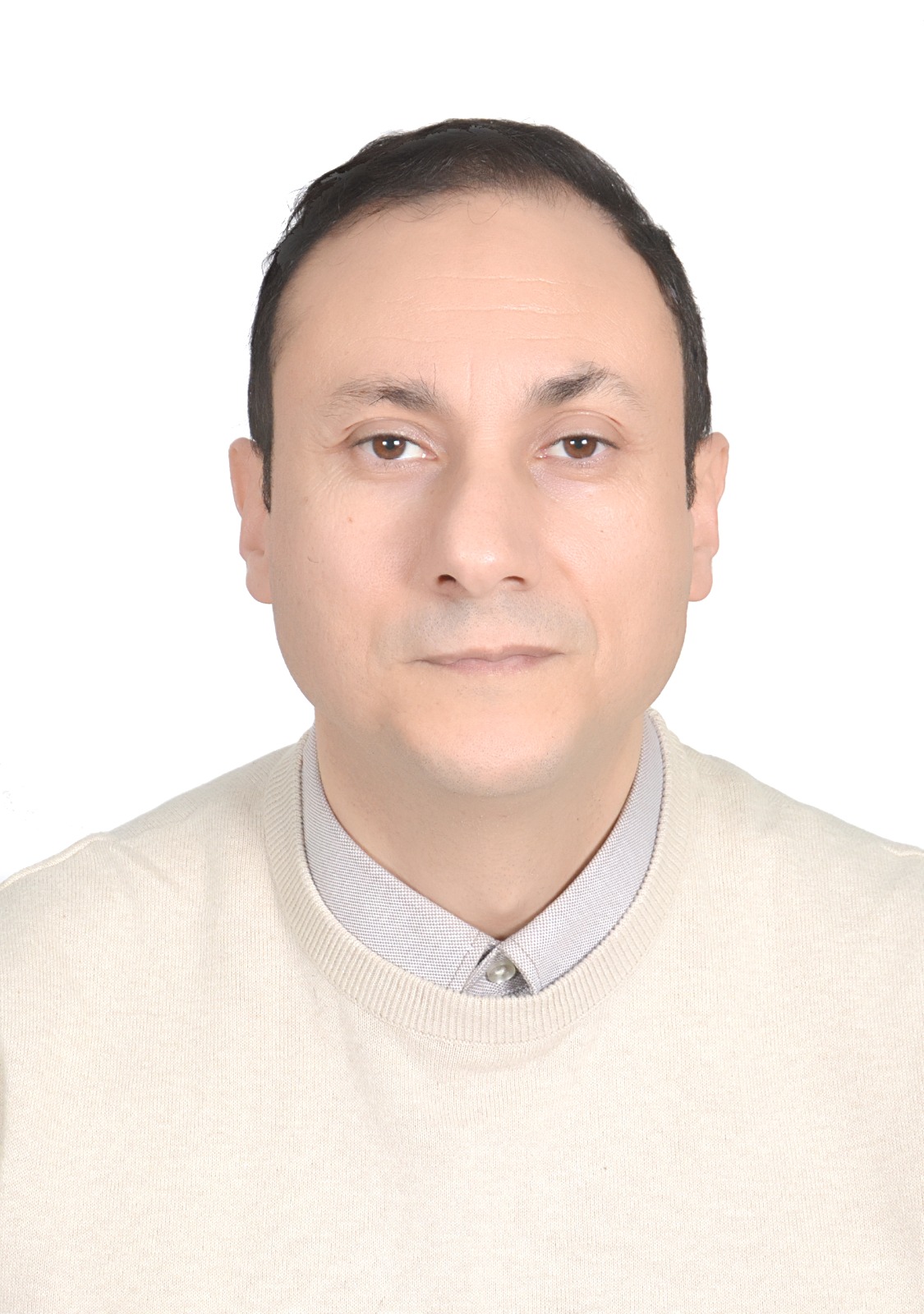
Driss Bennis
Session Speaker
Driss Bennis is a Professor of Mathematics at Mohammed V University in Rabat, Morocco, specializing in algebra with a focus on homological algebra and its applications, to which he has made significant contributions. Driss Bennis has supervised numerous Ph.D. theses covering topics ranging from abstract algebra to emerging areas such as topological data analysis and its applications in data science. He has also been actively involved in international research collaborations and has participated in major conferences worldwide, including plenary talks.In addition to his research activities, he plays a key role in pedagogical innovation and academic development. He is the Moroccan coordinator of the Erasmus+ project MathICs, which aims to modernize mathematics education through the integration of digital technologies. He has organized and contributed to numerous workshops and training sessions on the use of ICT in mathematics education across universities and institutions.
Topological Data Analysis and Its Applications:In recent years, the rapid growth of data across scientific and industrial domains has raised fundamental challenges in extracting meaningful and robust information from complex, high-dimensional datasets. Beyond classical statistical and machine learning approaches, there is an increasing need for methods capable of capturing the intrinsic geometric and structural properties of data. Topological Data Analysis (TDA) has emerged as a powerful framework addressing this need by leveraging tools from algebraic topology to study the “shape” of data. In particular, persistent homology provides a multiscale description of topological features such as connected components, holes, and voids, allowing for a stable and interpretable representation of complex structures. This talk will offer an accessible introduction to the main ideas underlying TDA, highlighting its mathematical foundations and emphasizing its role as a bridge between topology and data science. We will illustrate how these methods can be applied in various contexts.