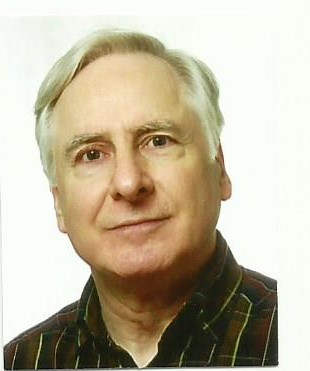
Friedhelm Manfred Joge
Session Speaker
My research focuses on the theoretical and empirical study of dark energy and its relationship to the age of the universe. I aim to develop a unified framework combining mathematical physics and observational data to derive fundamental laws, including a proposed equivalence between energy and time. Inspired by the data-driven approaches of Johannes Kepler and their theoretical foundations by Isaac Newton, my work integrates theory with astrophysical observations (e.g., from the Max Planck Institute for Radio Astronomy). I also explore connections to quantum and cosmological models, building on ideas by Thomas Görnitz. Overall, my goal is to contribute to a deeper understanding of dark energy, dark matter, and the fundamental laws of the universe.
He born in 1943, worked in a scientific laboratory after studying chemistry and mathematics textbooks at a young age and after studying chemical engineering. He then worked in development departments in the chemical and pharmaceutical industries. The focus of his work was in the field of biochemistry and macromolecular chemistry. His interest are the synopsis of various physical, chemical and biologycal knowledge as well as questions of origin and ethics in the field of tension between faith and science. In particular, he dealt with the concept of information. He is married, has a daughter and three Grandchildren. He also loves music and chess. Reference: Advances in Exploration of the Dark Universe (Dark Energy & Dark Matter) The rudiments of a dark energy theory are provides that appears to have been developed in two complementary ways. On the one hand, this theory is based on physics and mathematics and, on the other hand, it is developed on the basis of available data. This correspondends to the discovery of the laws of planetary motion in elliptical planetary orbits by JOHANNES KEPLER in the past. He developed his laws from a large dataset. Later it was theoretically substantiated more thoroughly by ISAAK NEWTON. The focus is on deriving a formula for the equivalence of energy and time or equivalence of dark energy and the age of the universe. This derivation provides new theoretical insights and applications in theoreticsl terms and leads to the discovery of a new law of nature. The theoretical result is confronted with the numerical value calculated from the available data from the MAX PLANCK Institute for Radio Astronomy. Excellent matching of numerical values of dark energy resulting in three independent paths makes the approach plausible. THOMAS GÖRNITZ [1] provides a theoretical basis for the equation of the equivalence of dark energy and the age of the universe. The empirical BALMER formula for the frequencies of the spectral lines in the arc spectrum of hydrogen was also theoretically justified by NIELS BOHR, who calculated the energy levels of the hydrogen atom and the fequencies of spectral lines. The derivation of a formula for calculation dark energy is described. Further formulas are deducted. The dark matter of the cosmos is calculated. A balance sheet is drawn up. Conclusions are drawn.