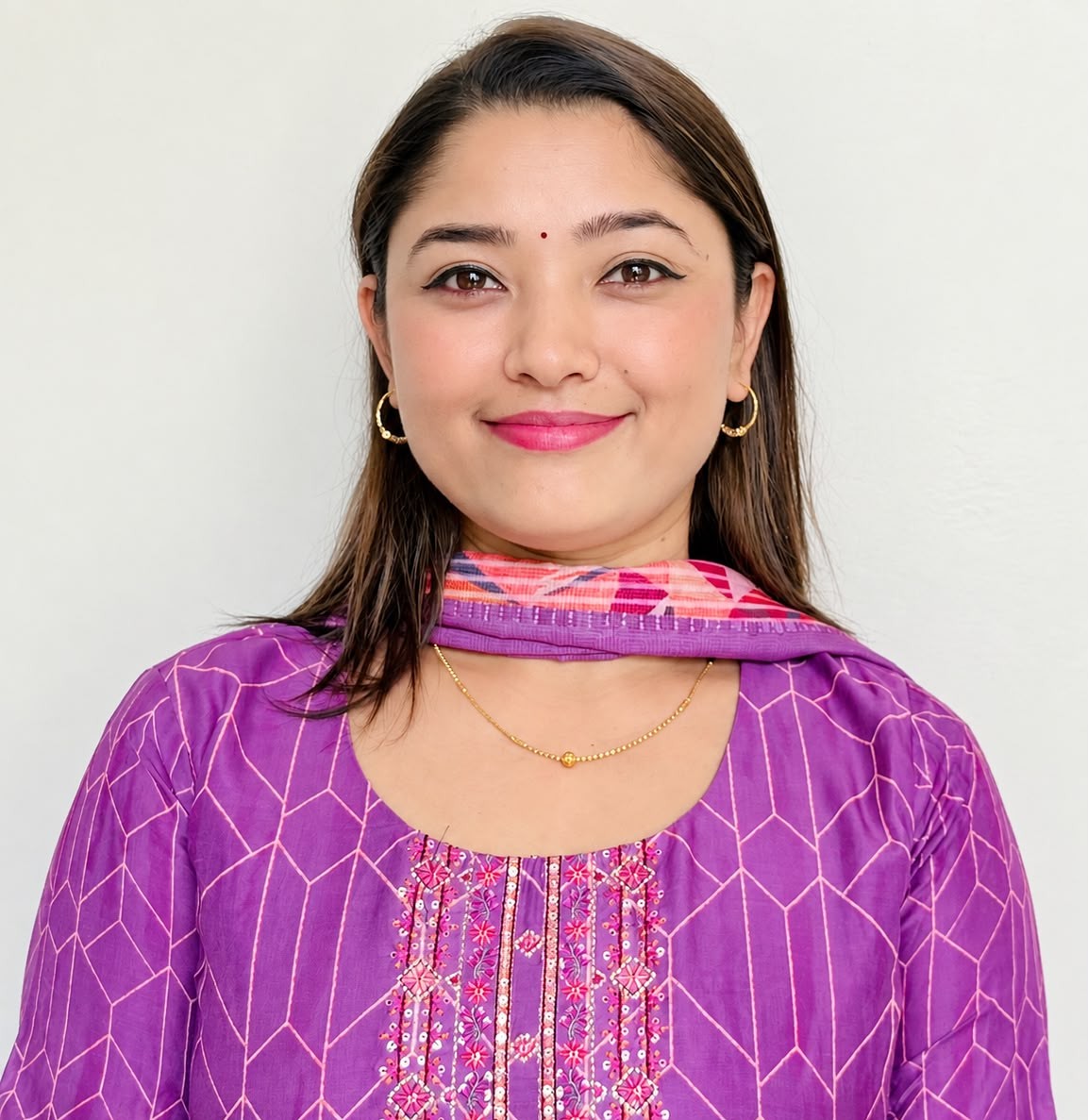
Preshna Chettri
Invited Speaker
Preshna Chettri is a full-time PhD Scholar in Nursing at the Faculty of Nursing, Sri Ramachandra Institute of Higher Education and Research, Chennai, India. She holds qualifications in General Nursing and Midwifery, BSc Nursing, MSc in Paediatric Nursing, and an MA in Psychology. Her research focuses on gamification, digital learning, and innovative teaching strategies in nursing education, with particular interest in infection prevention and control. Beyond academia, she writes articles on women's education, empowerment, health, and social development for newspapers, including Himalayan Darpan and Sikkim Express. Through her academic research and writing, she aims to contribute to women's empowerment, gender equity, and improved health education.
Beyond Education to Empowerment: Advancing Women’s Health Literacy, Decision-Making, and Social Equity in Underserved Communities
Background: Women's empowerment is frequently measured through educational attainment, employment, and economic participation. However, access to education does not automatically translate into autonomy, informed decision-making, or control over personal health and wellbeing.
Women in underserved communities may continue to encounter intersecting social, cultural, economic, and institutional barriers that restrict their ability to access information, exercise their rights, and make decisions about their lives. Addressing these inequalities requires an approach that positions education and health literacy as essential components of substantive empowerment.
Aim: This paper aims to examine how education and health literacy can strengthen women's agency, health-related decision-making, and participation in society, while identifying structural barriers that limit these outcomes in underserved communities in India.
Methods: A narrative review of relevant peer-reviewed literature and policy documents will examine the relationships between women's education, health literacy, healthcare access, decision-making autonomy, and gender equity. The review will synthesise evidence thematically, with particular attention to underserved populations and the influence of social and institutional inequalities. Findings will be interpreted in relation to gender-responsive education, accessible health information, and community-based empowerment strategies.
Discussion: The paper will examine the gap between educational access and the practical ability to exercise informed choice. It will consider how limited health literacy, gendered social expectations, financial dependence, restricted mobility, and barriers to healthcare access may constrain women's autonomy. It will also explore how culturally responsive health education, community engagement, accessible information, and supportive institutional policies can help women make informed decisions and participate more fully in decisions affecting their lives.
Implications: A multidimensional approach to women's empowerment should integrate education, health literacy, accessible healthcare, community participation, and gender-responsive public policy. Educational and health initiatives should be evaluated not only by participation or awareness but also by their contribution to informed decision-making, autonomy, and equitable access to opportunities.
Conclusion: Sustainable women's empowerment requires moving beyond access to education towards the conditions that enable women to apply knowledge, exercise agency, and influence decisions affecting their health and futures. Connecting education with health literacy and structural reform offers a practical framework for advancing gender equity and meaningful social impact.
Keywords: Women's Empowerment; Health Literacy; Gender Equity; Women's Health; Education; Social Impact