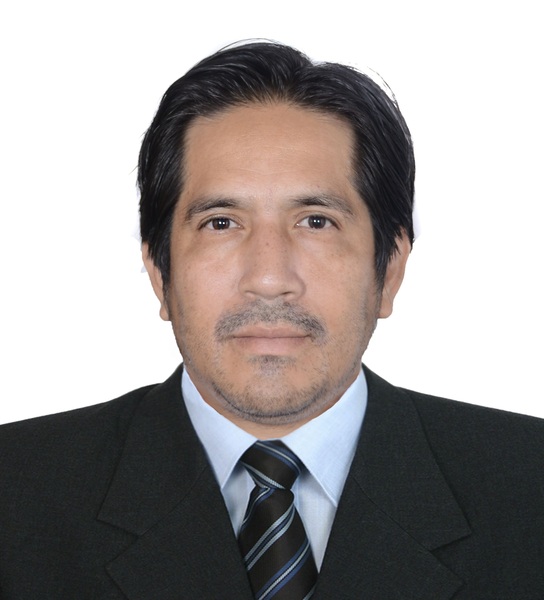
Dr. Dino Michael Quinteros
Session Speaker
Dr. Dino Michael Quinteros Navarro is a Peruvian Systems Engineer, Doctor in Systems Engineering and Informatics, Master in Information Technology Management, and MBA graduate with over 19 years of professional experience in project management, artificial intelligence, business intelligence, and monitoring and evaluation of social development projects. He currently serves as Systems Specialist for Monitoring and Evaluation at FONCODES–MIDIS, Peru, where he develops machine learning-based solutions, predictive analytics applications, business intelligence systems, and performance monitoring frameworks for social programs. Dr. Quinteros is certified as PMP® and PMI-ACP® and is recognized as a RENACYT Level V Researcher. His academic and research contributions include seven publications indexed in Scopus and Web of Science, along with the development of fifteen registered software products demonstrating applied technological innovation. In addition to his professional career, he is an active university professor and thesis advisor at leading Peruvian institutions, including the National University of San Marcos, Universidad Tecnológica del Perú, Universidad César Vallejo, and other higher education institutions. He teaches courses in Artificial Intelligence, Machine Learning, Big Data, Business Intelligence, Project Management, Software Quality, Python Programming, and Research Methodology. Throughout his academic career, he has supervised and guided more than 27 undergraduate theses, contributing significantly to research development and professional training in information technology and engineering. His work focuses on the application of data-driven technologies and intelligent systems to improve decision-making, project effectiveness, and social impact.
BioSmart Timber: Intelligent Architecture Based on Artificial Intelligence for the Adaptive Prediction of Wood Deterioration The growing need for sustainable and intelligent infrastructure has driven the development of new technologies applied to eco-friendly construction materials such as wood. In this context, this research proposes “BioSmart Timber,” an artificial intelligence-based smart architecture designed for the adaptive prediction of wood deterioration through multimodal analysis. The proposed framework integrates machine learning models, computer vision, and spectral analysis to identify patterns associated with moisture, deformation, color changes, and structural degradation in wood materials. The research is built upon two previous publications by the author related to artificial intelligence applications in wood analysis: Learning Model Based on Artificial Intelligence to Determine Wood Quality: A Systematic Review and Predicting Wood Color Origin Using Random Forest and Spectroscopy: A Machine Learning Approach for Industrial and Forestry Applications. These studies established scientific foundations for intelligent wood quality classification and predictive analysis using spectroscopy and machine learning techniques. The study proposes the creation of an intelligent environment capable of simulating the structural behavior of wood based on environmental variables and physical characteristics, enabling the anticipation of deterioration risks before critical failures occur. To achieve this, predictive models based on Random Forest algorithms and advanced data analysis techniques are applied to spectroscopic and visual information. Furthermore, an interactive digital platform is proposed for predictive monitoring and intelligent assessment of wooden structures in sustainable construction scenarios. This research aims to transform wood from a passive material into a bio-intelligent material capable of self-assessing its structural condition through adaptive artificial intelligence. The proposal contributes to the advancement of solutions aligned with Industry 5.0, smart buildings, and environmental sustainability, offering an innovative alternative for the predictive management of materials in intelligent architecture and infrastructure.