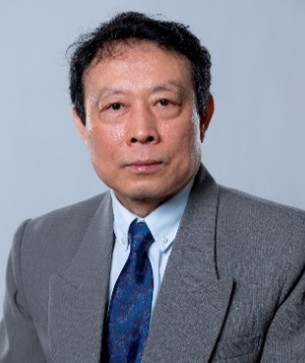
Wilson Wang
Session Speaker
Wilson Wang received his Ph.D. in Mechatronics Engineering from the University of Waterloo (Waterloo, Ontario, Canada) in 2002. From 2002 to 2004, he was employed as a senior scientist at Mechworks Systems Inc. He joined Lakehead University in 2004, and now he is a professor and director in Mechatronics Engineering. His research interests include mechatronics, smart sensors, artificial intelligence, machine learning, diagnostics and prognostics of engineering systems, intelligent control, and signal processing. He is a Lakehead Research Chair. He has serves to several journal boards (e.g., IEEE Transaction on Fuzzy Systems, IEEE/ASME Transactions on Mechatronics, IEEE Transactions on Instrumentation and Measurement), and organizations, for example, the Chair of Expert Committee for CFI (Canada Foundation for Innovation).
AI and Data Analysis for Machine Health Condition Monitoring Real-time machine condition monitoring systems are critically needed in industries to recognize machine defects as early as possible, so as to improve production quality, operation efficiency and safety, but to reduce maintenance costs. An AI-based monitoring system consists of modules of data acquisition, data analysis, fault diagnostics and prognostics. In real-world industrial monitoring applications, smart sensor-based data acquisition systems should be used to collect signals. Data analysis is a signal processing process to extract representative features from measurement for system analysis and fault detection in machine systems such as gears, bearings and motors. The related data analysis techniques should be robust to noise and sensitive to health associated features. Machine fault diagnosis is a procedure to classify representative features/patterns into different categories corresponding to different machine health states. AI-based tools such as neural fuzzy schemes and clustering methods have been used in diagnostic operations. Prognosis is a process to predict the remaining useful life of damaged equipment for predictive maintenance. Appropriate machine learning algorithms can be used to improve decision-making convergence and adaptive capability to accommodate different machinery conditions. This speech will discuss the research and development in these areas, the related challenges, and possible solutions. Strategies will be discussed on how to implement the related technologies for machine fault diagnosis and prognosis in real-world industrial applications.