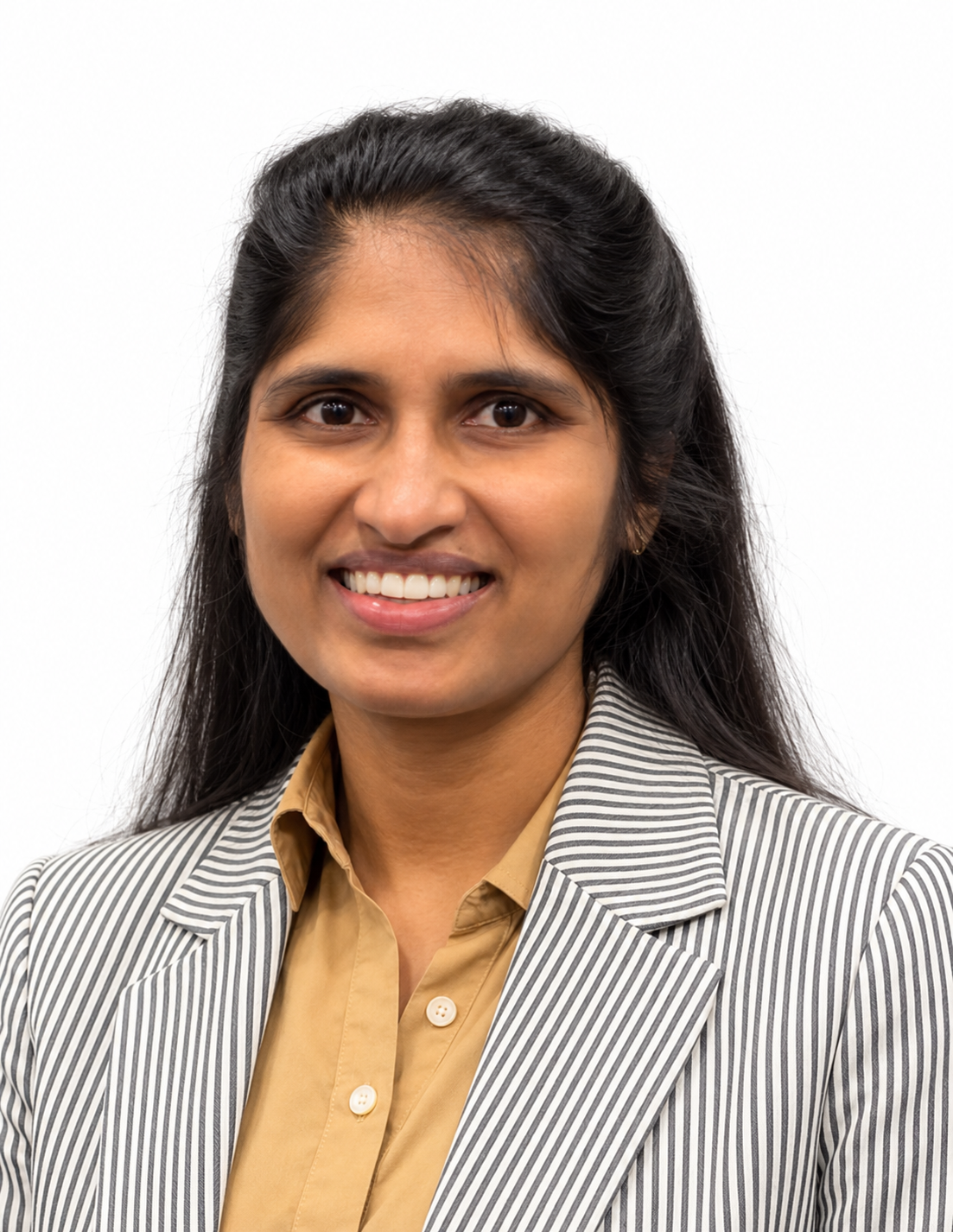
Lakshmi Prasanna Kachireddy
Keynote Speaker
Lakshmi Prasanna Kachireddy is a senior software professional in the US, working across applied machine learning, data engineering, and intelligent systems. Her experience includes designing scalable applications and data pipelines, developing forecasting and predictive analytics, and supporting reliable production services. Her research contributions include examining how generative AI interprets uncertainty in risk-sensitive forecasts. Her work integrates predictive modeling, language models, and dependable software design, emphasizing the transformation of emerging AI methods into practical systems.
Compositional Intelligence for Decision Science: Orchestrating Predictive ML, LLM Agents, and Intelligent Software Systems
Abstract: The next leap in artificial intelligence may not come from a single model becoming larger, but from systems that coordinate models with different strengths. Traditional machine learning excels at specialized tasks such as classification, forecasting, anomaly detection, and ranking. Large language models bring flexible interaction, language-based synthesis, and the ability to coordinate tools. We see the challenge as combining these capabilities into systems that can address complex, multi-stage problems.
We explore compositional intelligence: an approach in which specialized predictive models, LLM agents, data platforms, and human expertise operate as parts of a larger computational system. For example, machine learning can detect a pattern, an LLM can interpret the task and select the next analysis, software tools can retrieve or transform information, and human experts can guide actions where judgment matters. We focus on how these components are organized, how context and state move between them, and how the system responds when a task changes.
We examine the challenges of coordinating AI systems, including orchestration, memory, interoperability, latency, cost, and control. We also consider how to decide which capabilities belong in statistical models, which benefit from language models, and how to make systems modular enough to evolve as models and data change.
We argue that the future of intelligent software will depend on system design as much as model capability—and on creating architectures in which specialized intelligence can work together.