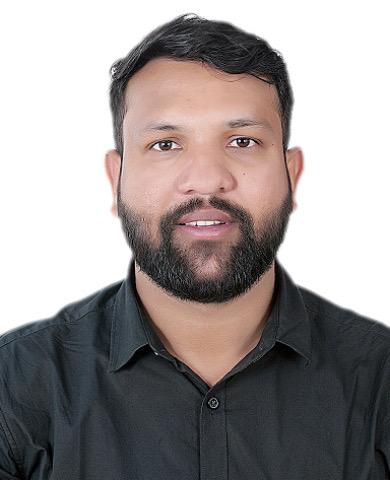
Dr. Nishant Kumar Singh
Session Speaker
Born in Ballia, Uttar Pradesh, India, Dr. Nishant Kumar Singh is an Assistant Professor in the Department of Biotechnology at the School of Applied and Life Sciences (SALS), Uttaranchal University, Dehradun, India. He earned his Master's degree in Microbiology from Dr. Shakuntala Mishra National Rehabilitation University, Lucknow, and his Ph.D. in Biotechnology from Amity University Uttar Pradesh, Lucknow Campus, in collaboration with Dr. Ram Manohar Lohia Institute of Medical Sciences (RMLIMS), Lucknow. His research focuses on cancer biology, molecular oncology, oral microbiome, bioinformatics, precision medicine, and computational drug discovery. He has published several research papers, reviews, and book chapters in reputed international journals and is the co-inventor of a Government of India–granted patent for a Non-Invasive Oral Cancer Test Device. Dr. Singh has received the Best Oral Presentation Award and Travel Grant Award at the 4th International Sustainability Conference (HSFEA-2023). He has received advanced training in molecular biology, microbiome analysis, artificial intelligence, and bioinformatics, with expertise in RNA extraction, qRT-PCR, differential gene expression
analysis, molecular docking, and translational cancer research. His current research integrates wet-laboratory and in silico approaches to identify novel biomarkers and therapeutic targets for oral and head-and-neck cancers, contributing to the advancement of precision oncology and personalized medicine. In addition to his research, Dr. Singh actively mentors’ students, serving as a Co-Guide for a Ph.D. scholar in the Department of Biotechnology, Uttaranchal University, and guiding B.Sc. Biotechnology students in independent research projects encompassing cancer bioinformatics, molecular docking,
and oral microbiome analysis.
Environmental Hazards and Chemoresistance in OTSCC: Molecular Docking and Prediction of Paclitaxel and Imatinib as BCL2 and EGFR Inhibitors
Abstract: Oral tongue squamous cell carcinoma (OTSCC) is a common type of oral cancer influenced by genetic, epigenetic, and environmental factors like exposure to environmental toxins. These environmental toxins can decrease the effectiveness of established chemotherapy drugs, such as Irinotecan, used in OTSCC treatment. Bioinformatics, drug discovery, and machine learning techniques were employed to investigate the impact of Irinotecan on OTSCC patients by identifying targets and signaling pathways, including those that positively influence protein phosphorylation, protein tyrosine kinase activity, the PI3KAkt (Phosphatidylinositol 3-kinase- Protein Kinase B) signaling system, cancer pathways, focal adhesion, and the HIF-1 (Hypoxia-Inducible Factor 1) signaling pathway. Later, the protein–protein interactions (PPIs) network, along with twelve cytoHubba approaches to finding the most interacting molecule, was employed to find the important proteins BCL2 and EGFR. Drugs related to BCL2 and EGFR were extracted from the DGIdb database for further molecular docking. Molecular docking revealed that Docetaxel, Paclitaxel, Imatinib, Ponatinib, Ibrutinib, Sorafenib, and Etoposide showed more binding affinity than Irinotecan (i.e., −9.8, −9.6). Of these, Paclitaxel (−10.3, −11.4) and Imatinib (−9.9, −10.4) are common in targeting BCL2 and EGFR. Using these identified candidate genes and pathways, we may be able to uncover new therapeutic targets for the treatment of OTSCC. Furthermore, molecular dynamics (MD) simulations were performed for selected ligand–receptor complexes, revealing stable binding interactions and favorable energetic profiles that supported the docking results and strengthened the reliability of the proposed drug repurposing strategy.
Keywords: OTSCC; EGFR; BCL-2; environmental pollutants; chemotherapy; irinotecan