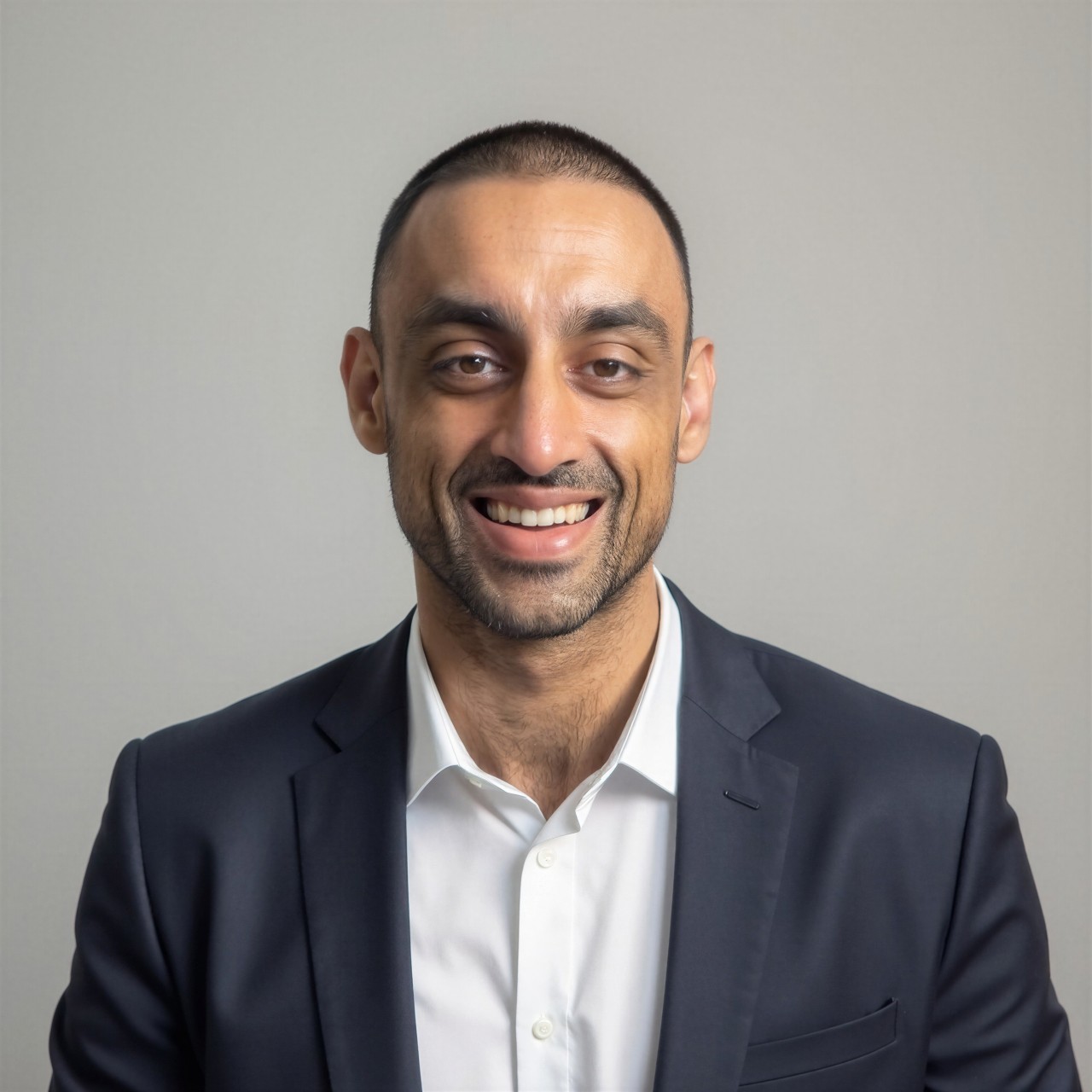
Vikram Singh Mangat
Invited Speaker
Vikram Singh Mangat is an AI researcher, software engineer, and founder of Singularity Language. He is the architect behind LayerZero, an agentic computing framework built to help AI systems communicate, collaborate, and prove origin across multi-cloud environments.
His research focuses on multi-agent AI, cross-cloud interoperability, provenance-backed licensing, and human-aligned governance. In this talk, Vikram explores why the next generation of AI systems will require a new business model—one built not around restricting access before use, but proving origin and enabling fair licensing after intelligent systems create value.
Beyond APIs: Proof of Origin as the New Business Model for Multi-Agent AI
Abstract: The API economy was designed for a software world where access was the main event. A
developer called an endpoint, received a response, and paid for usage. That model worked
when software interactions were relatively bounded, predictable, and human-initiated.
Multi-agent AI changes this assumption. A single user request can now trigger chains of model
calls, tool invocations, data retrievals, module instantiations, agent-to-agent handoffs, and
cross-system workflows. In this environment, value is no longer created only at the point of
access. It is created through downstream use.
This creates a structural challenge for the current AI business model. Infrastructure costs are
rising, hardware efficiency improvements are no longer reducing costs at the same historic
pace, and autonomous agents can generate large volumes of cross-system activity without the
same economic restraint a human operator would apply. Human approval can reduce runaway
spending, but too much human oversight becomes a bottleneck to true self-supervised
automation. At the same time, AI systems now operate across more available data points than
ever before. Sourcing the right data at the right time can make applications more powerful, but
searching, filtering, ranking, verifying, and delivering relevant information across expanding data
environments also creates growing compute and energy costs.
Our research indicates that proof of origin should become a foundational business model for
multi-agent AI. Proof-of-origin systems can function like an algorithmic digital watermark: a
cryptographic record that helps identify where an AI module, dataset, behavior, workflow, or
output originated and how it was used after implementation. Unlike traditional API access
controls, which mainly determine who can enter a system, proof-of-origin infrastructure can help
determine what happened after access was granted.
This shift could accelerate innovation rather than restrict it. Instead of limiting powerful AI
systems only to users who can afford high upfront access costs, a proof-of-origin model could
encourage broader adoption by allowing modules, models, datasets, and agentic workflows to
be used more freely while preserving enforceable licensing records after implementation.
Originators could allow wider experimentation, knowing that downstream commercial use,
reuse, or monetization could still be traced, attributed, and licensed.
Using Singularity Language as a practical research context, this talk explores how
provenance-aware interoperability can help the AI industry move from an access-first model to a
use-aware model. The broader goal is not to promote a single platform, but to advocate for an
industry transition: if autonomous agents are going to collaborate across systems, the business
model must evolve from charging only for access to proving origin, measuring downstream use,
and enforcing licensing after value is created.