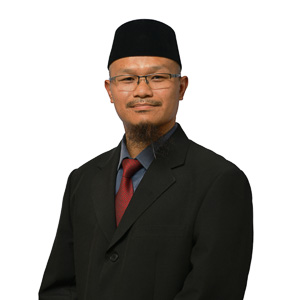
Mohd Herwan Sulaiman
Session Speaker
Professor Dr. Mohd Herwan Sulaiman is a Professor and Deputy Dean of Research and Postgraduate Studies at the Faculty of Electrical & Electronics Engineering Technology, Universiti Malaysia Pahang Al-Sultan Abdullah (UMPSA), Malaysia. He received his B.Eng. (Hons.) in Electrical-Electronics (2002), M.Eng. in Electrical-Power (2007), and Ph.D. in Electrical Engineering (2012) from Universiti Teknologi Malaysia (UTM). Prior to joining academia, he served as a Design Engineer at Panasonic AVC Networks Malaysia before pursuing a distinguished academic career at Universiti Malaysia Perlis (UniMAP) and subsequently UMPSA, where he has held positions including Lecturer, Senior Lecturer, Head of Program, Associate Professor, and Professor.
Professor Herwan's research focuses on power system optimization, artificial intelligence, swarm intelligence, metaheuristic optimization, machine learning, AIoT, renewable energy systems, and intelligent energy management. He is internationally recognized as one of the principal inventors of the Barnacles Mating Optimizer (BMO) and the Evolutionary Mating Algorithm (EMA), two innovative nature-inspired optimization algorithms that have significantly advanced evolutionary computation and intelligent optimization. He has secured research grants exceeding RM 2 million, supervised numerous Ph.D. and Master's graduates, and delivered keynote speeches at major international conferences across Asia.
An accomplished researcher, Professor Herwan has authored and co-authored more than 250 peer-reviewed journal articles, conference papers, books, and book chapters in the fields of power systems, artificial intelligence, renewable energy, deep learning, smart buildings, electric vehicles, and intelligent optimization. He serves as Associate Editor for Franklin Open (Elsevier) and Energy Exploration & Exploitation (SAGE), as well as holding editorial leadership roles in several international journals. His outstanding research achievements have earned him recognition among Stanford University's World's Top 2% Scientists for 2022, 2023, 2024, and 2025. He is also a Senior Member of IEEE and continues to contribute extensively to global research through editorial service, international collaborations, scientific publishing, and the development of advanced AI-driven solutions for sustainable energy systems
Abstract Title
Adaptive Cognitive-Inspired Intelligence for AIoT-Enabled Smart Energy Systems
Abstract
Artificial intelligence is playing an increasingly important role in smart buildings and intelligent energy systems, where predictive models must continuously adapt to changing operating conditions while maintaining computational efficiency. Traditional optimization techniques often require significant computational resources, making them less suitable for real-time deployment on resource-constrained AIoT platforms. This presentation introduces recent advances in adaptive cognitive-inspired optimization, focusing on the development of the Adaptive Cognitive Perturbation Search (Adaptive CPS) algorithm. The proposed method enhances the original Cognitive Perturbation Search framework through adaptive search strategies that reduce computational complexity while preserving high prediction accuracy. Its effectiveness is demonstrated through practical applications in chiller energy consumption prediction and wind power generation forecasting, achieving faster convergence and competitive predictive performance compared with conventional optimization methods.
The presentation further introduces an AIoT-enabled framework for intelligent building energy demand forecasting that integrates IoT sensing infrastructure, cloud-based data management, machine learning models, and adaptive optimization techniques. This framework enables continuous monitoring, intelligent forecasting, and real-time decision support for efficient energy management in smart campus environments. Practical deployment challenges, including scalability, computational efficiency, and real-world implementation, are also discussed. Finally, future research directions toward autonomous AIoT ecosystems incorporating edge intelligence, cloud computing, adaptive optimization, and digital infrastructure are presented, providing valuable insights for researchers and practitioners developing next-generation intelligent and sustainable energy systems