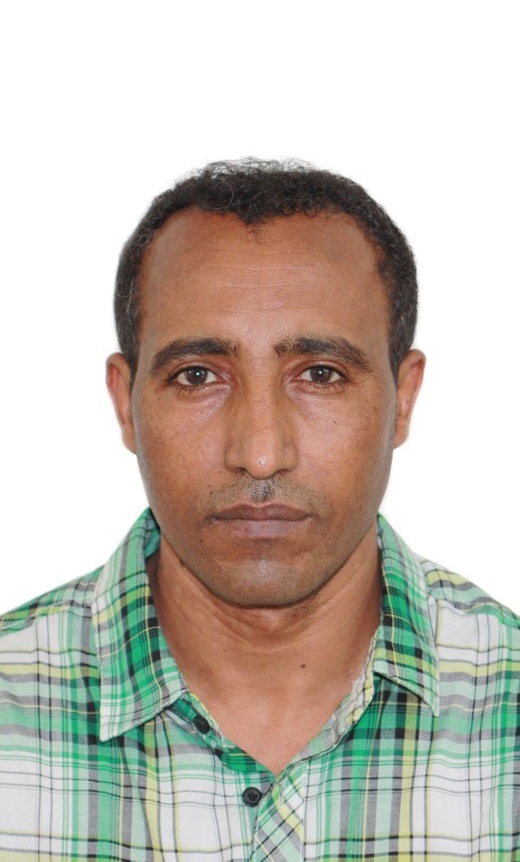
Dr. Gebeyehu Belay Gebremeskel
Session Speaker
Dr. Gebeyehu Belay Gebremeskel is an Associate Professor and principal researcher at Bahir Dar University, Institute of Technology, Computing Faculty in Ethiopia, where he currently serves as the Department Head of Artificial Intelligence and Data Science. He holds a Ph.D. in Computer Science and Software Engineering from Chongqing University, China (2013), an M.Sc. in Advanced Information Technology from London South Bank University, United Kingdom (2001), and a B.Sc. from Alemaya University, Ethiopia (1991). He completed a postdoctoral fellowship at Chongqing University (2014-2016), focusing on machine learning, big data analytics, and intelligent agent technologies. His research expertise spans artificial intelligence, machine learning, data mining, intelligent agent systems, big data analytics, and business intelligence, with applications in autonomous systems, UAV navigation, healthcare informatics, and smart agriculture. He has supervised numerous Ph.D. and M.Sc. students, published extensively in peer-reviewed journals and conferences, and serves as a reviewer and editorial board member for several international journals. He has received multiple awards, including the Academic Without Borders (AWB) fellowship from Canada (2023-2024) and research awards from Bahir Dar University. He has also organized international conferences and contributed to curriculum development at both undergraduate and postgraduate levels
Abstract Title: Resilient Intelligence-Driven Autonomous Navigation Framework for UAVs in GNSS-Denied and Electronically Contested Environments
Abstract:
Unmanned Aerial Vehicles (UAVs) operating in GNSS-denied and electronically contested environments face significant challenges in maintaining reliable navigation, situational awareness, and mission continuity. This paper proposes a resilient, intelligence-driven autonomous navigation framework that integrates pre-mission military intelligence data with real-time multi-sensor fusion. The system employs a nine-state Kalman filtering approach to fuse data from inertial, LiDAR, ultrasonic, and environmental sensors, enhanced by a context-aware sensor-weighting mechanism and statistical outlier rejection based on Mahalanobis distance. A rule-based decision module supports adaptive mission execution, target prioritization, and fault-tolerant return-to-home (RTH) operations. The proposed framework is evaluated in a MATLAB-based simulation environment that incorporates terrain complexity, stochastic sensor noise, and electronic warfare (EW) effects, such as jamming and spoofing. Comparative analysis against baseline methods demonstrates improved robustness, achieving reduced navigation error, enhanced sensor reliability, and sustained mission performance under adversarial conditions. The results highlight the effectiveness of integrating intelligence priors with adaptive estimation for GNSS-independent UAV autonomy.
Keywords: Autonomous UAV, GNSS-independent navigation, sensor fusion, mission resilience, Intelligence data