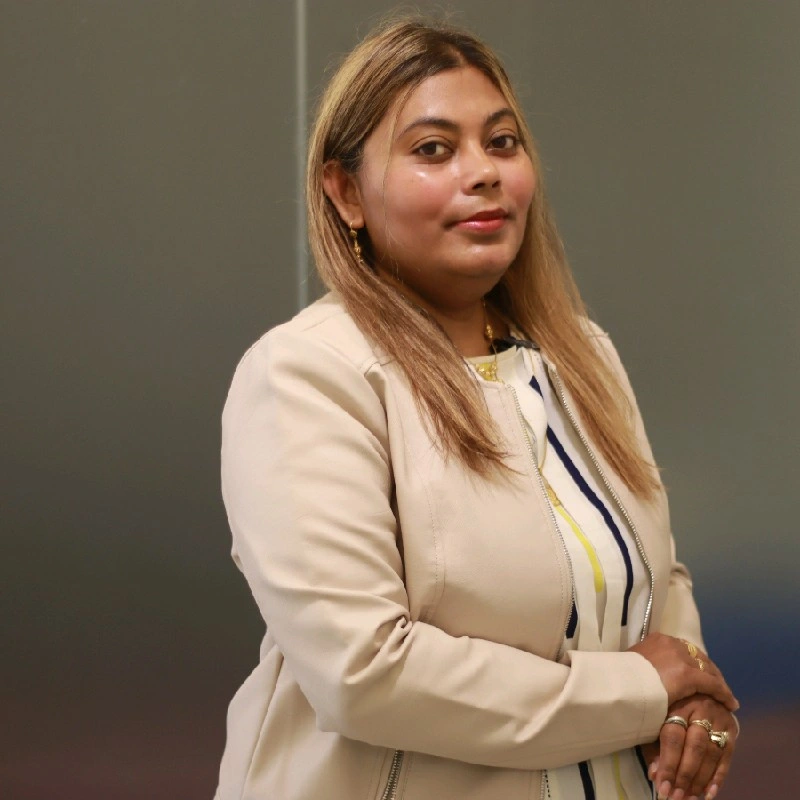
Dr. Khaleda Adib Binte Abdullah
Oral/Contributed Speaker
Khaleda Adib Binte Abdullah is a Clinical Research and Public Health Specialist with advanced training in medicine, epidemiology, and medical office administration. She brings a unique blend of clinical insight, research expertise, and workflow optimization to healthcare and mission‑driven environments. Khaleda holds an MBBS, MPH, and a Medical Office Administration diploma, and is completing graduate studies in Clinical Research at Harvard Medical School. Her work spans risk‑based quality management, emergency response, scientific writing, and clinic workflow design, with a strong focus on clarity, compassion, and operational excellence. Based in Toronto, she is actively pursuing roles in clinical research, MOA practice, and short‑term global health missions, where she aims to contribute to high‑impact, patient‑centered initiatives.
Diphtheria Outbreak in Rohingya Crisis due to Immunization Gap: A Retrospective Cohort Study.
Introduction: Diphtheria is a vaccine-preventable disease that can escalate rapidly without timely immunization. After the 2017 Rohingya migration to Cox’s Bazar, Bangladesh, a diphtheria outbreak struck the refugee camp. This study assesses mortality rates among children who received treatment at the MSF Balukhali facility during the outbreak, even when given oxygen support.
Methods: The study included 1,032 children aged 2–10 years with fever, cough, and difficulty swallowing. According to WHO guidelines, the doctors suspected diphtheria after ruling out upper respiratory tract infections identified in triage (October–November 2017). Detected cases were treated in accordance with WHO/MSF protocols, along with immediate preventive measures. We calculated mortality and oxygen requirements and performed logistic regression to assess the association between oxygen use and death.
Results: Among the 1,032 children assessed, those requiring oxygen therapy had a higher case fatality rate (CFR) of 9.5% (95% CI 7.7–11.3%) than those who did not. Of all affected children, 635 (61.5%; 95% CI, 58.5–64.5%) required oxygen for 5 or more days. Notably, none had received the diphtheria vaccine. Oxygen requirement was strongly associated with increased odds of death (OR 3.06; 95% CI 1.81–5.18; p < 0.00003).
Conclusion: Our results showed that children who needed oxygen support due to severe disease had a significantly higher mortality rate. Therefore, these findings pointed to the importance of cross-border vaccination, enhanced surveillance, and early detection. Symptom-based diagnosis and laboratory limitations indicated the need for health facilities during such outbreaks.
Keywords: Diphtheria, Rohingya refugees, Immunization gap, Humanitarian crisis.