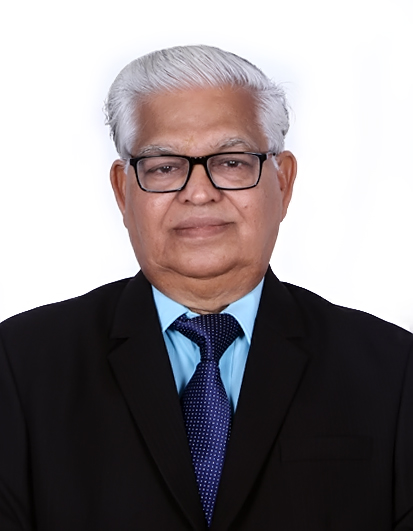
M V Raghavendra Rao
Keynote Speaker
Dr. Rao is an eminent Medical Microbiologist, academician, researcher, and administrator with nearly 50 years of teaching and research experience. He has held senior academic positions in India and internationally, including China, Libya, the Philippines, the Caribbean, Africa, and the USA. He has published 504 research papers, authored 15 books and 6 book chapters, and holds 3 patents. He has guided PhD and MPhil scholars, delivered numerous international keynote lectures, and served on the editorial boards of several national and international journals. He has received prestigious Lifetime Achievement, Distinguished Scientist, Research Excellence, and other international awards, and is associated with renowned organizations including the Royal College of Physicians of Edinburgh, American Society for Microbiology, World Society of Virology, World Academy of Medical Sciences, and TWAS.
New transformations to boost Global Health through Innovation in Disease Surveillance
Technology and medicine have gone hand in hand for many years. Consistent advances in pharmaceuticals and the medical field have saved millions of lives and improved many others. Medical advances that significantly improve diagnosis, treatment, or prevention of disease are often called ‘breakthroughs.
Cross disciplinary science is the combination of different scientific disciplines to handle some of the world’s most significant challenges. The role of clinicians will continue to evolve into a broader team that engages with a wide range of disciplines and plays leading roles in the healthcare of the future. Interdisciplinary promotes innovation by mixing diverse knowledge and perspectives.
By 2050, medical education is projected to undergo a radical transformation, moving away from traditional lecture-based learning toward a highly specialized, AI-integrated, and simulation-driven model. Medical education in India and throughout the world has undergone significant changes due to rapid advances in medical technology. Modern medicine has challenged the traditional method of clinical skills teaching, training, and learning. “The education of the younger generation has shifted from bookish learning to skill learning”. The ongoing skill and simulation center project aims to provide teaching, training, and learning in various clinical procedures for both medical students and clinicians.
ARTIFICIAL INTELLIGENCE (AI) detects diseases early and quickly confirms an accurate diagnosis. In breast cancer care, using AI enables the review of mammograms to be 30 times faster with 99% accuracy, reducing unnecessary biopsies. AI is also being applied to oversee early-stage heart disease. AI helps clinicians to create more comprehensive treatment programs.
Digital therapeutics (DTx) is one such category of digital health solutions that provides evidence-based software-driven therapeutic interventions for the prevention and management of a medical disorder or disease.
“Telemedicine” literally translates to ‘healing at a distance’. Telemedicine is considered to be the remote diagnosis and treatment of patients by means of telecommunications technology, thereby providing substantial healthcare to low-income regions. Telemedicine also helps family physicians by giving them easy access to speciality doctors and helping them in the close monitoring of patients.
Bioengineering is the application of engineering life sciences and solves problems in biology, Medicine, designing equipment and devices for body parts, such as artificial internal organs and replacements. They involve modifying cells, genes, and tissues to repair or replace damaged or diseased cells or tissues in the body.
Translational Medicine includes ---Drug delivery, Drug discovery, Tissue engineering, Synthetic biology, Biosensors, Stem cell therapies, Gene therapies, Immunotherapies, Medical Devices, Regenerative medicine, Nanobiology, Computational modelling, and Bioinformatics. Biotechnology is the application of scientific techniques to modify and improve plants, animals, and microorganisms to enhance their value.
Genetic engineering (also called genetic modification) is a process that uses laboratory-based technologies to alter the DNA makeup of an organism. Genetic engineering has been used in medicine to mass-produce insulin, human growth hormones, monoclonal antibodies, vaccines, and many other drugs. Biomedical engineering is used to prevent, diagnose, cure, and treat various diseases and disorders.
Biomedical Robotics is also known as mobile robotics. Robotic surgery, nowadays, is gaining its importance in the surgical process that is operated and controlled by computer programming methods. The advancing methods in the upcoming generation are Bio-robotics, Neuro-robotics, Surgical Robotics, and Surgical Planning.
mRNA technology has high effectiveness and low production costs. mRNA vaccines offer an alternative to the traditional vaccine. The success of the COVID-19 mRNA vaccines has greatly boosted the development of other mRNA vaccines for cancers and the Zika virus. mRNA technology allows the development of all kinds of treatments. -
Neurotechnology is used in brain imaging, stimulating the brain and nervous system to influence brain activity. It can be used to cure brain diseases like Alzheimer’s and Parkinson’s.
3D printing is the hottest technology on the market. 3D printers can be used to create implants and even joints to be used during surgery. It was able to regenerate skin cells for burn victims.
Precision medicine is useful in oncology, detecting rare genetic diseases, and helps in treating infections.
Clustered Regularly Interspaced Short Palindromic Repeats (CRISPR) is the most advanced gene-editing technology. CRISPR helps in correcting genetic defects and treating and preventing the spread of diseases. Cystic fibrosis (CF) is a genetically inherited rare disorder that affects the functioning of the respiratory and digestive systems. • CRISPR can be used to correct these mutations. • CRISPR can be used in treating sickle cell disease.
Medical advances by 2050 -Specialist surgeons will use remote robots to operate on patients on different continents • Babies will have their DNA sequenced before they are even born. • Patients will be able to generate new blood inside their bodies without the need for a blood donor. Scientists create blood vessels, synthetic ovaries, and even a pancreas. These artificial organs then grow within the patient’s body to replace the original faulty one.