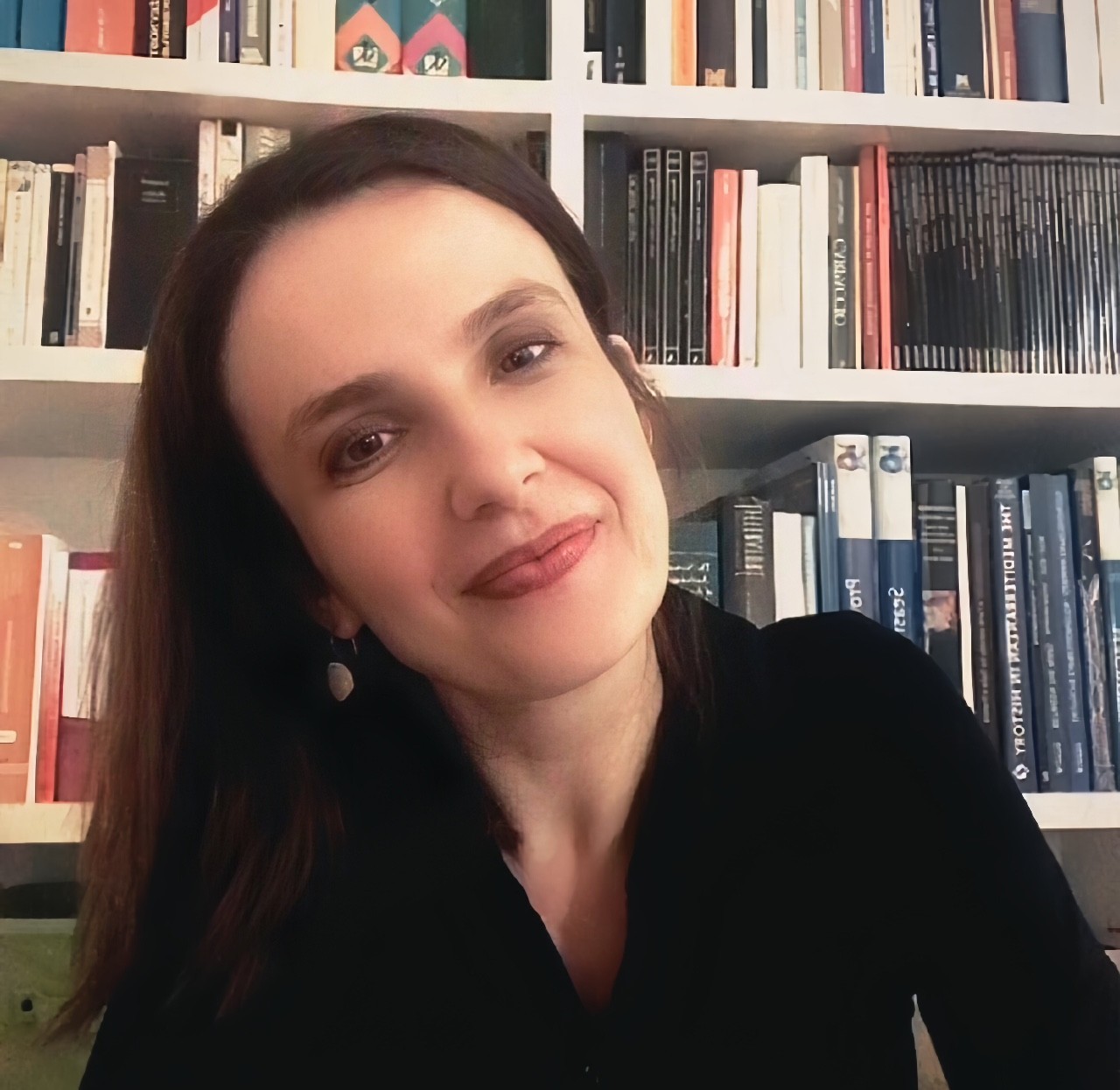
Dr. Višnja Bandalo
Session Speaker
Dr. Višnja Bandalo, PhD is a Researcher, Editor-in-Chief of the Journal of Neurology & Neurophysiology (ISSN 2155-9562; IOMC), and Research Associate of the University of Zagreb since 2013, where she obtained a PhD in reflexive writing, an M.A. in philology, and a B.A. She does research in medical humanities and comparative literature.
She authored more than 100 publications. She is the author of monographs "The Book About Oneself" (Ceres, 2011); "Discursive Features of Diaries in Modern Italian Literature" (LAP, 2018); "Convergences and Comparisons: Alvaro, C. Campo, Betocchi" (LAP, 2019).
She presented as a Plenary, Keynote and Invited Speaker 46 papers at 44 International Scientific Conferences in USA, UK, Canada, Japan, France, Italy, Austria, Spain, Switzerland, Netherlands, Croatia, Slovenia, Poland, Bulgaria.
She is OCM, Member of the Scientific Boards, Editor and Peer Reviewer for many international conferences, learned societies, academic journals, book series, scientific projects, and scholarly platforms.
She developed the Eco-Art Medical Psychology Protocol. Her Postdoctoral specialisations include, among others, Cornell University (SCT, 2018).
Research Interest:
psychiatry, neuropsychiatry, psychology, mental health, art therapy, imaging, wellness
Abstract Title: Eco-Presence in Arts-In-Health
Abstract :
Introduction: This presentation defines Eco-Presence as a novel interdisciplinary standardized protocol that combines art, health, and green practices with embodied skills, offering a foundational perspective on a global scale. It is developed at the intersection of mental health, a specific arts-based attention protocol that engages mechanisms associated with parasympathetic activity, and clinical practice. Methods: This method integrates eco-art processing with bio-regulation and neuropsychological principles to enhance clients' and patients' resilience in relation to public preventive healthcare and environmental health. It is a practical, scalable tool to prevent burnout that also helps with memory and post-COVID brain fog. It is a completely innovative method designed to maintain presence by utilizing neuroimaging tools, including prompts, processing sheets, and templates, as a cognitive assessment mechanism with specific technical effects. Results: By foregrounding reflection on how the self and language are constructed, it combines neurobiological and artistic elements. The theoretical framework is constituted by visual art principles treated as vagal safety cues in their intersections with music, photography, and design through eco-art stages, and further interrelations with instruments such as emotional attunement, recourse to symbolism and metaphors related to nature-associated topics, and sensory processing. The participants are educated about neuroception and practice directing attention to irregular, nature-based patterns. Self-reported shifts in state may reflect bottom-up regulation via breath, environment, and sensory tracking. It teaches attention strategies that overlap with vagal mechanisms. Conclusion: This frames this protocol as an innovational aesthetic-neuroscience education model in which artistic form functions as environmental neuroception, that is, the nervous system reads visual grammar as pre-cognition. This method proposes that specific aesthetic features constitute visual neuroceptive cues consistent with Polyvagal Theory and educates participants to direct attention to these features as a form of aesthetic literacy, and to potential state changes that may reflect the engagement of mechanisms associated with parasympathetic dominance.
Keywords:
Art Therapy, Manualized Intervention, Eco-Art, Trauma, Protocol