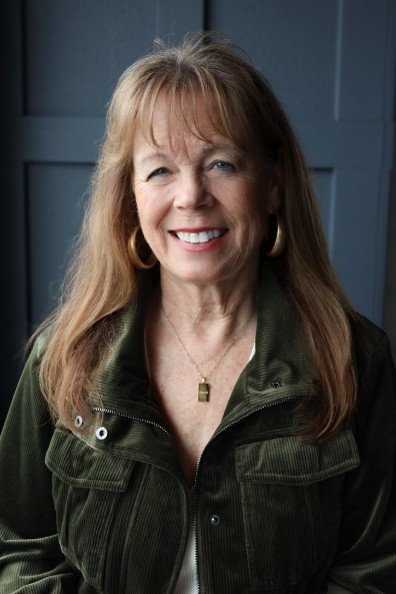
JoAnne Chitwood
Session Speaker
JoAnne Chitwood is a hospice nurse, author, and speaker with nearly forty years of experience walking alongside individuals and families through life's most sacred transitions.
Throughout her career, JoAnne has witnessed a profound truth: the wounds we do not tend to in life often return at the end of life. Unresolved grief, childhood experiences, fractured relationships, and unspoken fears frequently ask for our attention when time becomes precious.
JoAnne's work explores the connection between suffering, healing, and compassionate presence. Through hospice care, storytelling, books, and speaking, She helps professionals and families understand that healing is not separate from dying. Rather, the end of life often becomes an invitation into greater meaning, deeper connection, and wholeness.
She believes that when we address deep fears and. create space for healing, patients are able to live more fully, love more deeply, and approach life's final chapter with greater peace and less pain.
Reducing Fear to Reduce Pain in End-of-Life Patients
A few years ago, when I working as a hospice nurse in Tennessee, I got called out to a family’s home where the matriarch had been diagnosed with a terminal illness. I pulled my car into the driveway and noticed the riot of color in the gardens that surrounded the house. Bees and hummingbirds buzzed around the blooms and the air was filled with the sweet scent of honeysuckle. Clearly, someone here loved beauty.
I knocked on the door, and a middle-aged woman answered it, her gray-streaked hair pulled back into a ponytail.
“I’m JoAnne, the hospice nurse,” I said. “I’m here to assess your mom for hospice.”
The woman, who introduced herself as Julie, pulled me into the kitchen where her two brothers and sister were huddled around the table, speaking in whispers.
“So, the thing is,” Julie said. “We don’t want you to tell mom she is dying. We know she won’t be able to handle it.”
They all nodded in agreement.
“Well,” I said, after hearing them out. “I just need to talk to her. I won’t bring it up.”
They pointed me to mom’s room down the hall. I knocked softly and heard her say “come in”. As soon as I got in the room, she motioned for me to close the door behind me and come close to her hospital bed.
“I know I’m dying,” she said. “But whatever you do, please don’t tell my kids. They won’t be able to handle it.”
We laugh, but I want to ask you a personal question. When was the last time you had a real conversation about death with someone you love?
It’s not a shaming question. If you haven’t, you’re not alone. We are a society that tends to avoid real conversations about painful things. It’s a kind of magical thinking. If we don’t look at something, it won’t be real.
There is a popular saying about pain. “Pain is a part of life, but suffering is optional.” Suffering is what happens when we can’t find meaning in our pain.
Do you know why it was so important for that family to learn to talk to each other and tell the truth?
It’s because, to find meaning in something, we have to be able to be present with an open heart. And we need to be able to absorb information to help put that thing in context. We need the honest, loving feedback of people we trust.
There IS pain at the end of life. Physical pain as body systems shut down and disease ravages, emotional pain as the person grieves a multitude of losses, spiritual pain from facing what feels like abandonment.
Suffering happens when we can’t find meaning in the pain. The truth is that pain CAN be endured when it has meaning.
Paul Brand, the surgeon who wrote about working in a leper colony in India, calls pain “the gift that nobody wants”. Pain pushes us to search for the meaning, and in the search, if we have the support and love we need, we find the deeper truth about how to be our true authentic self when everything else is stripped away.
We can’t do that when we are consumed by fear. Fear blocks understanding and keeps us frozen in a dark place where understanding is impossible.
I’m happy to report that this family did come around and learn to communicate and tell each other the truth with support and encouragement from the hospice team. The kids were able to be present and surround their mom with love in her final days. They were all actually stronger than they thought.
Recently, one of my hospice patients, a lovely woman I’ll call Diane, struggled to sleep at night. We hospice nurses pride ourselves in being able to find the right combination of medications and support to deal with any symptoms that come up. But with Diane, nothing worked. No matter what we did, she tossed and turned at night, unable to go to sleep.
Finally, I sat down on the edge of her bed and asked her gently, “Diane, what is it that you are afraid of?”
She looked at me, surprise in her bright blue eyes, then she started to cry. “I’m not afraid of death,” she said softly. “I’m afraid of the process. What will happen to me as it is happening.”
“Would you like me to tell you?” I asked her gently. “I can walk you through what will happen with your disease process right up to the end, if you want me to.”
Diane looked down at her hands, then up to me with a trembling smile. “Yes,” she said. “Please do that. Every possible detail.”
So I did. I described the dying process from the decline stage, through transition, and to the active stage that ends in death. She listened intently, then sighed deeply.
“Okay,” she said. “That is really helpful.”
That night, she slept like a baby. And she slept well every night after that until she died, surrounded by her loving family.
She couldn’t find meaning in her pain until she had the information she needed to make sense of it.
Throughout my 40 years as a hospice nurse, I had the chance to travel to fascinating places to take care of the dying. One of the most memorable visits I’ve ever had happened when I was the supervisor of a hospice in the Matsu Valley in Alaska. I made a trip out to a native village, where I visited a 40-year-old man dying of lung cancer. It was a gorgeous summer day, with the fireweed in full bloom and the snow glistening on the mountain tops.
I heard singing as I approached the house and for a moment, wondered if I had the right address. An elderly native man met me at the door and ushered me in. At least 30 people were sitting in folding chairs around the room. They kept singing, never missing a beat, as they moved aside for me to get to the patient.
The young man lay curled up in his hospital bed at the far side of the living room. His eyes were closed, and his face had the waxen look of someone approaching death. But he looked utterly at peace. I did my assessment with the help of another young man that introduced himself as the patient’s brother.
When I finished the assessment, I noticed a group of elders clustered in the middle of the room. As I turned to face them, one of them grabbed my hands and pulled me into the middle of the circle for a special blessing. The sound of their voices felt like warm oil being poured over my head. When they were finished, another woman motioned to an empty chair and invited me to join in the singing.
I realized, when I finally tore myself away to leave, that something deep inside me had shifted. Being a part of that group changed me. Lifted me. Healed something in me that I didn’t even know needed to be healed.
“This is so amazing,” I said to the elder who walked me out. “Your family is so supportive. You are all here for this young man.”
The elder smiled at me and shook his head. “We are not his biological family,” he said. “We are his community. We never let anyone in our community die alone. We stay with him night and day to let him know he is loved.”
What was brought home in a new way to me that day is that, not only do we need to find meaning in our pain, especially at the end of our lives, but we need a community around us to share our pain with us and let us know we are not alone.
We need to build a community. And we need to be a community.
The death taboo complicates that process because we can’t be present for someone when they represent the thing we fear. To build the community we need, we first have to look death in the face and make friends with it.
I did that while working with over a thousand families in my career, providing end of life care to people with all manner of illnesses. I lost all fear I ever had of death when I saw how peaceful it can be when the person dying is supported, loved, and has their symptoms under control.
I never focused on hastening or postponing death. I just taught my families to stay present for every moment, making that one the best it can be. And you can learn to do that, too. In your family, in your community.
Imagine being that Alaskan Native man who died surrounded by a singing, praying, loving community. Imagine being one of the group surrounding him. It was a moment that touched heaven.
If you’d like to know how to do that, you can. You don’t need any special skills. Just an open heart and a gentle spirit. And I guarantee, you will never be the same again.