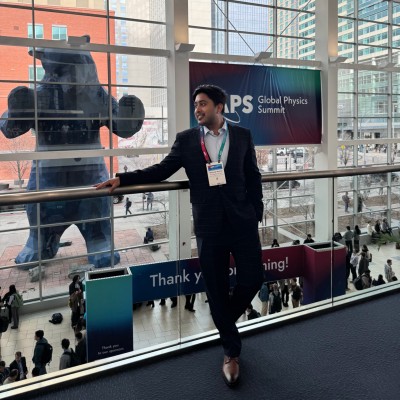
Shouray Kumar Sahu
Session Speaker
Biography – Shouray Kumar Sahu
Shouray Kumar Sahu is a Ph.D. researcher at the International College of Semiconductor Technology, National Yang Ming Chiao Tung University (NYCU), Hsinchu, Taiwan. His research focuses on quantum devices, semiconductor nanofabrication, device fabrication, and electrical characterization.
His technical expertise includes thin-film deposition, electron-beam lithography, photolithography, reactive ion etching, and advanced materials characterization using scanning electron microscopy (SEM), X-ray diffraction (XRD), and atomic force microscopy (AFM). His research investigates aluminum (Al), tungsten silicide (W₅Si₃), and cobalt disilicide (CoSi₂) thin-film devices, with particular emphasis on process-induced variability, defect analysis, low-frequency electrical noise, and temperature-dependent transport properties.
His work also includes the fabrication and cryogenic characterization of nanobridge transistors, investigating gate-controlled superconductivity and critical-current modulation at very low temperatures. His research contributes to understanding the relationship between fabrication processes, material properties, and device performance in semiconductor and quantum-device technologies.
Shouray holds an M.Sc. in Electronic Sciences from Jadavpur University, India, and a B.Sc. in Physical Science (Electronics) from the University of Delhi, India. His research has contributed to publications in APL Materials and the Chinese Journal of Physics. His broader research interests include semiconductor device engineering, quantum transport, superconducting devices, thin-film materials, and advanced semiconductor processing.
Abstract Title
Gate-Controlled Supercurrent in Strongly Disordered W5Si3 Nanobridges Transistor
We report gate-controlled suppression of the supercurrent in strongly disordered W5Si3 nanobridges fabricated on Si(100). Structural and transport measurements establish a diffusive, dirty-limit type-II super conducting regime, while temperature-dependent I–V characteristics identify the nanobridge as the current-limiting element. For bridge widths of 182, 243, and 415 nm, the switching current remains nearly constant below a finite gate-voltage threshold and is strongly suppressed at larger |VG|, approaching complete quenching. The gating response exhibits pronounced polarity asymmetry and is accompanied by an increase in gate leakage current. The lack of universal scaling with gate voltage or leakage current disfavors conventional electrostatic modulation as the sole origin of the effect and instead points to a leakage-assisted nonequilibrium suppression of superconductivity. These results establish W5Si3 as a new transition-metal-silicide platform for gate controlled superconducting devices