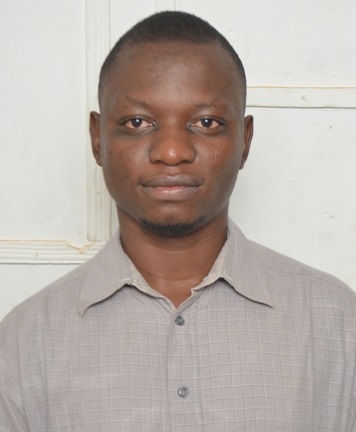
Richard Omoniwa
Session Speaker
Omoniwa Richard is a Computer Science academic and researcher specializing in Artificial Intelligence, Machine Learning, Healthcare Informatics, and IoMT. He is currently an Assistant Lecturer at Confluence University of Science and Technology, Nigeria, and pursuing a PhD in Computer Science (AI/ML). His research focuses on AI-driven healthcare, cardiovascular disease diagnostics, deep learning, cybersecurity, and decentralized healthcare systems. He has published research in deep learning, healthcare information systems, and cybersecurity.
Currently, cardiovascular disease (CVD) is the leading cause of death worldwide and is responsible for some 17.9 million deaths each year. The Internet of Medical Things (IoMT) has enabled continuous monitoring of physiological signals in the real world, but current deep learning-based prediction methods for cardiovascular diseases have three main drawbacks: They all operate in the central domain instead of at the edge; they cannot provide any explanation for their predictions. They lack explainability with respect to clinicians and privacy preserving learning. In this paper, we introduce a new explainable, edge–fog aided hybrid deep learning architecture that overcomes all three shortcomings. Five functional layers Sensor, Edge, Fog, Cloud and Application are covered by the system, which includes a hybrid model based on BiLSTM-Transformer-CNN for predicting the multi-class CVD.The system consists of 5 functional layers Sensor, Edge, Fog, Cloud and Application, and uses a hybrid model based on BiLSTM-Transformer-CNN for predicting the multi-class CVD from 6 modalities of sensors, including ECG, PPG/SpO₂, blood pressure, IMU, body temperature, and data from an implantable loop recorder. Explainability is provided at three different levels: Edge at the fog for local attribution per sample, fog at the temporal ECG heatmap, and cloud at the global feature importance with attention visualization over the features of the population. A defense-in-depth stack of AES-256-GCM, ECIES hybrid encryption, BFV homomorphic encryption, Groth16 zk-SNARKs and Gaussian differential privacy (ε = 0.8, δ = 10⁻⁶) with DP-FedAvg federated learning and Bonawitz secure aggregation ensures privacy. Experiments with the simulated 300-sensor network on the PTB-XL and PhysioNet 2021 datasets show 169 ms end-to-end latency at 90% of network load, 1,520 TPS peak throughput and macro-averaged F1-score of 0.915 for six categories of cardiovascular conditions, which is a 2.1% drop from the centralized non-private baseline. SHAP explanation fidelity (Pearson ρ = 0.956 at cloud level, 0.923 at edge level) corroborates the accuracy of the explanations generated for the clinician in capturing the model's reasoning, which matches the recent EU AI Act interpretability requirements for high-risk medical AI applications. The proposed model is superior to five state-of-the-art CVD prediction systems in all the dimensions considered.Cardiovascular disease prediction, Explainable AI, Edge computing, Fog computing, Federated learning, Differential privacy, SHAP, Grad-CAM, IoMT, BiLSTM, Transformer, and multimodal fusion.