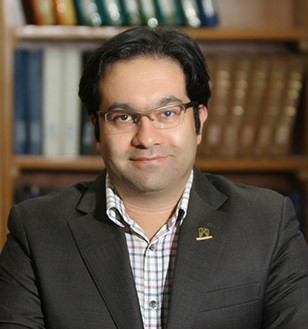
Mohammad Gohari
Session Speaker
Mohammad Gohari is an Associate Professor in the Department of Mechanical Engineering at Arak University of Technology, Iran, and a Postdoctoral Researcher in Robotics at the PRISMA Lab, University of Naples Federico II, Italy. His research focuses on robotics and control, artificial intelligence and data mining, mechatronics, biomechanics, vibration and acoustics. He has extensive experience in robotic systems, prosthetics, intelligent control, fault detection, and AI-based condition monitoring, with numerous publications in international journals and conferences. He has also served in several academic leadership and research management roles and has received prestigious awards, including a Gold Medal at the South Korea Innovation and Invention Exhibition.
Advancing Dexterous Manipulation: AI-Driven Control and Design of Flexible Robotic Systems Abstract: The pursuit of robots capable of matching human dexterity and safely interacting with unstructured environments has driven significant research in flexible and continuum robotics. This presentation will delve into the design, modeling, and intelligent control of flexible robotic systems, drawing from a series of recent projects conducted at the PRISMA Lab (University of Naples Federico II) and Arak University of Technology. The core of this work focuses on addressing the inherent challenges of flexible manipulators: their complex, non-linear dynamics and the difficulty of precise control in the presence of disturbances. We will present a comprehensive approach that combines advanced mechanical design with sophisticated, AI-enabled control strategies. Specifically, the presentation will cover: 1 Novel Design and Kinematic Modeling: We will introduce recent innovations in the design of tendon-driven robotic wrists, including a novel mechanism developed for a prosthetic hand, which utilizes principles of Timoshenko beam theory for accurate modeling. Furthermore, we will discuss the design of wire-driven flexible arm robots optimized for tasks requiring a high degree of compliance, such as safe human-robot interaction. 2 Intelligent Control Architectures: To master the complexities of these systems, we have developed and implemented a suite of intelligent controllers. This includes the application of Sliding Mode Controllers (SMC) for robust trajectory tracking, Model Reference Adaptive Controllers (MRAC) for handling parameter uncertainties, and hybrid neuro-controllers for adaptive force control. We will demonstrate how these AI-driven strategies effectively manage the compliance and non-linearities of the manipulators. Experimental Validation and Applications: The theoretical models and control algorithms are validated through extensive simulations and experimental implementations on physical prototypes. We will showcase the application of these technologies in key areas such as robotic surgery (in collaboration with the ICAROS center), assistive devices like arm exoskeletons controlled via EMG signals, and industrial applications like pipeline inspection. This presentation will demonstrate that the synergy between advanced mechanical design and intelligent, learning-based control systems is the key to unlocking the full potential of flexible robots. By integrating AI and machine learning for control and fault detection, we are moving towards a new generation of robots that are not only highly dexterous but also safe, adaptable, and capable of operating in complex, real-world scenarios. The session will conclude with a discussion on the future trajectory of this research, including the development of fully autonomous, generative AI-driven design and control frameworks for next-generation intelligent systems.