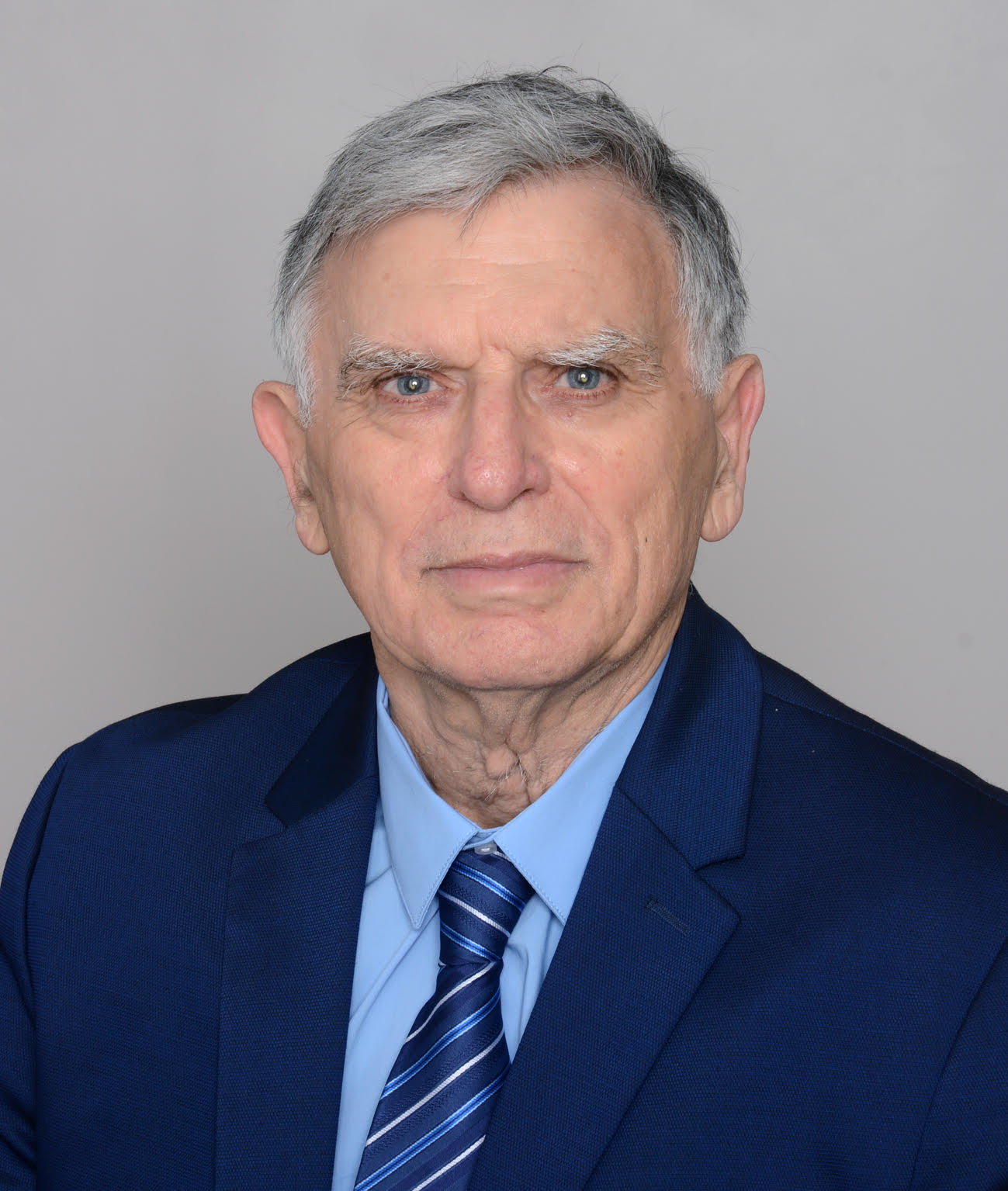
André A. Keller
Keynote Speaker
Prof. André A. Keller is a French researcher and academic affiliated with the University of Paris 1 Panthéon-Sorbonne. With extensive experience in economics, operations research, optimization, game theory, artificial intelligence, and mathematical modeling, he has held professorial and research positions at leading European universities. Prof. Keller is a former Principal Editor of the Journal of Computational and Applied Mathematics and has authored numerous publications and books in optimization, control theory, and computational mathematics. He is widely recognized for his contributions to interdisciplinary research and international scientific conferences.
Schrödinger equation as dual-operator framework unifying dynamics with stationary states to model quantum systems: This contribution develops a unified operator‑theoretic perspective on quantum systems by treating the time‑dependent and time‑independent Schrödinger equations as dual formulations of a single mathematical structure. Although the two equations are traditionally introduced as distinct regimes—one governing dynamical evolution and the other describing stationary states—they are in fact deeply interdependent. The time‑dependent Schrödinger equation (TDSE) encodes the full propagator $U\left(t\right)={{e}^{-iHt/\hbar }}$, while the time‑independent equation (TISE) characterizes the spectral decomposition of the Hamiltonian 𝐻. The duality between these formulations becomes explicit through the representation $\psi \left(t\right)=\sum\nolimits_{n}{{{c}_{n}}}{{e}^{-i{{E}_{n}}t/\hbar }}{{\phi }_{n}}$, which shows that all dynamical behavior is a superposition of stationary modes. This dual viewpoint has significant implications for quantum computing. In Hamiltonian simulation, spectral gaps and eigenstructure determine the complexity of Trotterization, randomized simulation methods, and qubitization techniques. In variational quantum algorithms, the stationary formulation underlies the objective landscape, while the dynamical formulation governs the sampling and optimization process. Adiabatic quantum computing and quantum control further illustrate how spectral properties constrain dynamical pathways and reachable sets. The dual formulation thus provides a coherent framework for understanding the interplay between spectral structure and algorithmic performance. The contribution introduces a computational perspective that integrates both formulations. Dual‑form solvers enforce temporal and spectral constraints simultaneously, improving stability and accuracy in hybrid classical–quantum workflows. Variational–spectral methods exploit the duality to extract eigeninformation from dynamical data, while physics‑informed learning schemes incorporate both TDSE and TISE residuals to guide training. These approaches highlight how the dual formulation can enhance quantum simulation, variational eigensolvers, and quantum machine‑learning models.