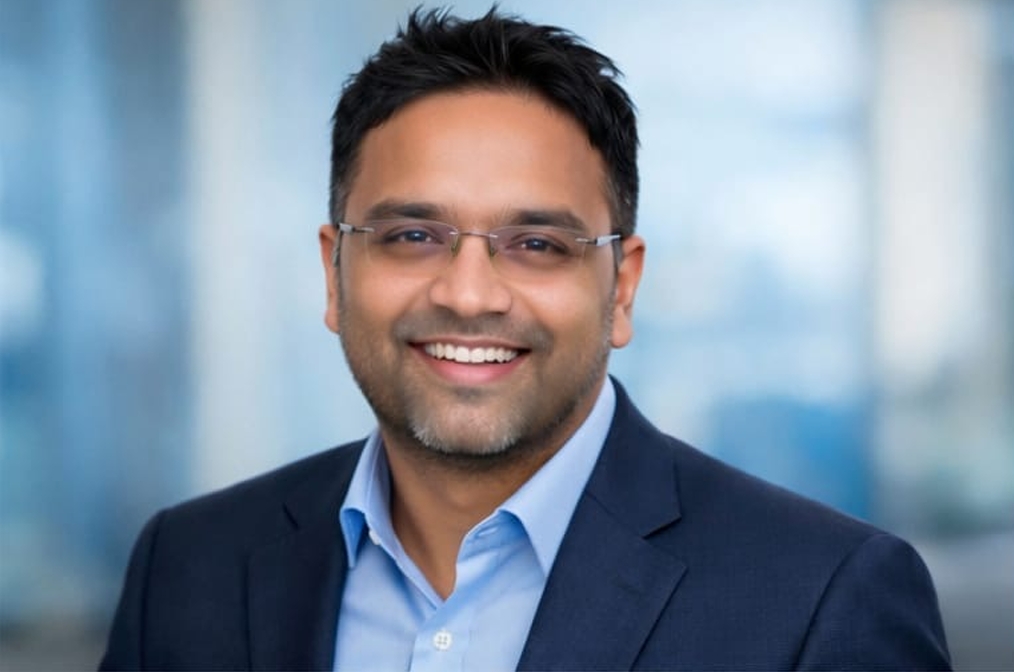
Harshit Sunilkumar Vora
Session Speaker
Harshit Vora is a Lead UI/Front-End Engineer specializing in cross-platform commerce, subscription, identity, purchase, redemption, and account-management experiences for large-scale digital media services. Based in the Bay Area, California, he brings 13+ years of experience delivering highly reliable, accessible, performant, and resilient customer-facing products across web, Android, iPhone/iPad, Apple TV, Apple Watch, and other Apple platforms. At Apple Media Products, where he has worked since May 2020, Harshit leads customer-facing subscription activation and management experiences for services including Apple TV+, Apple Music, Apple One, and iCloud+, owning end-to-end journeys involving Apple Account identity, billing, entitlements, eligibility, account linking, purchase and redemption, confirmation, and recovery. He has led the global Carrier Integration Program (CIP), designing reusable commerce frameworks for carrier-bundled Apple service activation at multi-million scale, including offer discovery, eligibility verification, account linking, redemption, entitlement confirmation, interrupt handling, idempotency, and recovery. He also designed a forward-compatible host-app-to-commerce integration contract supporting MLS Season Pass upsell and redemption across Apple surfaces and led Apple One subscription-management capabilities across iOS, macOS, and tvOS, with a focus on safe plan transitions and entitlement correctness. His work on iCloud+ subscription management has focused on cross-platform plan visibility, performance, progressive loading, caching, resilient state handling, and automated testing for high-risk plan transitions. Previously, at Pandora (SiriusXM), he progressed from Senior Software Engineer to Staff Software Engineer and served as Tech Lead for Web Ads and Monetization, leading revenue-critical advertising systems, programmatic audio advertising initiatives, and ad lifecycle analytics generating more than 600 million events per day while supporting approximately 1 billion display impressions per day. He also worked with Google IMA SDK, Google DFP/Google Ad Manager, and developed resilient advertising experiences capable of handling ad blockers, network failures, empty ads, and other real-world conditions. Earlier in his career at NetApp, he built responsive analytics dashboards and UI frameworks, improved data-processing performance, and developed internal automation tools, following engineering internships at Cisco Systems and Yahoo!. His core technical expertise includes TypeScript, JavaScript, Java, SQL, React, Redux, Vue, Stencil, HTML/CSS, Node.js, REST APIs, Jest, Cypress, Playwright, unit/integration/E2E testing, distributed systems fundamentals, analytics, and media advertising technologies. Harshit is also active in technical leadership, mentoring, interviewing, architecture and design reviews, automated testing standards, and release-readiness practices. He holds an M.S. in Software Engineering from San Jose State University and a B.E. in Computer Engineering from Saurashtra University. His professional achievements include recognition for global-scale delivery of Apple's Carrier Integration Program, promotion to Staff Software Engineer at Pandora, and contributions to products and partnerships covered by Reuters and Apple Newsroom. He has also published an article titled “A Prompting Workflow for Web Development That Reduces AI Hallucinations” on HackerNoon in February 2026.
Presentation Title:
Artificial Intelligence for Accessibility and Performance Auditing: Automated Findings With Human Judgment
Abstract:
Modern web applications depend on automated auditing to monitor accessibility and performance during continuous delivery, yet empirical evidence shows automation alone cannot guarantee quality. Large-scale analysis of one million home pages identified tens of millions of accessibility errors, averaging dozens of issues per page, and found that the vast majority of pages contain detectable WCAG conformance failures. These findings demonstrate both the scale of accessibility challenges on the web and the importance of automated detection.
At the same time, research consistently shows the limitations of automation. Controlled mutation-based testing reveals that automated accessibility tools miss a substantial share of intentionally introduced defects. Studies examining guideline coverage also demonstrate that even when multiple tools are combined, automated checks can only evaluate a portion of accessibility success criteria. Comparative research across multiple accessibility testing tools further confirms that no single tool identifies all detectable issues, with each tool uncovering problems that others miss. This session presents a practical auditing architecture that treats automated findings as graded-confidence hypotheses rather than definitive verdicts. The approach integrates deterministic rule engines, artificial intelligence-assisted semantic evaluation, and structured human validation. Artificial intelligence has demonstrated strong performance in extending automation toward semantically complex issues such as alternative text quality and contextual link purpose, achieving high levels of precision and recall in experimental evaluations.
Accessibility and performance auditing share similar measurement challenges. Widely adopted performance indicators such as Core Web Vitals provide valuable signals for regression detection, yet they still require contextual interpretation to determine real user impact.