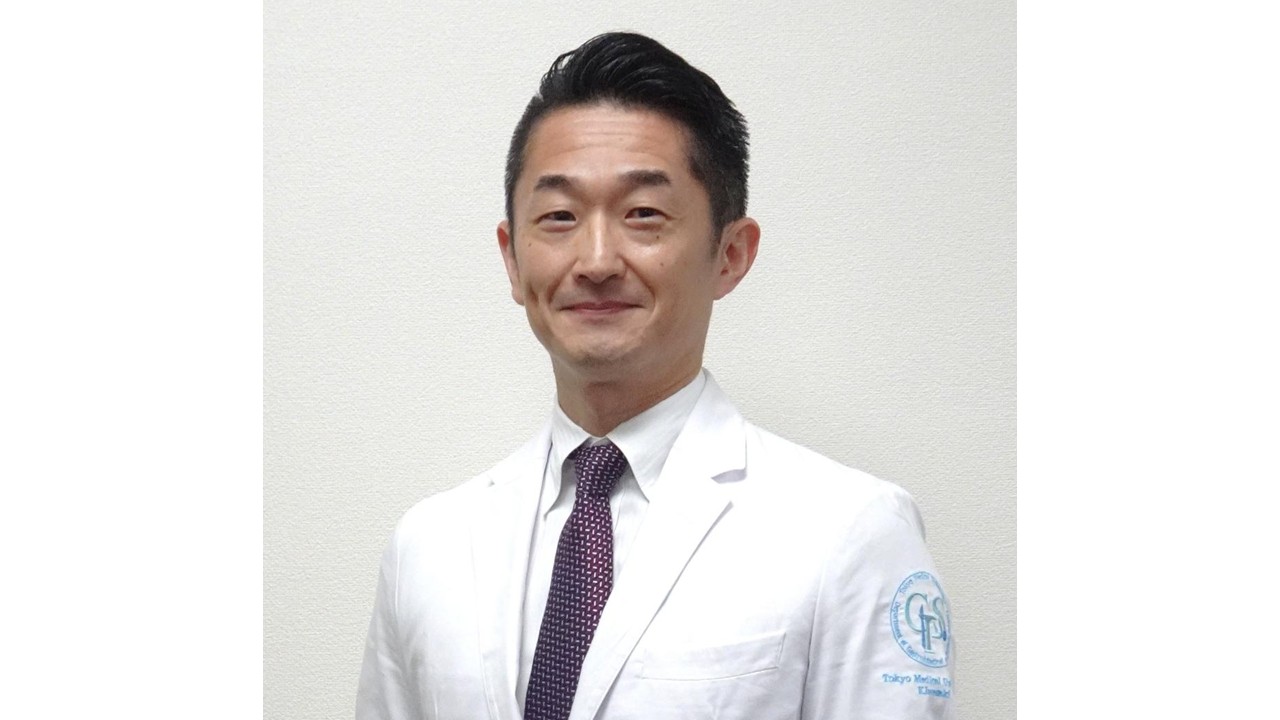
Kenichi Iwasaki
Session Speaker
Dr. Kenichi Iwasaki is a Professor in the Department of Surgery at the International University of Health and Welfare Ichikawa General Hospital, Japan. He earned his Doctor of Medical Science (Ph.D.) from Tokyo Medical University in 2016 and his Doctor of Medicine (M.D.) from Tokyo Medical University School of Medicine in 2006. He has extensive academic and clinical experience in gastrointestinal and general surgery, with a particular focus on gastrointestinal cancers, gastric cancer, minimally invasive surgery, and surgical oncology.
Throughout his career, Dr. Iwasaki has held several academic and clinical positions at Tokyo Medical University, including Assistant Professor, Junior Associate Professor, Lecturer, and Associate Professor in the Department of Gastrointestinal and Pediatric Surgery. He also served as a Research Fellow in the Department of Surgery at Johns Hopkins University School of Medicine, Baltimore, USA, from 2016 to 2018. His professional experience includes clinical training and surgical practice at Tokyo Metropolitan Cancer and Infectious Diseases Center Komagome Hospital. He is certified by the Japanese National Board for General Surgery and the Japanese Board of Cancer Therapy as a General Clinical Oncologist.
Dr. Iwasaki has received research funding, including Grants-in-Aid for Scientific Research, and has made significant contributions to surgical and clinical research. His research interests include gastric cancer, gastrointestinal malignancies, laparoscopic and minimally invasive surgery, postoperative outcomes, nutritional management, cancer recurrence prediction, and stem cell-based approaches to preventing postoperative abdominal adhesions.
He has published numerous peer-reviewed research articles in international scientific journals, including Scientific Reports, PLOS ONE, World Journal of Surgical Oncology, Medicine, The American Surgeon, and Journal of Minimally Invasive Surgery. His notable research includes studies on minimally invasive surgery for remnant gastric cancer, surgical outcomes in gastric neuroendocrine carcinoma, postoperative nutritional management, and the prevention of intra-abdominal adhesions. He has also presented his research at prestigious international scientific conferences, including Digestive Disease Week (DDW), the Society of American Gastrointestinal and Endoscopic Surgeons (SAGES), and the International Congress of the European Association for Endoscopic Surgery (EAES). His presentation on the pharmacological mobilization of endogenous stem cells to prevent postoperative intra-abdominal adhesions received a Poster of Distinction at DDW 2017 in Chicago.
Through his clinical expertise, academic leadership, and research contributions, Dr. Iwasaki continues to advance the fields of gastrointestinal surgery, surgical oncology, and minimally invasive surgical techniques.
Title
Haptic-Assisted Non-Perforating Duodeno-Gastric Stapling (HANDS) for Robotic Billroth-I Reconstruction: A Multicenter Experience Using Two Robotic Platforms
Abstract
Background: Intracorporeal Billroth-I reconstruction after robotic distal gastrectomy requires safe intraluminal advancement of a linear stapler, although current robotic systems provide limited or no direct tactile feedback to the console surgeon. We developed Haptic-Assisted Non-Perforating Duodeno-Gastric Stapling (HANDS), a team-based technique that combines robotic visualization with tactile information perceived by the bedside assistant during stapler insertion. This study aimed to describe the technical aspects of HANDS and evaluate its feasibility and short-term outcomes across two institutions and two robotic platforms.
Methods: We retrospectively reviewed 57 consecutive patients with gastric cancer who underwent robotic distal gastrectomy followed by Billroth-I reconstruction using HANDS at Tokyo Medical University and International University of Health and Welfare Ichikawa General Hospital between June 2022 and September 2026. The da Vinci Surgical System was used at Tokyo Medical University and the hinotori Surgical Robot System at International University of Health and Welfare Ichikawa General Hospital. The primary outcome was anastomosis-related morbidity. Secondary outcomes included technical success, anastomosis time, operative time, blood loss, conversion, postoperative morbidity, time to oral intake, and postoperative hospital stay.
Results: HANDS was performed in a total of 57 patients across the two institutions. Median operative time was 313 min (range, 241–595), median blood loss was 18 mL (range, 5–264), and median postoperative hospital stay was 8 days (range, 6–11). No anastomotic leakage or stenosis was observed in any of the 57 patients.
Conclusion: HANDS was feasible across two institutions and two robotic platforms, with no anastomotic leakage or stenosis in 57 consecutive patients. HANDS may provide a safe and reproducible approach to robotic Billroth-I reconstruction.