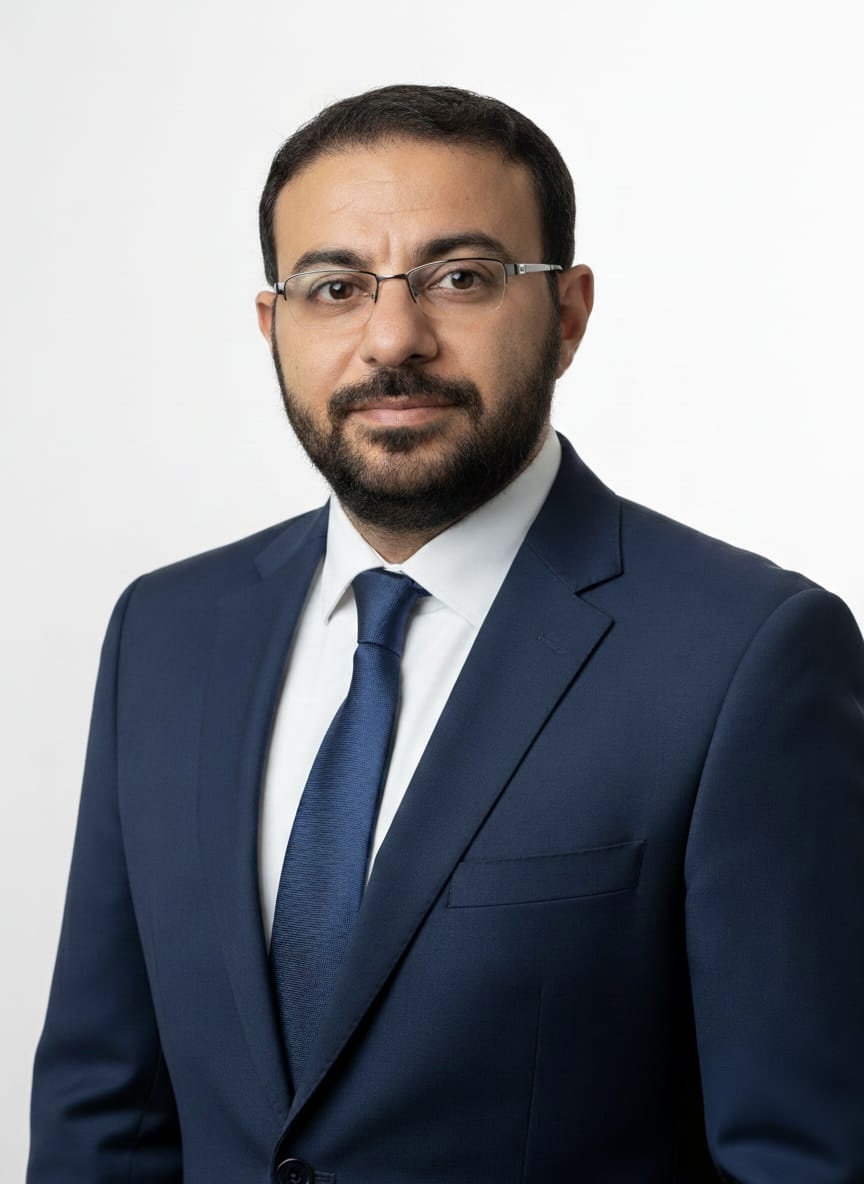
Mohamed Elsayed Abdelhalim
Session Speaker
Dr. Mohamed Elsayed Abdelhalim Hassan is an Orthopaedic Surgeon and Orthopaedic Registrar with over 15 years of clinical experience across high-volume tertiary-care hospitals in Saudi Arabia and Egypt. He is currently working as an Orthopedic Registrar at King Fahad Hospital, Al-Baha, Saudi Arabia, where he manages a diverse range of acute trauma and elective orthopaedic cases. His clinical expertise includes orthopaedic trauma, emergency surgery, fracture reduction and fixation, arthroscopy, sports injuries, joint reconstruction, and spinal trauma management.
Dr. Hassan has held several clinical positions throughout his career, including Orthopedic Resident–Registrar at Nasser Institute for Research and Treatment in Cairo, Egypt, Orthopaedic Resident at CTA Hospital, and General Practitioner at a Primary Health Care Centre in Giza. His professional experience encompasses complex fracture management, emergency theatre procedures, inpatient care, outpatient fracture clinics, multidisciplinary team coordination, clinical audits, and surgical teaching. He also has experience supervising and mentoring junior doctors, medical students, and nursing staff.
He holds a Master of Science in Orthopaedic Surgery from Al-Azhar University (2017), a Diploma in Sports Medicine from FIFA (2019), and a Bachelor of Medicine and Bachelor of Surgery (MBBCh) from Zagazig University (2009). He obtained Membership of the Royal College of Surgeons of England (MRCS) in 2024 and completed the Occupational English Test (OET) with Grade B in 2025. He holds full registration with the General Medical Council in the United Kingdom and the Irish Medical Council, along with professional registration in Saudi Arabia and Egypt.
His research interests include contemporary approaches to orthopaedic trauma, Kienböck’s disease, joint arthroplasty, surgical safety, surgical site infection prevention, and biomaterials in joint replacement. His research and clinical audit contributions include a two-cycle clinical audit on the Braden Scale Multi-Parameter Pressure Ulcer Risk Assessment, published in Cureus, as well as research on digital transformation in surgical safety and the prevention of surgical site infections. He has also conducted master's research on recent trends in the management of Kienböck’s disease and research into microplastics and wear-particle biology in joint arthroplasty.
Dr. Hassan has actively contributed to medical education through regular teaching activities for junior doctors, emergency physicians, medical students, and healthcare professionals. His teaching topics include open fracture management, fracture classification, wound debridement, spinal trauma assessment, and surgical techniques. He has completed numerous professional development courses, including AO Trauma Basic, Advanced and Master Courses, AO Spine training, ATLS, ALS, BLS, and specialised workshops in arthroscopy, joint replacement, spinal surgery, and fracture management.
He has delivered presentations on various orthopaedic topics, including the evolution of arthroplasty, management of open fractures, pelvic and acetabular fractures, spinal trauma, and recent advances in the management of Kienböck’s disease. His international presentation includes a systematic review of existing guidelines and current evidence concerning the assessment and early investigation of cauda equina syndrome. Through his extensive clinical experience, research involvement, surgical teaching, and commitment to evidence-based practice, Dr. Hassan continues to contribute to advancements in orthopaedic surgery, trauma care, and patient safety.
Tilte:
Microplastics and Wear-Particle Biology in Joint Arthroplasty: Convering Mechanisms, Clinical Relevance, and Future Biomaterials.
Abstract
Background:
Total joint arthroplasty effectively restores function in end-stage joint disease, yet particle-induced periprosthetic osteolysis and aseptic loosening remain major causes of implant failure. Emerging evidence shows that environmental microplastics accumulate in human bone marrow and synovial tissues, and their physicochemical similarities to prosthetic wear particles suggest shared mechanisms of peri-implant inflammation.
Aim:
The review elucidates shared mechanisms underlying innate immune activation, macrophage polarization, inflammasome signaling, and osteoclastogenesis, and evaluates their translational relevance to arthroplasty failure and future biomaterial development.
Evidence Synthesis:
Systematic reviews report a pooled global prevalence of primary aseptic loosening of 1.96%. The pathogenic cascade of prosthetic debris culminates in NLRP3 inflammasome activation, Gasdermin D-mediated pyroptosis, and RANKL-driven osteolysis. Concurrently, translational data confirm the bioaccumulation of environmental microplastics in human lower-limb joints (5.24 ± 2.07 particles/g) and bone marrow (19.72 particles/g, with 89.82% measuring < 100 µm). Transcriptomic evidence reveals that these environmental polymers trigger identical cellular stress responses, oxidative stress, and NF-κB/MAPK signaling. However, no verified higher-level evidence available confirms that environmental microplastics independently increase the clinical incidence of aseptic loosening. Current preventive strategies leverage highly cross-linked, vitamin E-doped polyethylene to resist oxidative degradation, thereby demonstrating superior mid- to long-term survivorship in meta-analyses by minimizing particulate generation.
Conclusion:
Environmental microplastics and prosthetic wear debris share converging inflammatory mechanisms that compromise the peri-implant bone microenvironment. While direct clinical causality between environmental microplastics and arthroplasty failure remains unproven, this intersection represents an emerging frontier for orthopedic biomaterial science, periprosthetic immunology, and osteolysis mitigation.
Keywords:
Joint Arthroplasty, Microplastics, Polyethylene, Wear Debris, Biomaterials, Oxidative Stress, Environmental Exposure.