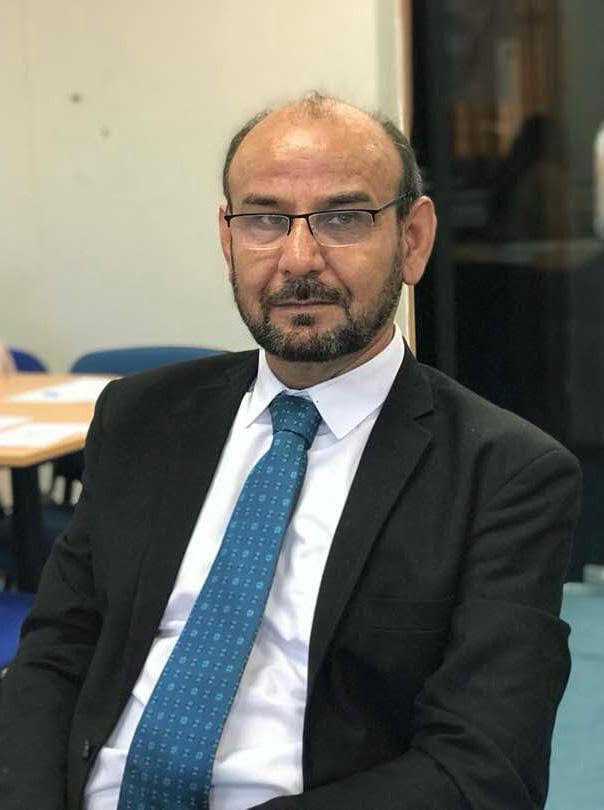
Mohammad Naqib Eishan Jan
Session Speaker
Professor Mohammad Naqib Eishan Jan is a Professor at the Ahmad Ibrahim Kulliyyah of Laws, International Islamic University Malaysia (IIUM), with over 25 years of academic and administrative experience in legal education. He holds a Ph.D. in Law, a Master of Comparative Laws, and a Bachelor of Law from IIUM. His areas of expertise include international law, international human rights law, international humanitarian law, international criminal law, international commercial arbitration, Islamic international law, law of the sea, and alternative dispute resolution. Throughout his distinguished career, he has served in several leadership positions, including Deputy Dean and Head of Department at the Ahmad Ibrahim Kulliyyah of Laws. As a dedicated educator and researcher, Professor Naqib has made significant contributions to legal scholarship and the advancement of international and Islamic legal studies through teaching, research, and academic leadership.
Women Under Taliban Rule: Gender Apartheid, International Law, and the Responsibility of the International Community
Abstract
Since the Taliban’s return to power in August 2021, Afghanistan has witnessed one of the most extensive and systematic assaults on women's rights in modern history. Through a series of decrees and executive measures, the Taliban have effectively excluded women and girls from public life. These measures include banning girls from secondary and higher education, restricting women's employment in both the public and private sectors, curtailing freedom of movement, closing parks and recreational areas to Afghan women, and arbitrarily detaining them for alleged violations of restrictive moral regulations; reports also indicate that those detained have been subjected to mistreatment. Collectively, these measures constitute an institutionalized system of gender-based discrimination that has devastated the social, economic, and political status of women in Afghanistan. This paper critically examines the legal legitimacy of these policies in light of international law, focusing on Afghanistan’s obligations under international human rights instruments, specifically the Convention on the Elimination of All Forms of Discrimination against Women (CEDAW), the International Covenant on Civil and Political Rights (ICCPR), the International Covenant on Economic, Social and Cultural Rights (ICESCR), and the Convention on the Rights of the Child (CRC). It also evaluates whether the Taliban’s practices amount to gender-based persecution and considers the growing academic and institutional discourse advocating for the recognition of "gender apartheid" as a distinct crime under international law. This article also challenges the Taliban's claim that these restrictions are justifiable under Islamic Sharia. Citing the Quran, the Sunnah, and established principles of Islamic jurisprudence, the article argues that Islam emphasizes the dignity, equality, right to education, and socio-economic participation of women, and that the Taliban's policies stem from a political ideology rather than reflecting authentic Islamic legal doctrine. Consequently, this paper demonstrates that the regime's treatment of women violates both international legal standards and fundamental principles of Islamic justice. Finally, this paper evaluates the reactions of the United Nations, the Organization of Islamic Cooperation (OIC), and the international community. It argues that expressions of concern and diplomatic condemnations have failed to bring about meaningful change and proposes a more coordinated approach, one that includes sustained diplomatic engagement, targeted sanctions against those responsible, strengthened international accountability mechanisms, more active involvement from Muslim-majority nations and Islamic scholars, increased humanitarian support for Afghan women and girls, and the inclusion of women's rights benchmarks in any future political engagement with the Taliban. This paper concludes that supporting Afghan women is not merely a domestic issue but a matter of international legal responsibility, requiring collective action by states, international organizations, and civil society. Without sustained international pressure and accountability, there is a risk that the systematic erosion of women's rights in Afghanistan could become an enduring challenge to international human rights law, as well as to the universal values of justice and human dignity.
Keywords: Afghanistan, Taliban, women’s rights, gender apartheid, international law, CEDOW, United Nations, OIC