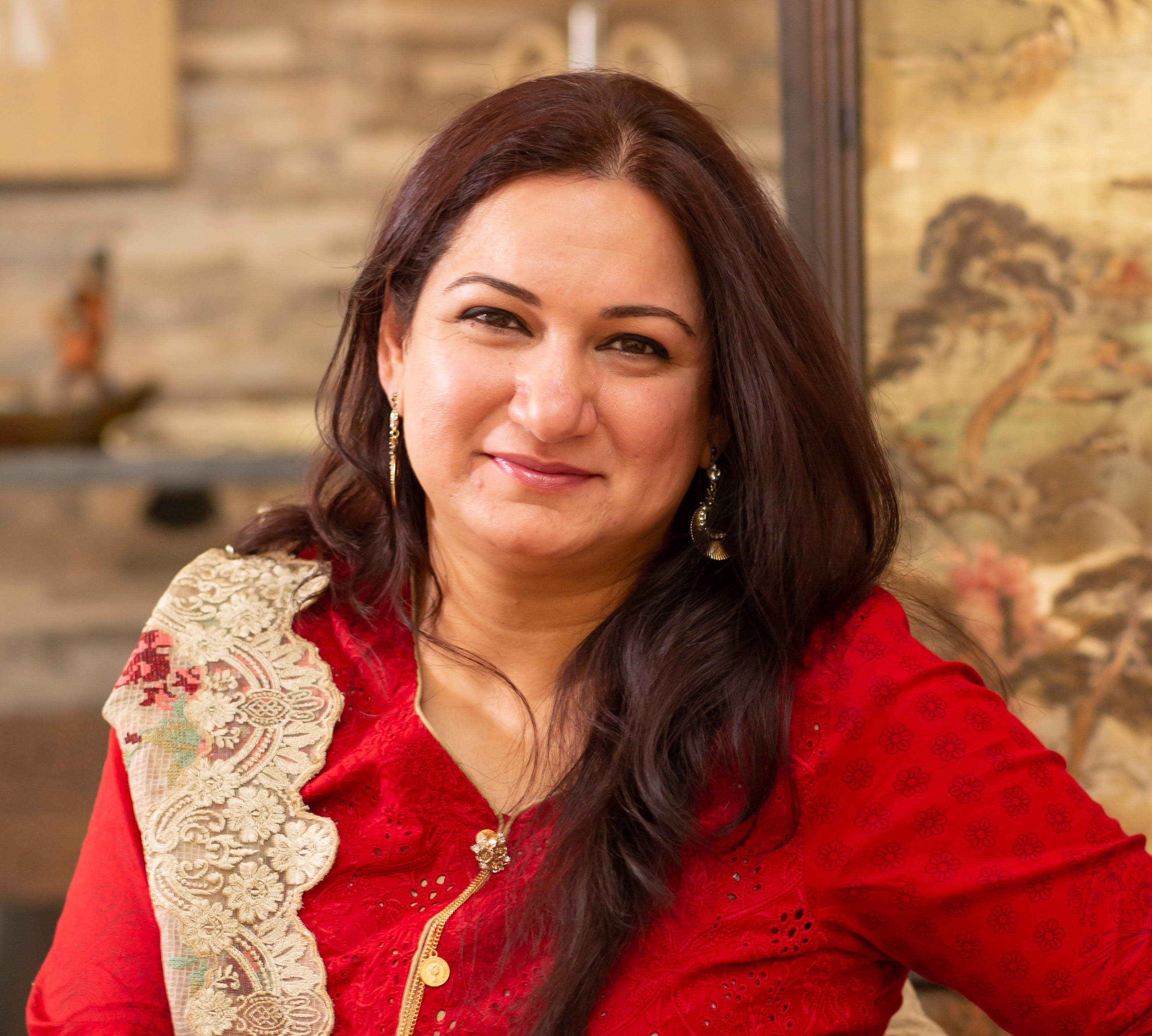
Dr. Iram Tahir
Keynote Speaker
Dr. Iram Tahir is a Lecturer in Business and Management with extensive academic and professional experience in leadership, organisational behaviour, human resource management, learning and development, gender and society, ethics, and sustainability. She holds a PhD in Public Administration and Management Sciences from the University of Karachi and a PG Cert in Higher Education with Distinction from Manchester Metropolitan University. She is also a Fellow of Advance HE (FHEA), Chartered Manager (CMBE), and holds professional qualifications in HR and digital marketing.
Dr. Tahir has held teaching, research supervision, and academic roles at several UK institutions, including Lancaster University Management School, University of Greater Manchester, University of Lancashire, Arden University, University of Bolton, and the University of Central Lancashire. She has also served as a visiting lecturer and research supervisor internationally.
Her research focuses on inclusive leadership, gender equality, sustainability, organisational behaviour, and emerging technologies in management. She has published research in peer-reviewed journals and presented her work at international conferences, including the British Academy of Management Conference. She also contributes extensively to the academic community as a reviewer, external examiner, associate editor, advisory board member, and research group member. Dr. Tahir has received several recognitions for her academic and teaching contributions, including an Academic Gold Medal from the University of Karachi and a Best Paper Certificate.
Beyond Empowerment: Consciousness, Inclusion, and the Transformation of Women’s Lives
Women empowerment has secured significant benefits for women in recent decades, and contemporary discussions on the topic have been critical in furthering women’s rights, representation, and educational and employment opportunities, allowing them significant freedom of choice. While these achievements have been critical in advancing the cause of women empowerment, gender equality, and social inclusion, there are still deeper questions regarding women’s agency, identify, belongingness, and their role in human and societal wellbeing and flourishing that remain under-answered. Despite the progress that women now enjoy on the policy, representation, rights and access fronts, they continue to encounter significant barriers on the institutional and social fronts because of internalised beliefs, cultural narratives and lived experiences that significantly shape their sense of self and possibilities.
There is a need for a broader and more holistic understanding of empowerment that does not limit itself to opportunities and resources but instead encapsulates feminist scholarship, consciousness studies, transpersonal psychology and feminist spirituality concepts to explore an understanding of empowerment that is multidimensional, encompassing structural, relational and consciousness-based transformation. Equality and social inclusion are not treated as merely participation inn social, economic and political life, but as an experience involving recognition, voice, belonging, and psychological safety.
Particular attention is given to the role of consciousness in developing self-awareness, self-authorship, resilience, and meaningful agency. Feminist spirituality perspectives that have contributed to women’s voices, embodied knowledge, and such alternative forms of authority, need to be assimilated as important dimensions of knowledge that provide insights into more holistic contemporary understandings of women empowerment, gender equality and social inclusion. By integrating these perspectives of empowerment and equity with emerging insights from consciousness, spirituality and transpersonal studies, a more transformative model of empowerment can be developed which links equality with thriving, flourishing, and wellbeing. Sustainable progress towards women empowerment and gender equity is based not only on structural changes, but also on the cultivation of individual and collective consciousness, supporting more inclusive, compassionate and equitable societies