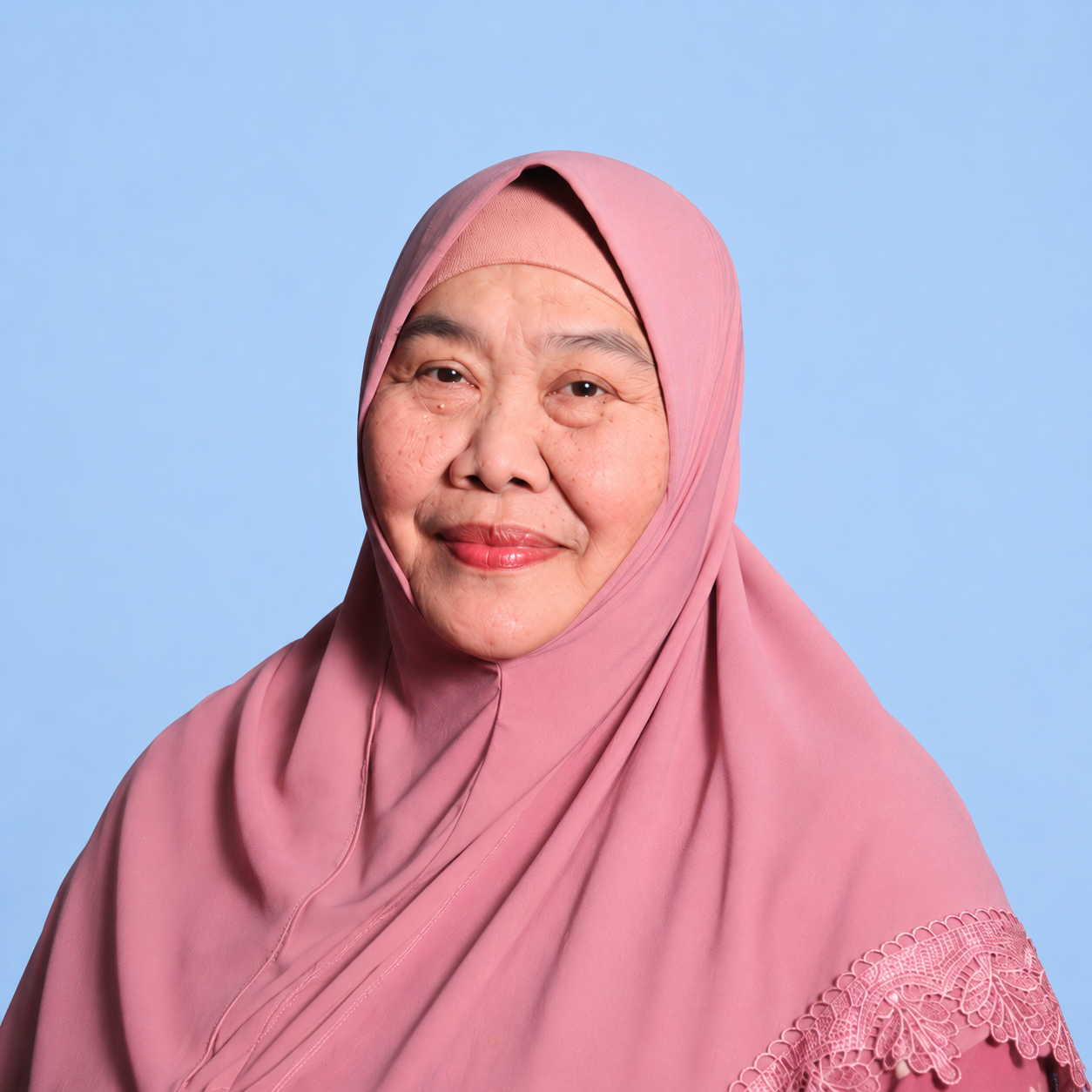
Asiah Abdul Rahim
Session Speaker
Prof. Dato’ Sri Ar. Dr. Asiah Abdul Rahim is a Professor at the Department of Architecture, Kulliyyah of Architecture and Environmental Design (KAED), International Islamic University
Malaysia (IIUM). She is a professional Architect and also coordinator for KAED Universal Design Unit (KUDU), KAED, IIUM which handling research and consultancy including Universal
Design and Accessibility for Persons with Disabilities (PwDs), elderly and children. She obtained her PhD from Oxford Brookes University in Oxford, United Kingdom in 1994, Bachelor of Architecture from Deakin University in Australia and a Diploma in Architecture from University of Technology Malaysia (UTM). She was a member of Universal Design and Built Environment Committee under National Council of Person with Disabilities (MKBOKU), Ministry of Women, Family & Community Development. She also has been appointed as member of Council for Majlis Tindakan OKU Selangor (MTOS) for the last 4 years and Head of Inclusive Access Development (Universal Design) Sub Committee. She is involved in teaching heritage studies and conducting research locally and abroad in collaboration with other universities and organisations. For example, Masjid Banten in Indonesia; Istana Leban Tunggal in Pahang; Haghighi House in Isfahan, Iran; Private houses in Damascus, Syria; Great Mosque of Hohhot, China; Sekolah Batu Lama, PULAPOL, Malaysia and other heritage works in Granada, Spain and India. Many of her works have been published for examples ‘Access Audit in Religious Building and Public Spaces in Damascus City, Syria’, ‘Housing in Islamic Perspective; Brunei as a Case Study’, ‘Architectural Heritage Study in Iran: Haghighi House’, ‘Accessible Built Environment For the Elderly And Disabled In Malaysia: Hotels As Case Study‘, ‘Keperluan Pengguna dan Reka Bentuk Bangunan untuk Orang Tua Di Malaysia’, ‘Garis Panduan Reka Bentuk Sejagat Petaling Jaya’, ‘Access Audit Manual and Access Audit Checklist Star Rating’, ‘From Bukit Tinggi to Negeri Sembilan’, Executive Report IIUM’s Vision 2077 A New Hijrah of the Muslim Ummah of Malaysia, Universal Design in the World Heritage Cities of Uzbekistan Travelogue
Observation and others. She is the chairperson for several Malaysian Standards (MS) related to Accessibility, Public Toilet, Mosque, and Industrialized Building System (IBS). She has been
invited as keynote speaker and presenting papers locally within Malaysia and internationally in Harvard, United States of America, United Kingdom, Sweden, Norway, Germany, Spain,
Switzerland, Turkey, Singapore, Brunei, Australia, China, Saudi Arabia, Sri Lanka, India, Japan, South Korea, Syria, Iran, Indonesia, Thailand, Pakistan, Ireland and several more other
countries to be mentioned, for talks and presentation in international conferences, symposiums and world forum. She also was a chairman for 1st – 5th International Conference
on Universal Design in the Built Environment (ICUDBE), Symposium on Trends on Universal Design (STUD) and Universal Design Product Competition (UDPC). She was previously the
chief of editor for several journals which are Journal of Universal Design in the Built Environment (JUDBE) and Journal of Architecture, Planning and Construction Management
(JAPCM) and currently is the chief of editor for Design Ideal Journal (DIJ).
Universal Design for the Comfort and Safety of Person with Disabilities including Women and the Aged in the Inclusive Built Environment
Universal Design (UD) in the built environment is essential for creating inclusive, safe, accessible, and comfortable spaces that respond to the diverse needs of women, Persons with
Disabilities (PwDs), and older persons. These groups may experience greater challenges in accessing and using buildings and public spaces due to mobility limitations, sensory
impairments, age-related physical decline, health conditions, and safety concerns. Women with disabilities and older women may face additional barriers related to personal safety, privacy, dignity, caregiving responsibilities, and access to essential facilities. This paper explores the application of Universal Design principles in developing an inclusive built environment that
enhances comfort, independence, safety, and social participation. Reviewing of legislations, standards, uniform building by laws (UBBL) and relevant guidelines are crucial. It highlights
the importance of accessible circulation, appropriate spatial planning, inclusive sanitary facilities, adequate lighting, clear signage, ergonomic design, safe pedestrian environments,
and adaptable spaces. The study also emphasises the role of retrofitting existing buildings to accommodate changing needs, including wheelchair users, persons with visual and hearing
impairments, and older persons experiencing frailty, dementia, or stroke-related limitations. Ultimately, the integration of Universal Design from the planning and design stages, supported by effective policies and accessibility standards, can contribute to a more equitable and dignified built environment where women, PwDs, and older persons can participate fully and
comfortably in society.
Keyword: Universal Design, Women, Person with Disabilities, Aged, Inclusive Built Environment