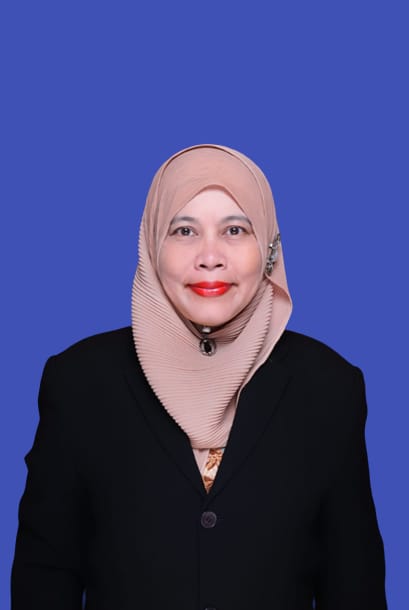
Ameilia Zuliyanti Siregar
Keynote Speaker
Dr. Ameilia Zuliyanti Siregar, M.Sc., Ph.D. is a lecturer in the Faculty of Agriculture at Universitas Sumatera Utara (USU), Indonesia, where she has served since 2005. She holds a Bachelor’s degree in Biology from Universitas Sumatera Utara and Master’s and Ph.D. degrees in Biology from Universiti Sains Malaysia (USM). Her core expertise lies in agricultural entomology, useful insects, food security, and environmental sciences. She currently serves as Head of the Pest Laboratory at the Faculty of Agriculture, USU, and is actively involved in community development, disaster risk reduction, and environmental initiatives. Dr. Siregar is also the founder of an education foundation and the Komunitas ZIS, and serves as Chair of the Social and Planning Commission of the Indonesian Ulema Council (MUI) of North Sumatra. Her research and community-service activities cover insect diversity and food security, agricultural pest management, environmental conservation, disaster mitigation, community empowerment, mangrove ecosystems, and sustainable agricultural practices. She has contributed to publications addressing flood disaster education, stunting-community empowerment, vegetable-based bioactivators, coffee processing, mangrove conservation, and insect diversity in rice plantations.
Community Empowerment Model of Women Group Farmers Through Creative and Collaborative Economy Increases Food Security Resilience Post-Hydrometrology in South Tapanuli ABSTRACT This study aims to analyze the utilization of social capital and local wisdom of flash flood disasters and the social resilience of families affected by flash floods in Aek Ngadol Village, South Tapanuli. Data collection was carried out in November 2025-May 2026 using a quantitative approach with a survey research strategy and had a population of 30 female farmers. This study uses a descriptive qualitative approach method (observation, data collection, and interviews). The sampling technique used simple random sampling with the Slovin formula with an error level of 10% or 0.1 with the results of 20 respondents. The results of this study show that 24 respondents with a percentage of 80 percent consider their area prone to flooding with local knowledge of respondents regarding natural signs and what to do when a disaster occurs is classified as moderate, the approach taken by the Government through the local phrases "marsialap ari (mutual cooperation)" and "lubuk larangan" is an ecological foundation for maintaining river sustainability and mitigating disasters from generation to generation. Communities care for each other, strengthen each other, help each other, collaborate, and prioritize togetherness and avoid conflict to quickly recover from the disaster. Farmers leverage social capital through networks, trust, and norms, which then provide assistance and strengthen farmers' resilience in the aftermath of the hydrometeorological disaster. The Community Service Program (PKM) of the USU LPPM Assisted Villages conducted creative economic training for women through the production of traditional rice, liquid soap, meatballs, and small fish floss through education and internal farmer organization. The research results indicate that farmer resilience is strengthening, as evidenced by the increasing self-resilience of farmers in their continued struggle to improve food security in Aek Ngadol Village, South Tapanuli. Keywords: Resilience, Women Group Farmers, Hydrometrology, Food Security, South Tapanuli