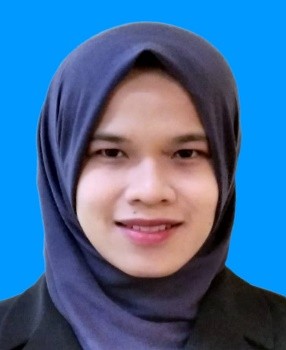
ATIKAH BALQIS BINTI BASRI
Session Speaker
Dr. Atikah Balqis binti Basri is an Assistant Professor in the Department of Information Systems at the International Islamic University Malaysia (IIUM), where she is affiliated with the Kulliyyah of Information and Communication Technology. She holds a PhD in Engineering from IIUM and completed her Postdoctoral training in Data Modelling and Analytics at Mokpo National Maritime University in South Korea. Her professional credentials include being a Graduate Technologist and Professional Technologist with the Malaysian Board of Technologists (MBOT), a Graduate Engineer registered with the Board of Engineers Malaysia (BEM) and The Institution of Engineers, Malaysia (IEM), as well as an EC-Council Network Security Administrator v4 and a Professional Member of the Association of Computing Machinery (ACM). With expertise spanning Artificial Intelligence and Electronic Engineering, Dr. Atikah has been actively involved in numerous research projects, including serving as Principal Researcher for a Fundamental Research Grant Scheme (FRGS) project on flood disaster prediction using hybrid computational models, and as a co-researcher for international collaborations with Mokpo National University on satellite-terrestrial wireless connectivity, 6G mobile communications, and satellite link propagation studies. She has authored and co-authored multiple academic publications in the last three years, with her work appearing in journals such as TELKOMNIKA, the International Journal on Perceptive and Cognitive Computing, and the Journal of Information Systems Engineering and Management, as well as in various IEEE conference proceedings. Her current research focuses on rain attenuation characterization, predictive modelling, and adaptive link resilience strategies for reliable satellite-terrestrial wireless communications in tropical climates, with direct applications to disaster prediction and network infrastructure planning in Malaysia and other equatorial regions