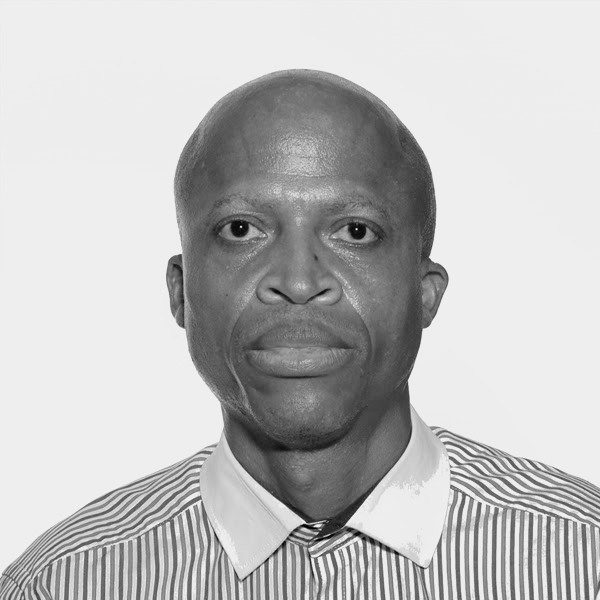
K Raymond Da-Boi
Session Speaker
K. Raymond Da-boi is a Doctoral Candidate in Cultural Anthropology at the University of Tennessee, Knoxville, where he also serves as a Graduate Teaching Associate. He holds an M.Sc. in Humanitarian & Refugee Studies from the University of Ibadan, Nigeria, and an MA in Conflict, Security & Development from King's College London, where he was a Peace, Security & Development Fellow. He also holds a BBA from A.M.E. Zion University in Liberia and is a Rotary World Peace Fellow. His research interests include informal economies, border studies, political economy, peace and conflict, and post-war reconstruction, with a regional focus on West Africa, particularly the Mano River Basin. He has extensive professional experience as a lecturer, researcher, and consultant in Liberia and Nigeria, working with organizations such as UNESCO, UNDP, and USAID, and has published several books, monographs, and peer-reviewed articles on peace, conflict, and regional security
Abstract Title : Entanglements of informal economies, networked survival, and placemaking from below: The political economy of survival at Bo Waterside
Abstract : This chapter examines the ways informal market actors at Bo Waterside are intricately enmeshed with formal and non-state-like structures and groups to produce a dynamic and robust political economy "from below." In this chapter, I highlight the vital role of informal women-led associations—such as Women in Tears, Peace Hut, and Cross Border Women—in not just shaping commerce and trade, but life in general at the border, their political influence, and participation in community development, howbeit without bureaucratic recognition, and the way they function as self-governing institutions that distort the lines between informality and formality. I lean on local knowledge, interpretations, and understandings of "we live on each other" based on market women's narratives to shed light on a moral economy built on an ethos of reciprocity, trust, and collective survival, highlighting the important ways microcredit practices, rotating savings schemes, and social lending function as financial support systems weaved into daily life. Drawing upon ethnographic evidence from my fieldwork and critical scholarship on microfinance, I situate the different lifemaking activities and microcredit practices of market women networks within the broader debates on development and the informal economy and the critical role and contributions of these groups and how they're shaping life and transforming the border town's socioeconomic landscape and market based economy, showing how market women effectively adapt, and use microcredit in culturally applicable ways as systems of mutual support and assistance as they navigate entrenched pervasive hardships and poverty, structural inequalities, displacement from state-led development-induced projects, and changing land regulations and laws. Lastly, the chapter shows that Bo Waterside is a complex space – a site of trade and commerce as well as a socially produced space – where the border is reconstituted, reconfigured, and transformed, largely 'from below:' a space where economic life, social reproduction, and collective agency come together to reshape the borderland's socioeconomic landscape