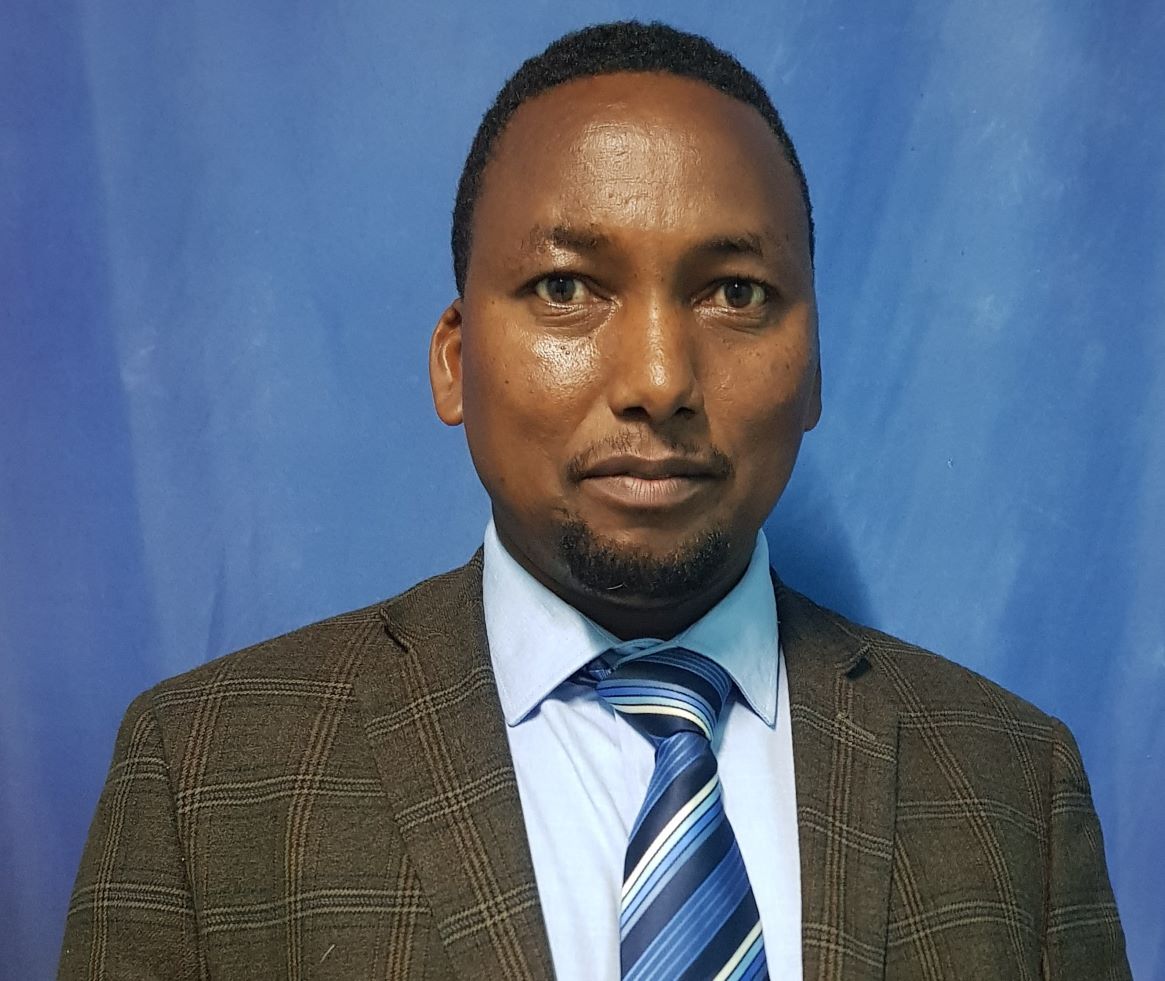
Salesio Miriti M’Muruku
Session Speaker
Dr. Salesio Miriti M'Muruku is an Agricultural Economist, university lecturer, and researcher with over 18 years of combined academic and professional experience in Kenya. He holds a PhD in Agricultural Economics from Chuka University, an MSc in Agricultural Resource Management from South Eastern Kenya University, and a BSc in Agribusiness Management from Egerton University. He also holds a Diploma in Project Management from the Kenya Institute of Management. He is currently a Part-Time Lecturer at Tharaka University, where he teaches undergraduate and postgraduate courses in Agricultural Economics, Agribusiness Management, and related fields, and supervises postgraduate research. His research interests include women's socio-economic empowerment, gender and development, rural livelihoods, water and development interventions, agricultural economics, agricultural finance, financial inclusion, and value chains. He has published extensively in peer-reviewed journals and has served as a peer reviewer and external examiner for postgraduate theses. He also brings extensive practical experience in microfinance, agricultural finance, and project management, having worked with the County Microfinance Corporation, Agricultural Finance Corporation, and in water project management
Abstract Title : Socio-Economic Dynamics Influencing Women's Empowerment in Donor-Funded Water Projects: Evidence from Gatundu North Sub-County, Kenya
Abstract :
Women are central beneficiaries of donor-funded development initiatives designed to improve livelihoods through access to essential resources such as water. However, the extent to which beneficiaries' socio-economic characteristics shape women's socio-economic empowerment remains insufficiently understood. This study examined the influence of beneficiary socio-economic characteristics on the socio-economic empowerment of women participating in donor-funded water projects in Gatundu North Sub-County, Kiambu County, Kenya. The study was anchored on Sara Longwe's Women Empowerment Framework (WEF) and adopted a descriptive cross-sectional research design. The target population comprised 1,004 female beneficiaries across four administrative wards, from which 100 respondents were selected using systematic random sampling. Primary data were collected through questionnaires, key informant interviews, and direct observations, supplemented by secondary project documents. Data were analyzed using SPSS Version 27.0. The regression model was statistically significant and explained 28.1% of the variation in women's socio-economic empowerment (R² = 0.281; F (8, 91) = 4.44; p < 0.001). Among the continuous and ordinal characteristics, household income (β = 0.514, p = 0.012), formal education level (β = 0.482, p = 0.012), project handling experience (β = 0.367, p = 0.020), and beneficiary age (β = 0.028, p = 0.046) had significant positive effects, while household size had a significant negative effect (β = −0.176, p = 0.031). Analysis of categorical characteristics further showed that sole land ownership (β = 0.382, p = 0.028), micro-entrepreneurship (β = 0.391, p = 0.031), and formal employment (β = 0.348, p = 0.043) significantly enhanced women's empowerment relative to their respective reference categories. The study concludes that access to physical water infrastructure alone may not guarantee women's socio-economic empowerment; outcomes are also shaped by women's human capital, financial capacity, economic opportunities, and control over productive assets. The study recommends integrating donor-funded water interventions with targeted enterprise development, financial literacy, skills development, and land-tenure security initiatives to strengthen women's empowerment outcomes