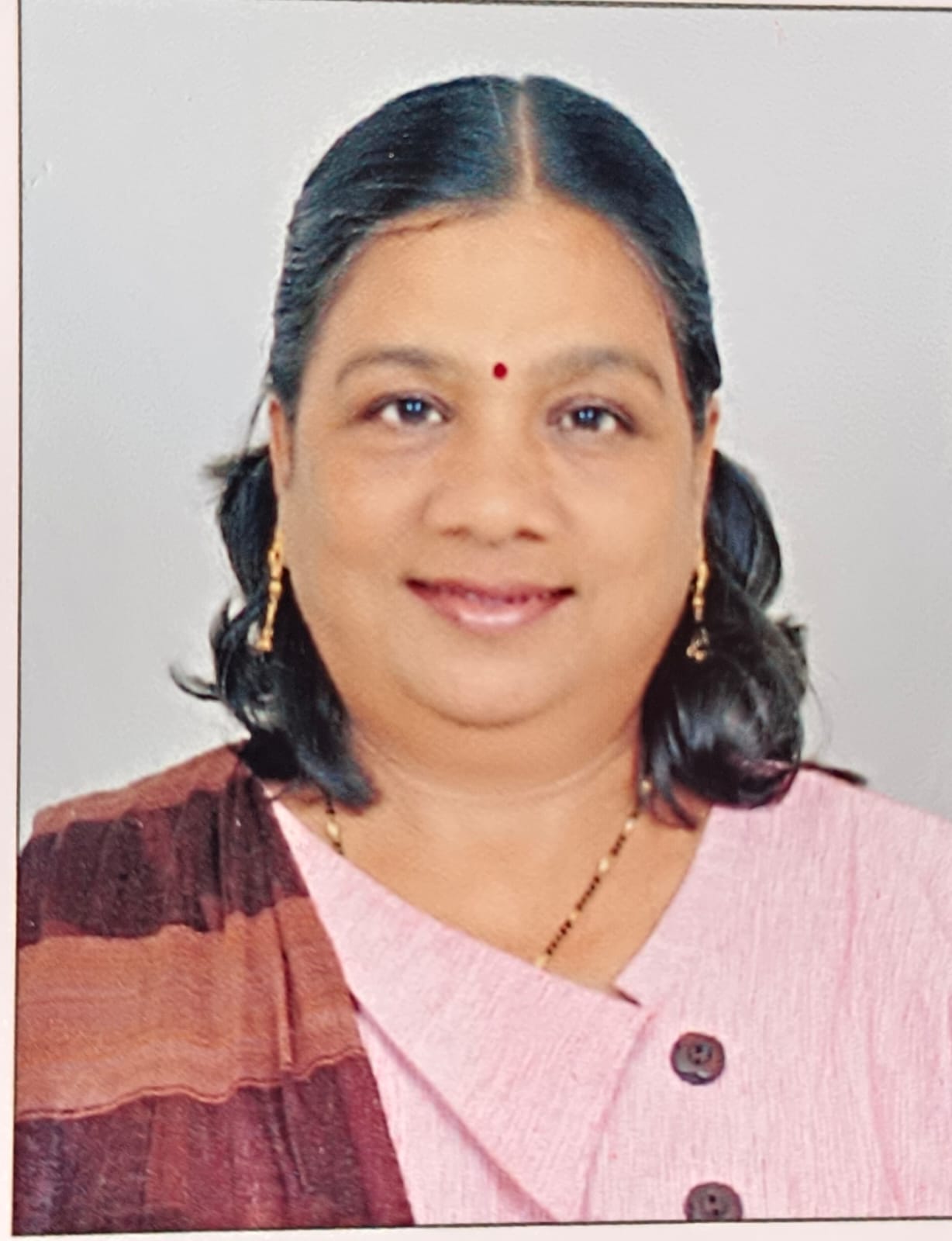
Mrs. Jyoti Ashish Vasavada
Session Speaker
Mrs. Jyoti Ashish Vasavada is an Assistant Professor in the Department of Education at the Faculty of Education and Psychology, The Maharaja Sayajirao University of Baroda, Vadodara, Gujarat, India. She holds M.Com., M.Ed., and M.Phil. degrees in Education, with a consistently first-class academic record throughout her studies. She brings over 20 years of teaching experience across schools, colleges, and universities. Her research interests include women's empowerment, gender studies, social impact, and educational development. She is passionate about exploring the role of Nari Shakti (women's power) in nation-building and social transformation, drawing upon India's ancient cultural heritage and modern constitutional frameworks
Abstract Title : Turning potential into action: The unstoppable force of female empowerment leading towards Human Capitalisation, National Growth and progressive society
Abstract :
India is a land of Sanatan Sanskriti that focuses on Nari Shakti saying "yatra Naryastu Pujayante Ramnte tatra Devta". Culture of India has always showed reverence for Identity of woman with dignity. Women has always remained a constant support and motivator for man kind. In ancient India, particularly during the Vedic and classical eras, women made foundational contributions across philosophy, governance, religion, and the economy as equal partners in society. Scholars and seers like Gargi, Maitreyi, and Lopamudra authored sacred hymns, led deep metaphysical debates, and served as spiritual educators, while powerful leaders like Queen Nayanika and Prabhavatigupta actively ruled kingdoms and managed state administration. Beyond their vital role as indispensable partners in sacred rituals and managers of household economies, women also served as key patrons of temple architecture and the arts, reflecting a culture that deeply revered the divine feminine and recognized women as key architects of early Indian civilization. During the medieval period and under Islamic rule in India, the socio-religious status and dignity of women experienced a significant decline compared to early ancient times, largely driven by political instability, foreign invasions, and increasingly rigid social norms. As a response to security concerns and the adoption of restrictive practices across communities, social customs like the Purdah system (veiling and female seclusion) gained widespread prominence, severely limiting women's visibility and participation in public, educational, and political life. Access to formal education for women drastically diminished, reducing them primarily to domestic roles, while oppressive practices such as Sati (widow burning), child marriage, restrictions on widow remarriage, and Jauhar (mass self-immolation during military defeats) became more entrenched in various regions. Furthermore, under patriarchal administrative and legal frameworks of the era, women's legal autonomy, property rights, and social agency were significantly curtailed, shifting their societal perception from dynamic contributors to dependent subjects needing protection. In the modern era, the trajectory of Indian women underwent a monumental transformation, pivoting from centuries of social suppression back toward constitutional equality, active agency, and national leadership. Catalyzed initially by social reformers and the mass participation of women in the Indian independence movement, post-independence India enshrined equal rights, voting access, and affirmative action into its Constitution. Today, modern Indian women serve as central architects of the nation's socioeconomic growth, driving innovation across diverse fields including science and technology (such as ISRO's space missions), corporate leadership, medicine, literature, sports, and grassroots entrepreneurship. Politically, women hold key decision-making roles from local Panchayats—where millions of elected female representatives shape rural governance—to top constitutional positions such as the Prime Minister and President of India. Beyond formal economic metrics, women contribute fundamentally to nation-building by elevating literacy, steering social reform, managing family welfare, and breaking historical glass ceilings, proving that India's overall progress and development remain intrinsically linked to the empowerment and active leadership of its women. The paper discusses social impact of empowered women and some real life case study examples of women partnership for progress and betterment of the country. Women's empowerment is a powerful catalyst for broad social change. When women are empowered socially, economically, and politically, the benefits ripple across families, communities, and entire nation