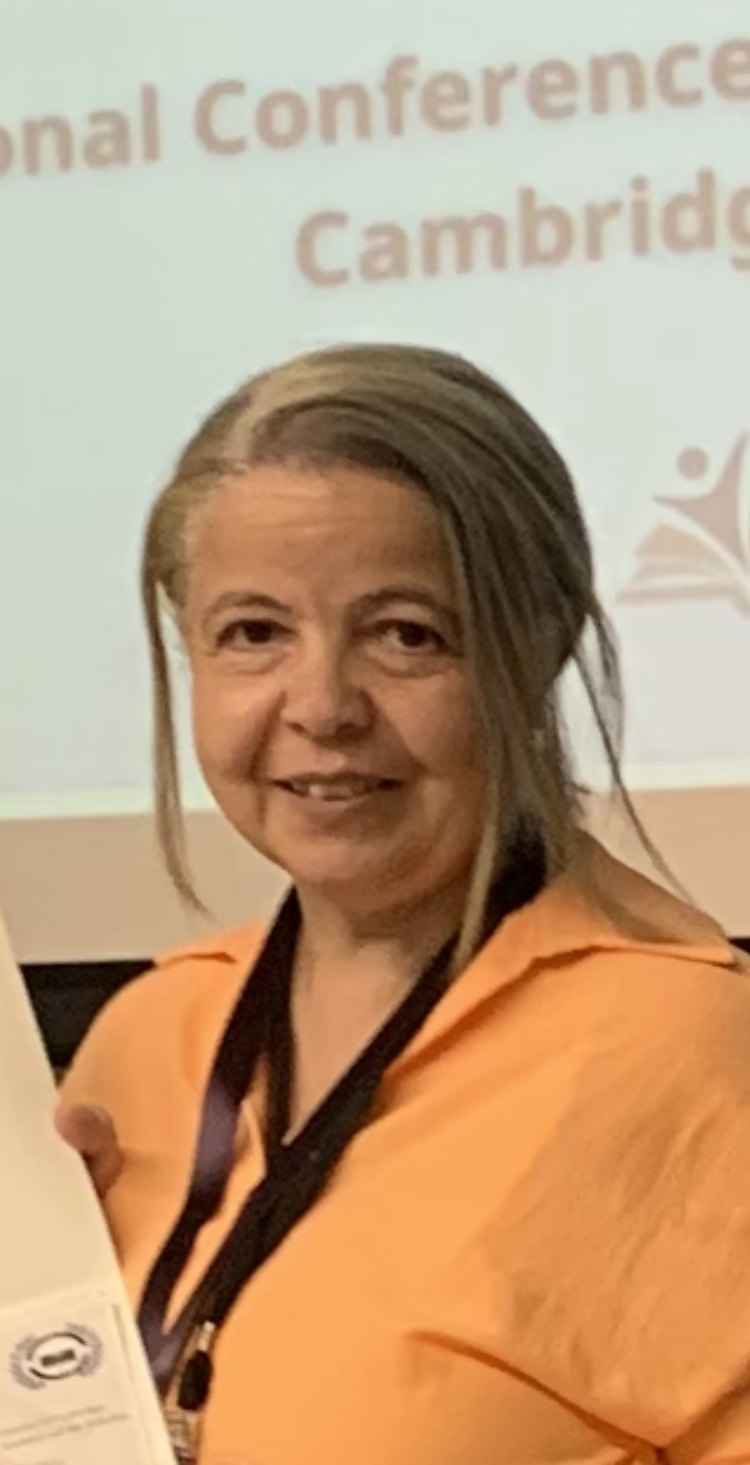
Dr. Fatima Ferhane
Session Speaker
Dr. Fatima Ferhane
Independent Researcher, Morocco.
Women’s Freedoms between Religious Reference and Patriarchal Social Structure: From Exclusion in the School Environment to the Issue of Single Mothers in Morocco
This presentation is a continuation of my previous research on women’s conditions, examining social cases that reveal the tension between individual freedoms, normative references, and the prevailing social structure in Moroccan society.
One of my previous studies examined the case of a schoolgirl within the educational environment, focusing on the exclusion, abuse, and restrictions she experienced, and highlighting the influence of social and cultural norms in determining what is considered acceptable or unacceptable for girls within public and institutional spaces.
Another study examined the constraints faced by single mothers, a term with civil, social, and legal significance that reflects a family status existing in social reality, while raising a profound question when considered in relation to a religious reference that does not recognize the concept of the “single mother” in the same civil meaning used within contemporary human-rights and social discourse. This raises the issue of women whose social status exists within a space between civil recognition and normative religious reference.
Building on these two previous research experiences, this presentation moves from the examination of individual cases towards questioning the structures that produce such restrictions. It addresses the following central question:
How do religious reference and patriarchal social structures contribute to defining the space available for women’s freedoms and producing forms of exclusion and inequality between women and men in Moroccan society?
The presentation argues that the issue cannot be reduced to isolated social restrictions, but must be understood through the interaction between religious reference, social norms, family structures, and institutional practices. Such interaction may contribute to granting men a wider space of autonomy and freedom while subjecting women to more restrictive standards and expectations.
The presentation also examines the relationship between freedom, equality, and the civil state, based on the premise that protecting the rights derived from women’s freedoms requires strengthening the rule of law, respecting international human-rights commitments, and guaranteeing equality before the law, allowing all citizens to exercise their rights without discrimination based on sex, belief, opinion, or expression.
In this context, the presentation calls for the development of a civic space that respects difference and pluralism and enables coexistence among diverse beliefs and opinions, while emphasizing that the law should constitute the common and superior framework to which everyone is equally subject. Respect for religious and cultural particularities should not become a basis for restricting fundamental rights and freedoms or producing unequal legal and social status between women and men.
The presentation concludes that women’s empowerment cannot be achieved through the formal recognition of equality alone. It requires moving towards substantive equality based on the protection of freedoms, respect for difference, the rule of law, and alignment with international human-rights commitments. Building a more equitable society requires a common legal framework capable of protecting women and men on an equal basis, without discrimination, exclusion, or the imposition of a single model of life, belief, or expression.
Keywords: Women’s freedoms; Gender equality; Religious reference; Patriarchal structure; Single mothers; Human rights; Morocco.