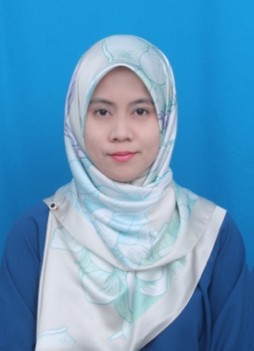
Nurin Erdiani Binti Mhd Fadzil
Session Speaker
Dr. Nurin Erdiani binti Mhd Fadzil is a Senior Lecturer in the Department of English Language, Faculty of Modern Languages and Communication at Universiti Putra Malaysia. She holds a PhD in Teaching English as a Second Language from Universiti Kebangsaan Malaysia and a Master of Applied Linguistics from Universiti Putra Malaysia. Her research interests include multimodal learning, academic writing, technology-enhanced language education, artificial intelligence, virtual reality, and ESL pedagogy. She is an award-winning educator, researcher, postgraduate supervisor, workshop speaker, and active contributor to international conferences and educational innovation initiatives.
Amplifying Malaysian Women's Voices in Climate Change Discourse: An Ecolinguistic Analysis of Digital Environmental Advocacy
Abstract: Climate change is increasingly recognised as not only an environmental crisis but also a social and gendered issue. While women are often portrayed as among the populations most vulnerable to climate-related challenges, such representations may overshadow their significant roles as environmental advocates, knowledge holders, community leaders, and agents of change. This study examines how Malaysian women's voices, identities, and agency are constructed through digital environmental advocacy. Drawing on Stibbe's ecolinguistic framework of Stories We Live By, complemented by a feminist discourse perspective, the study investigates the linguistic and discursive strategies through which women communicate environmental concerns, construct climate-related identities, and advocate for collective action in digital spaces. The analysis focuses on selected publicly available social media content produced by Malaysian women involved in environmental and climate advocacy. Particular attention is given to linguistic features related to identity, agency, evaluation, framing, salience, and the narratives that emerge from the discourse. The study seeks to move beyond dominant representations of women as passive victims of climate change by exploring how digital communication can amplify women's voices and position them as active contributors to environmental sustainability. It further examines whether the stories embedded within these discourses promote more equitable, inclusive, and ecologically beneficial ways of understanding the relationship between gender, society, and the environment. By integrating ecolinguistics with a feminist discourse perspective, this study contributes an interdisciplinary approach to understanding women's empowerment in contemporary environmental communication. The findings are expected to highlight the transformative potential of language and digital advocacy in strengthening women's agency, advancing gender equity, and fostering meaningful social and environmental change.
Keywords: climate change discourse; digital advocacy; ecolinguistics; gender equity; Malaysian women; women's empowerment