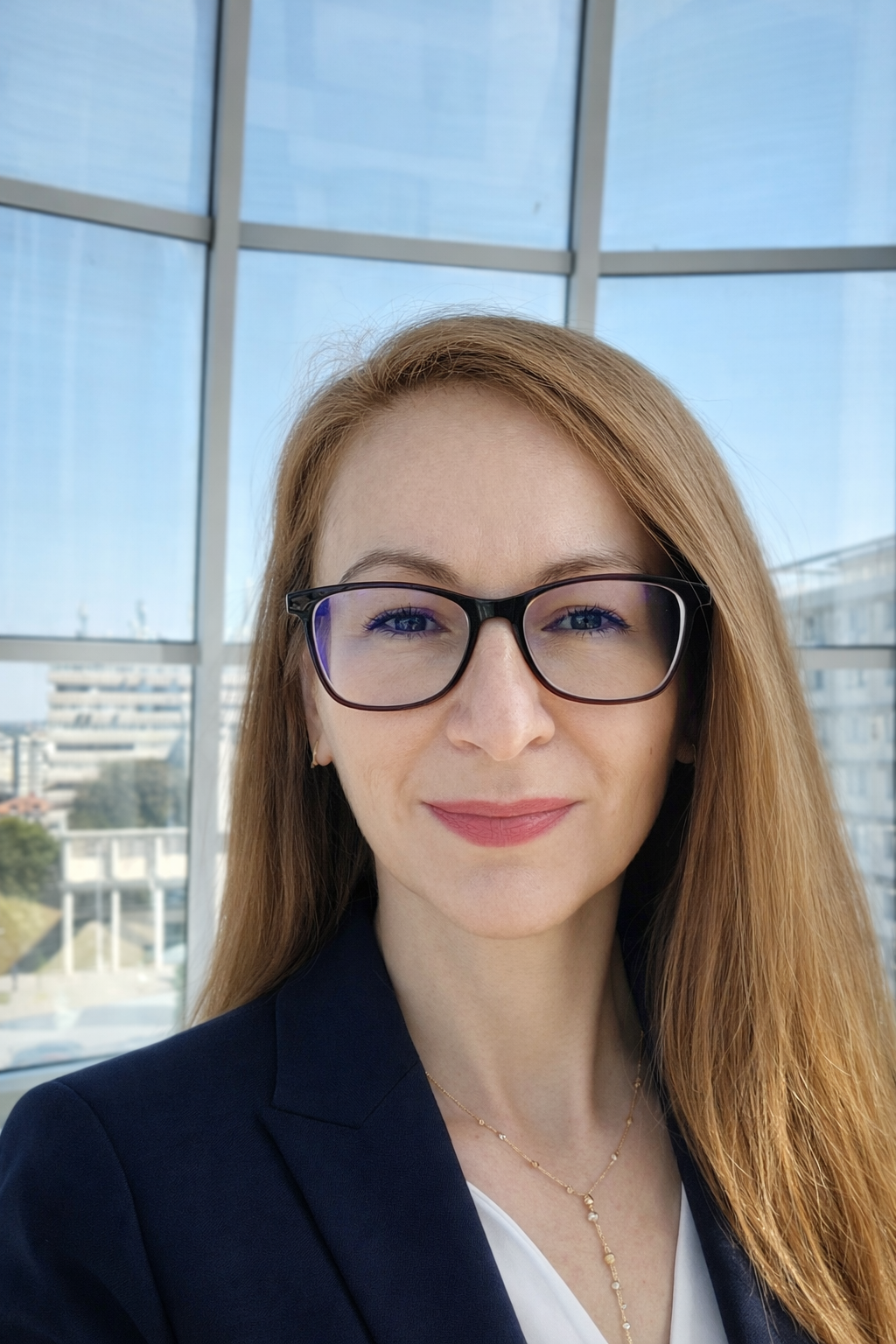
Oana Cogeanu-Haraga
Session Speaker
Oana Cogeanu-Haraga, Ph.D. is an Associate Professor at the Faculty of Letters, Alexandru Ioan Cuza University of Iași, Romania, where she teaches cultural studies and translation studies. She also serves as Vice-Dean for Quality Assurance and Human Resources. Her publications include two monographs, An Introduction to African-American Travel Literature and Legal Translation and Beyond, as well as more than 20 articles and book chapters. She has directed national and international projects, including ENTICE, ROK, INTEL-UAIC, and RoTEXTRA. Her research focuses on travel, translation, and intercultural exchange.
From Margins to Network: Translation, Women’s Knowledge, and Epistemic Visibility
Abstract: Women’s reflections remain largely absent from canonical histories and dominant systems of knowledge; their exclusion is measurable, for instance, in major anthologies of translation theories. Douglas Robinson’s Western Translation Theory from Herodotus to Nietzsche (1997) includes nine women among 90 authors and notes that none had previously been selected in an anthology or discussed in a history of translation theory. The first edition of Lawrence Venuti’s The Translation Studies Reader (2000) includes only five women among the authors of its 30 selected texts. Moreover, knowledge produced by women in less widely translated languages is especially vulnerable to omission. Female practitioners and scholars of translation can therefore occupy a double margin: within national intellectual histories because of gender, and within global knowledge systems because of language and geography.
Drawing on bell hooks’s understanding of the margin as both a site of exclusion and a position of critical insight, feminist theories of situated knowledge, and the concept of epistemic injustice, this talk examines translation as a means of redistributing intellectual visibility. It introduces the concept of translational visibility to describe the process through which archival recovery, contextualisation, translation, and digital circulation make historically marginalised contributions recognisable and usable as knowledge across linguistic and cultural boundaries.
This process is undertaken by RoTEXTRA, a project that recovers, systematises, and internationalises Romanian discourse on translation. This talk offers an overview of the project and presents a case study of Romanian writer and translator Otilia Cazimir. Cazimir describes translation as demanding intellectual and creative labour, reflects on the negotiation between the author’s voice and the translator’s style, and criticises editorial practices that render translators “almost anonymous.” Her observations connect authorship, professional responsibility, material forms of attribution, and cultural recognition.
Recovering and translating this text does more than add a woman’s name to translation history. It repositions Cazimir as a producer of knowledge about translation and demonstrates how visibility depends on more than textual accessibility. Making women visible in and through research requires their contributions to be found, attributed, interpreted, translated, taught, and connected to new scholarly networks. The movement from margin to network thus entails not assimilation into, and validation by, a canonical center but participation in a polycentric history of knowledge.
Keywords: women’s knowledge; translational visibility; epistemic justice; Otilia Cazimir; RoTEXTRA