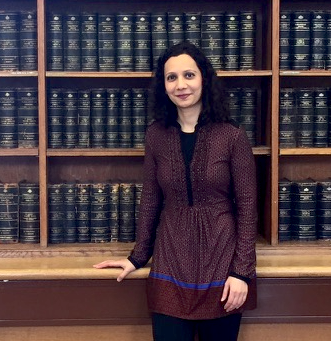
Nasreen Mansoor
Session Speaker
Dr Nasreen Mansoor is an experienced clinical supervisor, counsellor, counselling tutor, and qualitative researcher based in Manchester and Leeds. She holds a PhD in Counselling from the University of Manchester and is an MBACP (Accred) member of the British Association for Counselling and Psychotherapy. She has extensive experience providing individual and group clinical supervision to trainee and qualified counsellors, psychotherapists, helpline staff, specialist support workers, and practitioners across healthcare, education, voluntary-sector organisations, HM Prison Service, rape crisis services, and private practice. Her professional expertise includes trauma, sexual violence, domestic abuse, safeguarding, cultural and linguistic issues, mental health, inequality, displacement, forced marriage, and the experiences of individuals from diverse and intersecting identities. She is also the founder of the South Asian Counselling Project and has undertaken extensive culturally responsive counselling and community-based work. As an affiliate researcher, she completed a qualitative study exploring the life stories of South Asian women survivors of sexual violence using thematic analysis and has presented her research at the BACP International Research Conference. Her doctoral research examined the concept of honour and shame among South Asian British Muslim men and women. She has also founded and chaired the Greater Manchester Diversity Researchers’ Forum, served as a visiting lecturer at the University of Manchester, and authored academic textbook chapters on counselling research. Dr Mansoor is fluent in English and Urdu, with knowledge of Hindi, Hindko, Mirpuri, and Punjabi, and has extensive experience working across culturally diverse communities.
Exploring Honour and Shame for South Asian British Muslim Men and Women
This study explored honour and shame for South Asian British Muslim men and women. It aimed to offer plausible answers to the definition, concept, impact and gender differences of honour and shame for this sociocultural and faith group of people.
This qualitative piece of research encompassed triangulation of individual interviews, focus groups and photo elicitation. Thirty participants of South Asian British Muslim identities were recruited via a purposive sampling strategy. This included men and women of diverse demographics and locations with an age range of nineteen – sixty-four. The majority of interviews were conducted in English, with some participant’s sporadic dialogue in Arabic, Bangla, Punjabi and Urdu.
The methodology was thematic analysis. Seven main themes were identified via thematic analysis of the data. A humanistic stance underpinned the conduct of the investigation alongside a hermeneutic researcher stance. A social constructivist and interpretive epistemological position in conjunction with a critical realism perspective infused the research process. A predominantly insider researcher position was established, which was a major influence in eliciting the rich, deep and meaningful data that emerged regarding the honour and shame phenomena. Researcher reflexivity was a key factor in how the research was approached, conducted, interpreted and understood.
This study identified a threefold patriarchal construct; Western, South Asian and Muslim underpinned the honour and shame phenomena. The research illustrated honour appeared to be relational and the nexus which held the family relationships together. Shame seemed to be the substance which fractured this complicated structure. There were narratives of some South Asian British Muslim women being sectioned and admitted into psychiatric institutions due to them being at risk to themselves/and or other persons. The deterioration in their mental health appeared to be closely associated with their experiences of being subjected to abusive honour and shame stipulations. The study also found cultural and traditional mores were very influential components in deleterious honour and shame practices, which at times replaced Islamic principles. One of the more significant findings to emerge from this study was that some British Muslim Bangladeshi communities practised a bride price system.
The findings obtained from this research cannot be extrapolated to all South Asian British Muslims as they derived from a small sample size.