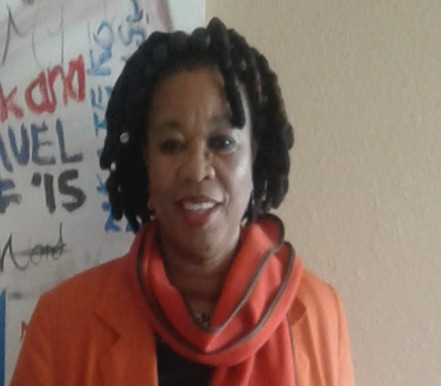
Christine Mmapila Rabalao
Session Speaker
Christine Mmapila Rabalao is a Lecturer in the Department of Social Work, College of Human Sciences, at the University of South Africa (UNISA). Her research interests include caregiving, child welfare, gender, social justice, and community-based interventions. She has experience in higher education, community engagement, student support, social work practice, and research. As a PhD candidate, she contributes to academic and professional discussions within the field of social work, with a particular interest in issues affecting children, families, communities, and social welfare.
Care, Gender and Economic Justice: Experiences of African Women Caring for Ill Parents in South Africa
Abstract: In South Africa, the responsibility of caring for ill and ageing parents continues to fall disproportionately on women because of cultural expectations, gender norms, and family obligations. While caregiving is often regarded as a moral and familial responsibility, it frequently results in significant economic hardship for women, including loss of income, reduced employment opportunities, financial strain, and increased dependence on limited household resources. Despite the central role women play in sustaining family wellbeing, the economic implications of caregiving remain insufficiently explored within gender and caregiving scholarship. This study investigated the financial burden experienced by African women caring for ill parents and examined how gendered caregiving responsibilities influence women's economic wellbeing and social position. A qualitative approach employing exploratory, descriptive, contextual, and phenomenological designs was utilised. Fifteen African women caring for ill parents in Mabopane, Gauteng, were purposively selected and participated in face-to-face semi-structured interviews. Data were analysed using thematic analysis. The findings revealed that caregiving often required women to sacrifice employment opportunities, reduce working hours, or withdraw from the labour market entirely. Participants reported difficulties meeting basic household needs, reliance on social grants and pensions, debt accumulation, and limited financial support from family members. The study further found that economic hardship was closely associated with gendered expectations that women should assume caregiving responsibilities regardless of personal cost. These findings highlight the intersection between unpaid care work, gender inequality, and economic injustice. The study underscores the need for gender-responsive social protection measures, caregiver support programmes, and policies that recognise and address the economic contribution of informal caregivers.
Keywords: gendered caregiving, economic injustice, unpaid care work, African women, ill parents, social justice.