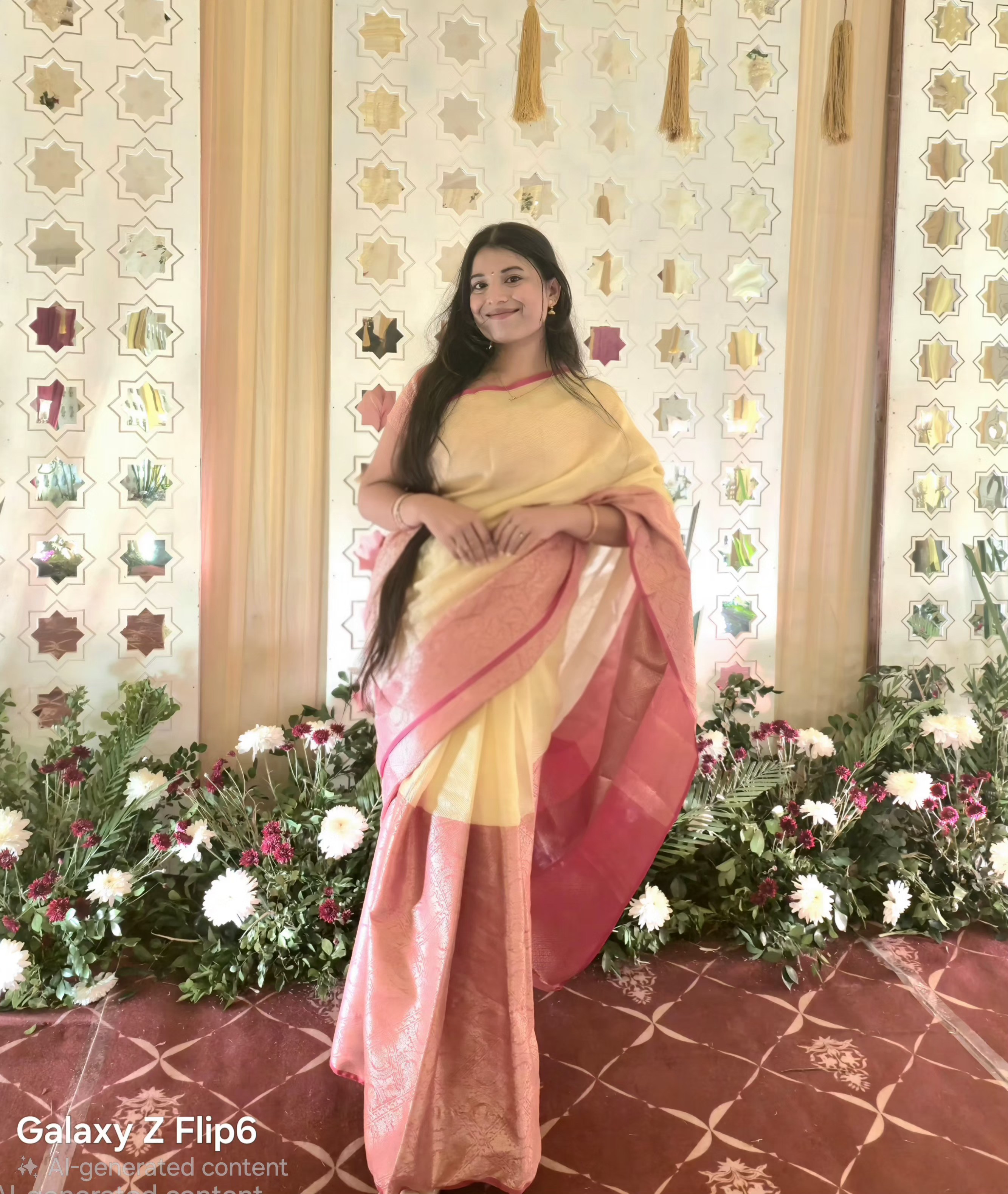
Shreya Pragati Kumari
Session Speaker
Shreya Pragati Kumari is a UGC-NET Junior Research Fellow (JRF) and Ph.D. Research Scholar at Ranchi University, aspiring to become an Assistant Professor. Her research interests include development finance, microfinance, financial inclusion, tribal empowerment, women’s entrepreneurship, and sustainable livelihoods. She holds a Bachelor of Commerce (B.Com.) degree (2019–2022) and a Master of Commerce (M.Com.) degree (2022–2024) from Ranchi University and enrolled in her Ph.D. programme in December 2024. She has expertise in quantitative research, SPSS, Microsoft Excel, statistical analysis, research methodology, secondary data analysis, literature review, academic writing, and financial management. She has published research papers on microfinance, forest conservation, tribal livelihoods, regional products, international trade, financial inclusion, financial literacy, and women’s entrepreneurship in peer-reviewed journals. She also has manuscripts under review on tribal empowerment, NABARD’s role in human development, India’s startup ecosystem, employment generation, and the impact of unpaid care responsibilities on women’s careers. She has presented research at academic conferences on AI in business management and finance, Vision Bharat @2047, behavioural finance, and AI for sustainable development. She was awarded the UGC-NET Junior Research Fellowship by the Government of India and completed the Research Methodology Advancement Program (REMAP 2025) at Sarala Birla University. She is proficient in English and Hindi.
From Rigvedic Voice to Gender Gap: Rethinking Women’s Equality for Sustainable Development
Abstract
Historicizing the gender hierarchy is an incomplete assumption in Indian society. It tackles a conundrum central to the issue of gender-equity policy in India: public discussion between imported norms and loose references to tradition, and persistent empirical evidence for equality resting unquestioned within the tradition itself. This integrative review with secondary-data analysis is a reconstruction from a critically evaluated body of historiography and primary-text scholarship that has identified the domains in which early Vedic society (c. 1500-1000 BCE) attempted gender symmetry: universal female education through Upanayana and the order of Brahmavadinis; marriage autonomy via swayamvara and widow remarriage; economic agency in production and teaching; public philosophical voice; and matronymic identity in Satyakama Jabala and the Kolhapur coin inscriptions. It represents the documented shrinkage of these arrangements through ritual formalisation, property codification and the Manusmriti guardianship regime, as well as the present gap from the benchmark as measured by NFHS-5 (2019-21), the Global Gender Gap Report 2025, PLFS 2023-24 and AISHE 2023-24. The analysis produces a map that is not uniform but differentiated: education has largely converged, with a gender parity index of 1.08 (higher education enrolment of female students is higher than that of male students); economic participation (25 percent female compared to 75 percent male; India ranks 55 on this dimension among the 162 economies worldwide) is far away from the Vedic position; political voice (only about 8 percent of parliamentary seats held by women, while a political-parity horizon is set at 162 years) is even further behind; bodily autonomy has completely reversed, from the mother-referenced identity to the compulsory marital surname that contemporary research is now naming as compensatory gender display. Four research gaps in the literature are identified and filled. The paper suggests that the recovery of the ancient Vedic criterion provides the gender-equity policy with an indigenous measure of success; the different convergence of the sectors shows that hierarchy is a historical construct that can be reversed, and realignment in the identified areas is a prerequisite for the sustainable social impact envisioned in SDG 5 and the theme of the WCWEGESI 2026.
Keywords: gender equity; Vedic period; women's education; metronymic naming; SDG 5; sustainable development; India